




Siemens is employing first-of-its-kind spot-welding technology to build the stainless steel coach car shells and these coaches will be the only carbody with a flat sidewall of this type in the U.S. market. The completed coach shell will now go through a finishing process, preparing it for final assembly.
Siemens completes first car shell for Florida's Brightline rail service
More than 70 employees at Siemens’ state-of-the-art manufacturing facility in Sacramento have worked on building this 85-foot-long first coach car, using more than 50,000 welds to fuse it together.
January 26, 2016
Siemens
2 min to read
Siemens
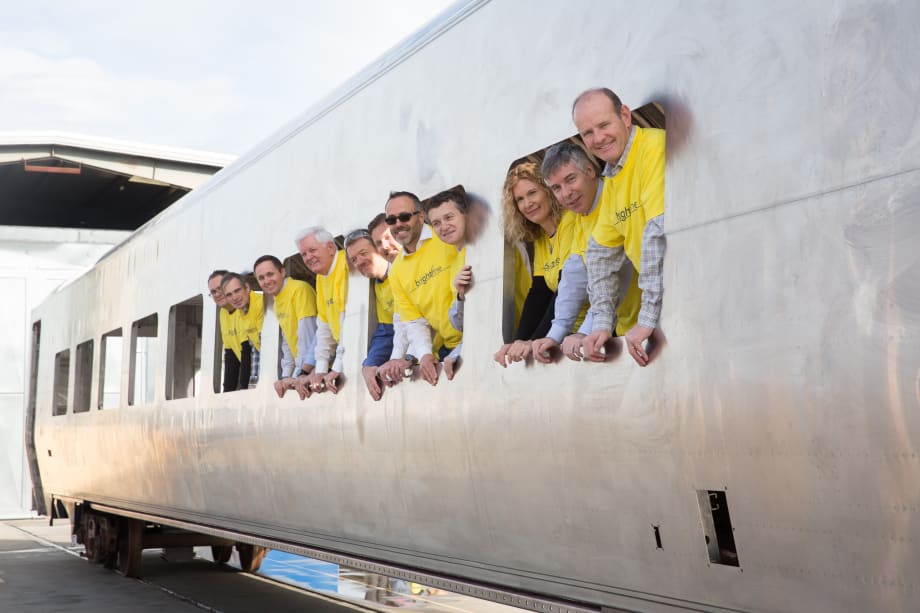
Florida passenger rail service, Brightline and rail manufacturer, Siemens announced today that the first stainless steel passenger coach car shell for the new train service has been completed, reaching a major milestone in the construction of the trains.
More than 70 employees at Siemens’ state-of-the-art manufacturing facility in Sacramento have worked on building this 85-foot-long first coach car, using more than 50,000 welds to fuse it together.
“With the completion of the first coach car shell, we are bringing our vision for a truly unique train service that will transform travel in Florida one step closer to fruition,” said Mike Reininger, Brightline’s president. “The Siemens team has been working diligently and we are thrilled to mark this milestone as the finishing of this car progresses and the manufacture of additional cars continues.”
This coach shell is part of the first of Brightline’s initial five four-car train sets that will each carry 240 passengers with more train sets to follow as the service expands.
Siemens
“We’re thrilled to be marking this production milestone with the Brightline team and also recognizing the highly-skilled work taking place at our Sacramento rail manufacturing plant,” said Michael Cahill, president of Siemens Rolling Stock. “Siemens has been successfully building America's next era of innovative, high-performance and energy-efficient transportation solutions out of our Sacramento hub for decades, and we are excited to continue that tradition by employing the industry’s latest technologies and techniques to build these state-of-the-art trainsets for Brightline and its future riders.”
The Siemens Sacramento, Calif. manufacturing plant, which has been in operation for almost 30 years, is powered up to 80% by two megawatts of solar energy, currently employs over 800 people, and includes a recent 125,000-square-foot expansion to accommodate growing production needs.
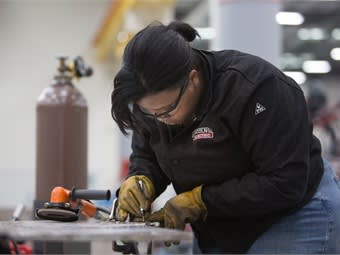
To support the skills needed for the advanced welding techniques being employed to build these trainsets, Siemens has launched a workforce development and training initiative partnering with local community colleges and the Sacramento Employment and Training Agency (SETA). Siemens has also developed a robust and diverse base of U.S. rail suppliers to support the next-generation of rail manufacturing for Brightline including components from more than 40 suppliers in more than 20 states with additional suppliers still being added.
Last week, Brightline poured the first concrete foundation for its Running Repair Facility in West Palm Beach, where the trains will be serviced and housed. Siemens will perform service and maintenance on the trains there. The facility is expected to be operation in August. Construction is also underway on Brightline’s train stations in Miami at MiamiCentral, Fort Lauderdale, West Palm Beach and Orlando.
More Rail

New York MTA Advances Final Contract for Second Avenue Subway Expansion
Contract Four is the largest in the Second Avenue Subway Phase 2 project and includes construction of station infrastructure, tracks, and signals for the subway expansion, MTA officials said. Work on Contract Four will begin in 2027.
Read More →
San Diego MTS Breaks Monthly Trolley Ridership Record
Agency officials said July’s ridership indicates MTS’s continued recovery from the pandemic.
Read More →
Report Examines NJ TRANSIT Reliability, Funding Challenges
The Garden State Initiative analysis examines the roles of Amtrak infrastructure, fleet management, and agency operations while recommending a more performance-based approach to improving reliability.
Read More →
Stadler, CapMetro Sign Long-Term Rail Fleet Support Agreement
Beginning in 2027, Stadler will provide on-site technical expertise, spare parts support, training, and obsolescence management to help extend the reliability and longevity of CapMetro’s GTW fleet.
Read More →
Biz Briefs: Alstom Lands Canadian Contract, LYT to Supply California TSP, and More
In METRO's latest installment, we take a look at recent news from Complete Coach Works, Beep, FlixBus, and more partnerships making headlines across the transportation sector.
Read More →
CATS Gold Line Marks 5 Years of Service, 2.8M Passenger Trips
With a six-mile expansion planned, the Charlotte streetcar is positioned to connect more neighborhoods and major transit hubs across the region.
Read More →
Why Simulating Pedestrian Movement Has Become Essential for Modern Rail Stations
Pedestrian microsimulation is helping rail planners identify bottlenecks, test station designs, and prepare complex transit hubs for growing passenger volumes.
Read More →
Amtrak Begins Major Construction at New York’s Sunnyside Yard
The new maintenance facility will support Amtrak’s Airo trainsets while improving maintenance efficiency and turnaround times in New York.
Read More →
Chicago Leaders Unveil Plans for O’Hare Airport Express Train
The privately developed project would offer a 15-minute trip between downtown and O’Hare’s Terminal 2, with trains operating every 15 minutes on a dedicated track. The service would use battery-electric trains and three existing freight rail rights-of-way.
Read More →
OCTA Maps Out 30-Year Strategy to Protect Coastal Rail Corridor
The draft feasibility report identifies strategies to protect the coastal rail line for decades as the agency continues near-term stabilization and sand placement efforts.
Read More →