



SoCal survey finds university, college students prefer not driving
The survey, conducted by Metrolink, found that 45% of students commute 41 minutes or longer from home to school.


Public transit helps reduce air pollution and also is less stressful than driving, according to numerous studies.
Metrolink
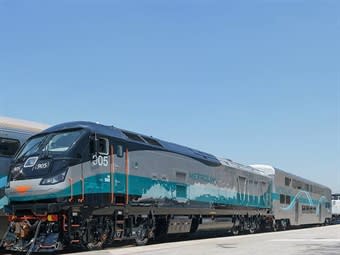
Public transit helps reduce air pollution and also is less stressful than driving, according to numerous studies.
Metrolink
College and university students in Southern California would rather not drive, but the current transportation alternatives fall short of meeting their needs.
That’s the message of a mobility survey that Metrolink conducted over the past six months. Nearly 600 college and university students from throughout the region responded. These are largely working class students with two thirds having annual incomes less than $30,000.
Sixty-nine percent said their personal vehicle best met their needs followed by Uber and Lyft (44%). Public transit and carpooling ranked high for only about a third of students. However, 68% of students said they prefer not driving alone, and 90% of those who took the survey said they would consider using public transit instead of driving if it were reliable, affordable, convenient, and safe.
When asked what features are important for them for transportation, the vast majority (76%) cited modes that were environmentally responsible. An even higher percentage (86%) wanted transportation to be stress free.
Public transit helps reduce air pollution and also is less stressful than driving, according to numerous studies.
The survey underscored that students, like their parents and others, commute long distances. Forty-five percent commute 41 minutes or longer from home to school.
Results of the online student mobility survey were shared at an unprecedented forum involving college and university student leaders from throughout Southern California, elected officials, and transit executives. They focused on the unique mobility needs of millennials and younger people, the next generation of commuters.
The forum was jointly sponsored by Metrolink, Cal State LA student leaders, and the Pat Brown Institute for Public Affairs at Cal State LA. The purpose of this inaugural dialogue is promoting alternatives to driving to help ease traffic and determining how the current and future public transit systems in the region can be designed to attract younger riders and steer them from their cars.
Students were asked an array of questions to gauge how they get to school, work, and other destinations and what features would make public transit a better option for them.
Getting them exactly where they need to go quickly ranked high in the data along with reliability, affordability, and safety.
That mirrors results of studies done on millennials and mobility conducted by the U.S. Public Interest Research Group and the American Public Transportation Association.
More New Mobility

From Hardware to Digital Partner: Luminator Charts Its Next Chapter
CEO Magnus Friberg discusses Luminator’s shift toward becoming a digital partner, the growing importance of software and interoperability, and how AI can help agencies improve operations and passenger experience.
Read More →
Biz Briefs: Alstom Lands Canadian Contract, LYT to Supply California TSP, and More
In METRO's latest installment, we take a look at recent news from Complete Coach Works, Beep, FlixBus, and more partnerships making headlines across the transportation sector.
Read More →
CharterUP’s Armir Harris on Technology, AI, and the Future of Group Mobility
In a recent episode of METROspectives, CharterUP Founder/CEO Armir Harris discussed the company’s evolution from an online charter bus marketplace into a technology platform supporting public- and private-sector mobility and much more.
Read More →
Jacksonville’s NAVI Project Charts a New Course for Autonomous Public Transportation
Through its NAVI program, JTA is showing how autonomous vehicles, intelligent infrastructure, and coordinated operations can work together to deliver everyday public transportation.
Read More →
Biz Briefs: Luminator Marks Milestone and More
From manufacturers and suppliers to transit agencies and motorcoach operators, these updates offer a snapshot of the projects, partnerships and business moves driving the industry forward.
Read More →
New Tricks for Old Bureaucracies: Joshua Schank on Making Transit Innovation Stick
Former LA Metro Chief Innovation Officer Joshua Schank discusses why good ideas aren't enough, how transit agencies can overcome resistance to change, and why today's challenges demand more innovation.
Read More →
How DART's GoPass Is Redefining Regional Mobility
Serving 14 transit agencies, GoPass simplifies multimodal travel by allowing riders to plan, pay for, and manage an entire trip through one app.
Read More →
Biz Briefs: OCTA Taps Clean Energy for Hydrogen Station, Stadler to Supply Via Rail Vehicles, and More
From manufacturers and suppliers to transit agencies and motorcoach operators, these updates offer a snapshot of the projects, partnerships and business moves driving the industry forward.
Read More →CharterUP Expands Into New Mobility and Autonomous Transportation
Vice President of New Mobility Stephen Joos discusses how CharterUP is leveraging its nationwide transportation network, technology platform, and autonomous vehicle partnerships to expand into workforce mobility, campus shuttles, and transit solutions.
Read More →
METRO Magazine Announces 2026 Innovative Solutions Awards Winners
Projects Recognized for Advancing Mobility Through Technology, Accessibility, Workforce Innovation, and Operational Excellence
Read More →