



Sound Transit board taps elevated light rail for Redmond Link extension
The action moves the Downtown Redmond Link Extension project closer to the start of construction in 2019 and service beginning in 2024.


A baseline cost estimate for the Redmond project is being finalized for presentation to the Sound Transit Board in October.
Sound Transit
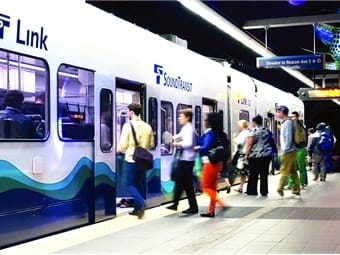
A baseline cost estimate for the Redmond project is being finalized for presentation to the Sound Transit Board in October.
Sound Transit
Seattle’s Sound Transit Board selected an elevated light rail alignment in downtown Redmond that incorporates refinements the board recommended for further study in 2017. The action moves the Downtown Redmond Link Extension project closer to the start of construction in 2019 and service beginning in 2024, only one year after the opening of light rail to Redmond’s Overlake area.
The Downtown Redmond Link Extension extends the East Link project that is now under construction by 3.4 miles. While the Sound Transit Board adopted a previously approved route to downtown Redmond in 2011 as part of the broader East Link project, the downtown extension did not receive funding until regional voters’ November 2016 approval of the Sound Transit 3 ballot measure.
The alignment selected incorporates refinements identified through intensive work with the City of Redmond, the King County Department of Natural Resources and Parks, King County Metro Transit, and the Washington State Department of Transportation. The features will improve service reliability and safety by separating trains from vehicle and pedestrian traffic.
Sound Transit prepared the Downtown Redmond Link Extension State Environmental Policy Act (SEPA) Addendum for the East Link Project Environmental Impact Statement issued in 2011. Additional information about the proposed refinements was included in the 2018 Downtown Redmond Link Extension SEPA Addendum issued on Aug. 31.
“When Downtown Redmond Link opens in 2024, people will be able to travel congestion-free to destinations across our region, from Redmond, to Bellevue, to Seattle, to Lynnwood, to Federal Way,” said Sound Transit CEO Peter Rogoff. “With connections from Link light rail to bus rapid transit and local transit service, people will enjoy greater mobility and more places where they can conveniently live, work, and play.”
A baseline cost estimate for the project is being finalized for presentation to the Sound Transit Board in October. The initial step (RFQ phase) of selecting a contractor for this project has begun and the next phase of this process will take place later this year (RFP Phase).
Sound Transit is simultaneously working to extend light rail north, south, east and west, opening new stations every few years to form a 116-mile regional system by 2041. Starting in 2021 the Northgate project will provide reliable, congestion-free travel to Seattle’s University District, Roosevelt, and Northgate neighborhoods. Northgate Link will be followed in 2023 by the opening of service to Mercer Island, Bellevue and Redmond’s Overlake community. Additional extensions to Shoreline, Mountlake Terrace, Lynnwood, Kent/Des Moines, Federal Way, and downtown Redmond are planned in 2024. Further light rail extensions are scheduled to reach West Seattle, Fife, and Tacoma in 2030; Ballard in 2035; Paine Field and Everett in 2036; and South Kirkland and Issaquah in 2041.
The agency is also working on further investments including, but not limited to, expansions of Sounder South service and bus rapid transit service in 2024 along the north, east, and south sides of Lake Washington.
More Rail

New York MTA Advances Final Contract for Second Avenue Subway Expansion
Contract Four is the largest in the Second Avenue Subway Phase 2 project and includes construction of station infrastructure, tracks, and signals for the subway expansion, MTA officials said. Work on Contract Four will begin in 2027.
Read More →
San Diego MTS Breaks Monthly Trolley Ridership Record
Agency officials said July’s ridership indicates MTS’s continued recovery from the pandemic.
Read More →
Report Examines NJ TRANSIT Reliability, Funding Challenges
The Garden State Initiative analysis examines the roles of Amtrak infrastructure, fleet management, and agency operations while recommending a more performance-based approach to improving reliability.
Read More →
Stadler, CapMetro Sign Long-Term Rail Fleet Support Agreement
Beginning in 2027, Stadler will provide on-site technical expertise, spare parts support, training, and obsolescence management to help extend the reliability and longevity of CapMetro’s GTW fleet.
Read More →
Biz Briefs: Alstom Lands Canadian Contract, LYT to Supply California TSP, and More
In METRO's latest installment, we take a look at recent news from Complete Coach Works, Beep, FlixBus, and more partnerships making headlines across the transportation sector.
Read More →
CATS Gold Line Marks 5 Years of Service, 2.8M Passenger Trips
With a six-mile expansion planned, the Charlotte streetcar is positioned to connect more neighborhoods and major transit hubs across the region.
Read More →
Why Simulating Pedestrian Movement Has Become Essential for Modern Rail Stations
Pedestrian microsimulation is helping rail planners identify bottlenecks, test station designs, and prepare complex transit hubs for growing passenger volumes.
Read More →
Amtrak Begins Major Construction at New York’s Sunnyside Yard
The new maintenance facility will support Amtrak’s Airo trainsets while improving maintenance efficiency and turnaround times in New York.
Read More →
Chicago Leaders Unveil Plans for O’Hare Airport Express Train
The privately developed project would offer a 15-minute trip between downtown and O’Hare’s Terminal 2, with trains operating every 15 minutes on a dedicated track. The service would use battery-electric trains and three existing freight rail rights-of-way.
Read More →
OCTA Maps Out 30-Year Strategy to Protect Coastal Rail Corridor
The draft feasibility report identifies strategies to protect the coastal rail line for decades as the agency continues near-term stabilization and sand placement efforts.
Read More →