




Decades of disinvestment have made it difficult for private real estate markets to capitalize on opportunities for infill development around the valuable rail infrastructure in these cities.
Study finds untapped development potential around MBTA rail stations
Vacant and underutilized land surrounding 13 Gateway City commuter rail stations could house up to 230,000 residents and 230,000 jobs.
April 24, 2018
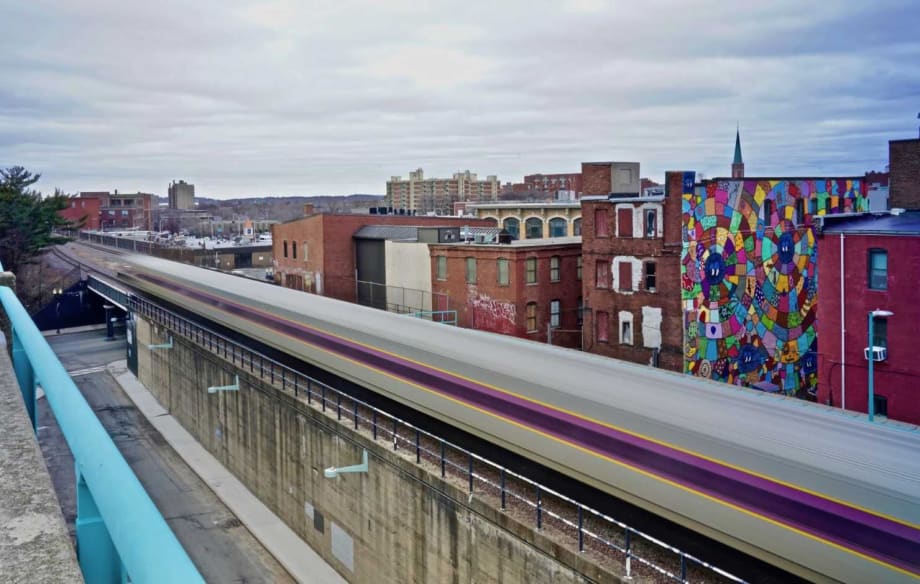
Vacant and underutilized land surrounding 13 Gateway City commuter rail stations could house up to 230,000 residents and 230,000 jobs. Photo: MassINC
3 min to read
Vacant and underutilized land surrounding 13 Gateway City commuter rail stations could house up to 230,000 residents and 230,000 jobs. Photo: MassINC
A new study from the nonpartisan think-tank MassINC reveals large untapped development potential around Massachusetts Bay Transportation Authority's (MBTA) urban commuter rail stations.
Vacant and underutilized land surrounding 13 Gateway City commuter rail stations could house up to 230,000 residents and 230,000 jobs-double the number of people living and working in these station areas today, according to the study.
Gateway Cities are midsize urban centers that anchor regional economies around the state, according to MassINC. For generations, these communities were home to industry that offered residents good jobs and a “gateway” to the American Dream. Over the past several decades, manufacturing jobs slowly disappeared. Lacking resources and capacity to rebuild and reposition, Gateway Cities have been slow to draw new economy investment.
Decades of disinvestment have made it difficult for private real estate markets to capitalize on opportunities for infill development around the valuable rail infrastructure in these cities. The nature of commuter rail service is also problematic. Fares have become cost-prohibitive for many, and service is often slow, infrequent, and unreliable. The study points to Census data that show only about one in every 50 residents living near a Gateway City station takes a train to work; the commuter rail system’s lowest performing stations on this measure are all located in Gateway Cities.
The report recommends:
lowering commuter rail fares for those living and working in Gateway Cities;
offering financial incentives to spur initial residential and commercial development in inactive downtown station areas;
and improving service as ridership grows.
“If nobody is using the train, that tells us it isn’t adding any value to the surrounding real estate,” says Ben Forman, MassINC’s research director and an author of the study. With the right policies, he believes Massachusetts could alter this dynamic and get the kind of transit-oriented development (TOD) that is going up in and around Boston to occur in these depressed real estate markets.
If this were to occur, daily commuter rail boardings would increase by 25%, generating an additional $81 million in fare revenue for the MBTA. While the lower fares proposed would partially offset this gain, the study recommends compensating the MBTA for these losses through revenues associated with policies that are on the drawing board to limit greenhouse gas (GHG) emissions. Accommodating future growth in these walkable urban centers with existing transit would reduce GHG emissions by an estimated $126 million annually, according to the study.
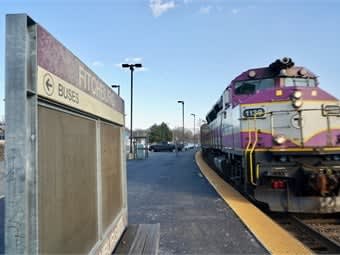
Census data shows only about one in every 50 residents living near a Massachusetts Gateway City station takes a train to work.
Photo: MassINC
This new research comes at a time when transportation leaders are busy assessing how to invest in the state’s road and rail network to support future growth. One component of this discussion is what changes should be made to commuter rail before MassDOT negotiates the next long-term operating contract for the system, which is scheduled to commence in 2022.
According to Lynn Mayor Tom McGee, it’s important that state leaders consider this new information as they plan for the future. “Massachusetts needs more space for both commercial and residential growth. Gateway Cities like Lynn have capacity to accommodate millions of square feet of mixed-use development around our existing rail infrastructure.”
Within a half-mile of Lynn’s station, the study finds potential for nearly 20 million square feet of additional development.
Forman says: “Too often we think about transit and economic development investments independently. In order to get the most from the billions of dollars we commit to operating commuter rail along these right-of-ways, it’s critical to think about what mix of policies could spur reinvestment in these older urban areas.”
Sal Lupoli is a pioneering real estate developer who has had early success in Lawrence and Lowell and believes in the value of transit-oriented developments near commuter rail stations. “If we want to create opportunities for economic development and sustained growth in every corner of the Commonwealth,” he says, “we need to take a fresh look at how we get more people living and working in affordable Gateway Cities up and down our commuter rail lines.”
More Rail

New York MTA Advances Final Contract for Second Avenue Subway Expansion
Contract Four is the largest in the Second Avenue Subway Phase 2 project and includes construction of station infrastructure, tracks, and signals for the subway expansion, MTA officials said. Work on Contract Four will begin in 2027.
Read More →
San Diego MTS Breaks Monthly Trolley Ridership Record
Agency officials said July’s ridership indicates MTS’s continued recovery from the pandemic.
Read More →
Report Examines NJ TRANSIT Reliability, Funding Challenges
The Garden State Initiative analysis examines the roles of Amtrak infrastructure, fleet management, and agency operations while recommending a more performance-based approach to improving reliability.
Read More →
Stadler, CapMetro Sign Long-Term Rail Fleet Support Agreement
Beginning in 2027, Stadler will provide on-site technical expertise, spare parts support, training, and obsolescence management to help extend the reliability and longevity of CapMetro’s GTW fleet.
Read More →
Biz Briefs: Alstom Lands Canadian Contract, LYT to Supply California TSP, and More
In METRO's latest installment, we take a look at recent news from Complete Coach Works, Beep, FlixBus, and more partnerships making headlines across the transportation sector.
Read More →
CATS Gold Line Marks 5 Years of Service, 2.8M Passenger Trips
With a six-mile expansion planned, the Charlotte streetcar is positioned to connect more neighborhoods and major transit hubs across the region.
Read More →
Why Simulating Pedestrian Movement Has Become Essential for Modern Rail Stations
Pedestrian microsimulation is helping rail planners identify bottlenecks, test station designs, and prepare complex transit hubs for growing passenger volumes.
Read More →
Amtrak Begins Major Construction at New York’s Sunnyside Yard
The new maintenance facility will support Amtrak’s Airo trainsets while improving maintenance efficiency and turnaround times in New York.
Read More →
Chicago Leaders Unveil Plans for O’Hare Airport Express Train
The privately developed project would offer a 15-minute trip between downtown and O’Hare’s Terminal 2, with trains operating every 15 minutes on a dedicated track. The service would use battery-electric trains and three existing freight rail rights-of-way.
Read More →
OCTA Maps Out 30-Year Strategy to Protect Coastal Rail Corridor
The draft feasibility report identifies strategies to protect the coastal rail line for decades as the agency continues near-term stabilization and sand placement efforts.
Read More →