




RELATED: Uber, Lyft cuts transit usage, boosts vehicle miles
Study links rising SoCal car ownership with decline in transit ridership
The six-county region added 2.1 million household vehicles between the years 2000 and 2015, a car increase that nearly quadruples the rate of the preceding decade.
February 1, 2018

The study found that the six-county SCAG region added 2.1 million household vehicles between the years 2000 and 2015.
2 min to read

The study found that the six-county SCAG region added 2.1 million household vehicles between the years 2000 and 2015.
A dramatic increase in private automobile ownership in Southern California as the main cause of an overall decline in transit ridership, according to a new report released by the Southern California Association of Governments (SCAG) and the UCLA Institute of Transportation Studies.
The report, “Falling Transit Ridership: California and Southern California,” was commissioned by SCAG to identify the causes of transit ridership declines in the region, which are part of an overall nationwide trend.
The study found that the six-county SCAG region added 2.1 million household vehicles between the years 2000 and 2015, a car increase that nearly quadruples the rate of the preceding decade. The number of vehicles added nearly matches the growth in population during those years.
“This absolutely has had a tremendous impact on congestion,” said Hasan Ikhrata, executive director of SCAG. “Last year, drivers in L.A. County spent over 100 hours stuck in traffic as a result. Think about the effect that 2 million more cars has had on air pollution, not to mention the wear and tear on our roads.”
The study also considered factors including transit service quality, fuel prices, neighborhood change, and the rise of ride-hailing services like Uber and Lyft, but found that the region’s higher number of cars was the root of transit ridership’s downward trend. Vehicle ownership was also shown to have risen among demographic groups that have traditionally been the highest users of transit, including low-income and foreign-born immigrants.
“Transit providers in the region are facing an uphill battle, because so many of our current policies incentivize driving,” said study co-author Michael Manville, a professor at UCLA’s Department of Urban Planning and Institute of Transportation Studies. “We need to plan not just for the transit-dependent, but also focus on making transit an appealing option for riders who have a mobility choice.”
As the metropolitan planning organization responsible for assessing long-term needs and charting transportation policies for the region, SCAG has identified building more housing near high quality transit as a key strategy in meeting the region’s greenhouse gas emission reduction goals, as well as addressing the region’s growing housing affordability crisis. SCAG estimates that approximately 1,000,000 units of housing are needed in Los Angeles County alone.
More New Mobility

From Hardware to Digital Partner: Luminator Charts Its Next Chapter
CEO Magnus Friberg discusses Luminator’s shift toward becoming a digital partner, the growing importance of software and interoperability, and how AI can help agencies improve operations and passenger experience.
Read More →
Biz Briefs: Alstom Lands Canadian Contract, LYT to Supply California TSP, and More
In METRO's latest installment, we take a look at recent news from Complete Coach Works, Beep, FlixBus, and more partnerships making headlines across the transportation sector.
Read More →
CharterUP’s Armir Harris on Technology, AI, and the Future of Group Mobility
In a recent episode of METROspectives, CharterUP Founder/CEO Armir Harris discussed the company’s evolution from an online charter bus marketplace into a technology platform supporting public- and private-sector mobility and much more.
Read More →
Jacksonville’s NAVI Project Charts a New Course for Autonomous Public Transportation
Through its NAVI program, JTA is showing how autonomous vehicles, intelligent infrastructure, and coordinated operations can work together to deliver everyday public transportation.
Read More →
Biz Briefs: Luminator Marks Milestone and More
From manufacturers and suppliers to transit agencies and motorcoach operators, these updates offer a snapshot of the projects, partnerships and business moves driving the industry forward.
Read More →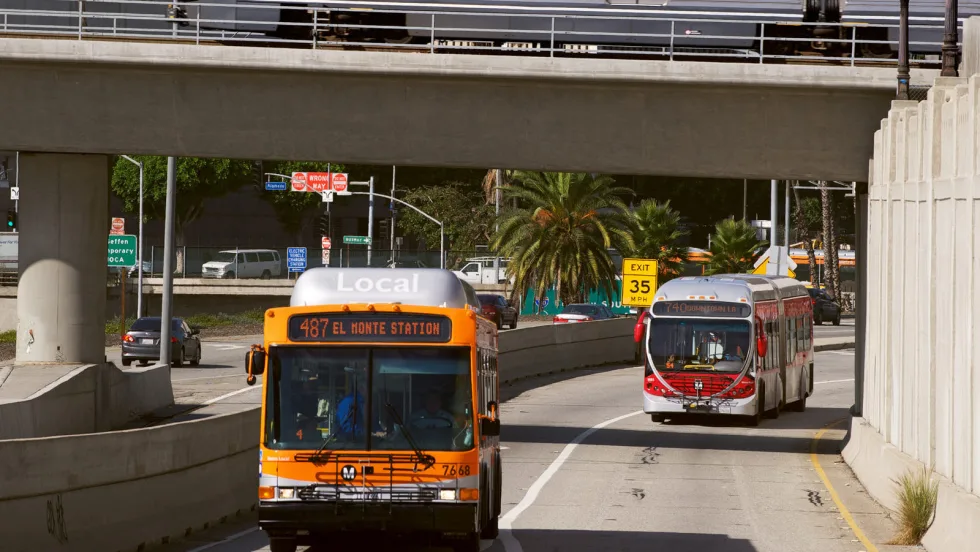
New Tricks for Old Bureaucracies: Joshua Schank on Making Transit Innovation Stick
Former LA Metro Chief Innovation Officer Joshua Schank discusses why good ideas aren't enough, how transit agencies can overcome resistance to change, and why today's challenges demand more innovation.
Read More →
How DART's GoPass Is Redefining Regional Mobility
Serving 14 transit agencies, GoPass simplifies multimodal travel by allowing riders to plan, pay for, and manage an entire trip through one app.
Read More →
Biz Briefs: OCTA Taps Clean Energy for Hydrogen Station, Stadler to Supply Via Rail Vehicles, and More
From manufacturers and suppliers to transit agencies and motorcoach operators, these updates offer a snapshot of the projects, partnerships and business moves driving the industry forward.
Read More →CharterUP Expands Into New Mobility and Autonomous Transportation
Vice President of New Mobility Stephen Joos discusses how CharterUP is leveraging its nationwide transportation network, technology platform, and autonomous vehicle partnerships to expand into workforce mobility, campus shuttles, and transit solutions.
Read More →
METRO Magazine Announces 2026 Innovative Solutions Awards Winners
Projects Recognized for Advancing Mobility Through Technology, Accessibility, Workforce Innovation, and Operational Excellence
Read More →