




Read More: How Agencies Can Improve Sustainability
Study Reveals Most Eco-Friendly Way to Travel
The study also compares the actual carbon dioxide emissions of traveling on popular U.S. routes by each travel mode.
July 21, 2023
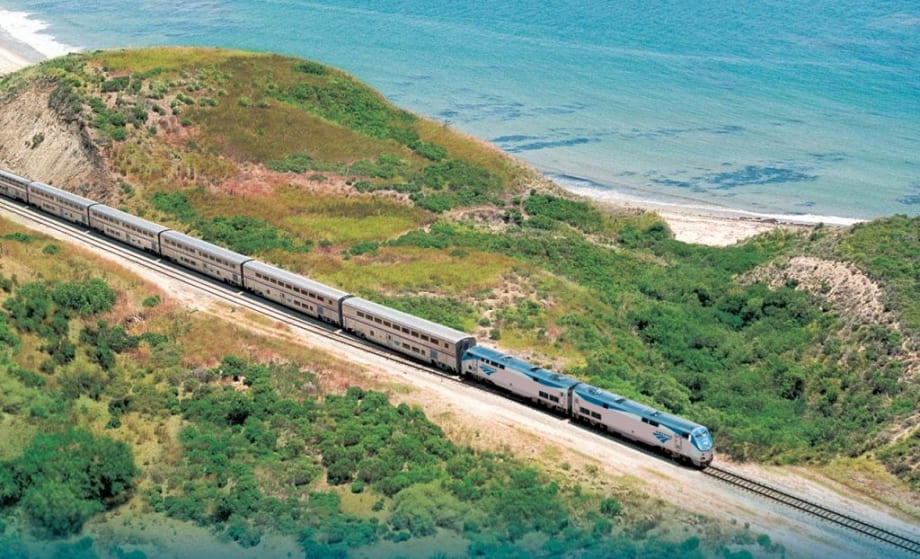
Traveling by bus rather than flying could decrease your carbon footprint by up to 77.5%.
Photo: Amtrak
2 min to read
Wanderu recently published the results from its latest study, showing that buses are even more eco-friendly than trains (by up to 50%).
Takeaways from Wanderu's Study
Key takeaways from the study include:
Intercity buses are the most sustainable mode of transportation in the U.S.
Intercity buses are 550% more fuel efficient than cars on a per-passenger basis.
Taking the bus instead of flying can decrease your carbon footprint by up to 77.5%.
Trains produce less CO2 emissions per passenger than planes, and the average Amtrak train can carry more passengers than the average domestic jet plane.
The study also checked out the average carbon dioxide emissions for each of these travel modes. The Congressional Budget Office has reported that transportation is the largest source of carbon dioxide emissions in the U.S., and 83% of emissions in the transportation sector come from cars and trucks.
Based on the study's fuel efficiency and carbon dioxide emission data, the most sustainable mode of traveling in the U.S. is via intercity bus, followed by trains. Intercity buses use 280.1 passenger miles/gallon, while trains use 79.8 passenger miles/gallon.
Average CO2 Emissions
Intercity buses carry 0.15 lbs/passenger miles, while trains carry 0.30 lbs/passenger mile.
Driving releases almost half a pound of carbon dioxide for every passenger, every mile. This means even a 20-mile drive can release 10 pounds of carbon dioxide into the atmosphere. It would take one tree about six months to recapture the carbon dioxide released on this short drive.
Traveling by bus rather than flying could decrease your carbon footprint by up to 77.5%.
Average Maximum Capacity of Vehicles
An average intercity bus can fit up to 55 people on board, while the average personal car can carry up to five passengers at a time.
According to the Bureau of Transportation Statistics, the average car carries only between one and two passengers. Therefore, one bus can take as many as 55 cars off the road.
While trains might be a little less efficient than buses, their higher capacity makes the overall footprint of each train much lower than an airplane.
The average Amtrak train can carry more people than the average domestic jet plane, compounding the positive effects of a lower per-passenger carbon footprint.
More Zero Emissions
LA Metro Board Awards 220 Battery-Electric Bus Contract to ENC
The contract, which is the largest base award of battery-electric buses by a U.S. transit agency, will be built in Southern California, sustaining good jobs as LA prepares to welcome the world in 2028
Read More →
Public Transit Conference Returning to GFX in 2027, Call for Papers Now Open
The Call for Papers is now open, allowing transit agency professionals and industry experts to help shape the PTC educational program by submitting session ideas for consideration.
Read More →
Report: Transit Bus Manufacturing Supports 34,100 Jobs, $5.1B in GDP
The “Buses Mean Business” report examines the transit bus manufacturing industry’s economic footprint, supply chain, and rising demand for vehicle replacements.
Read More →
Ohio’s METRO RTA Turns Electric Buses into Mobile Power Sources at PorchROKR
See how three Gillig battery-electric buses powered festival stages while the agency’s new Park & Ride service carried approximately 1,000 attendees, demonstrating another potential use for transit agencies’ electric fleets.
Read More →
CALSTART and Forth Combine to Form Catalyst Mobility
The new name represents a renewed vision for the nonprofit focused on advancing clean, equitable, and affordable transportation solutions that move people and goods.
Read More →
Building a Flexible Path to Transit Electrification
John Hroncich discusses BAE Systems’ modular and scalable approach, lessons learned from decades of real-world operations, and how agencies can identify electrification strategies that fit their fleets.
Read More →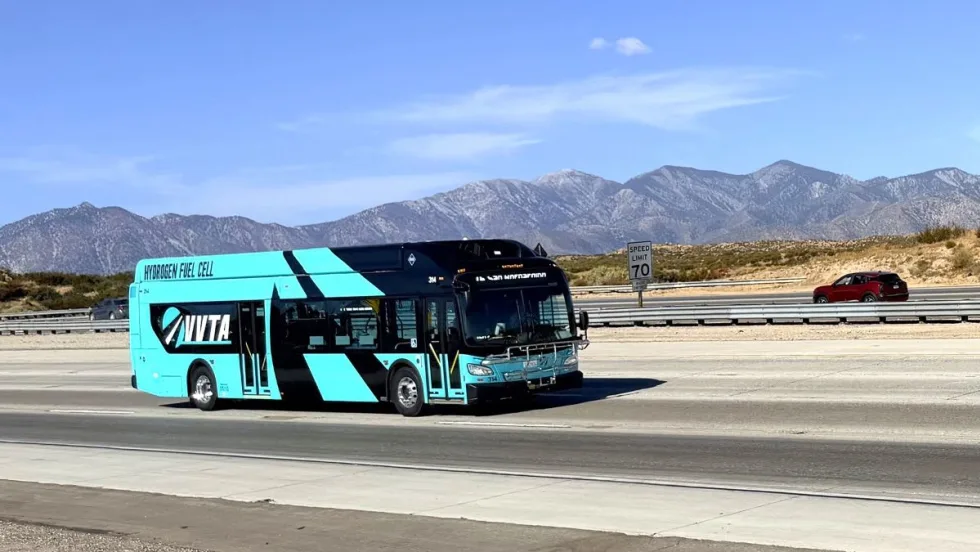
California's VVTA Begins Phased Rollout of Hydrogen Fuel Cell Buses
The agency is introducing 13 zero-emission buses into revenue service while evaluating performance across its urban, rural, and long-distance routes.
Read More →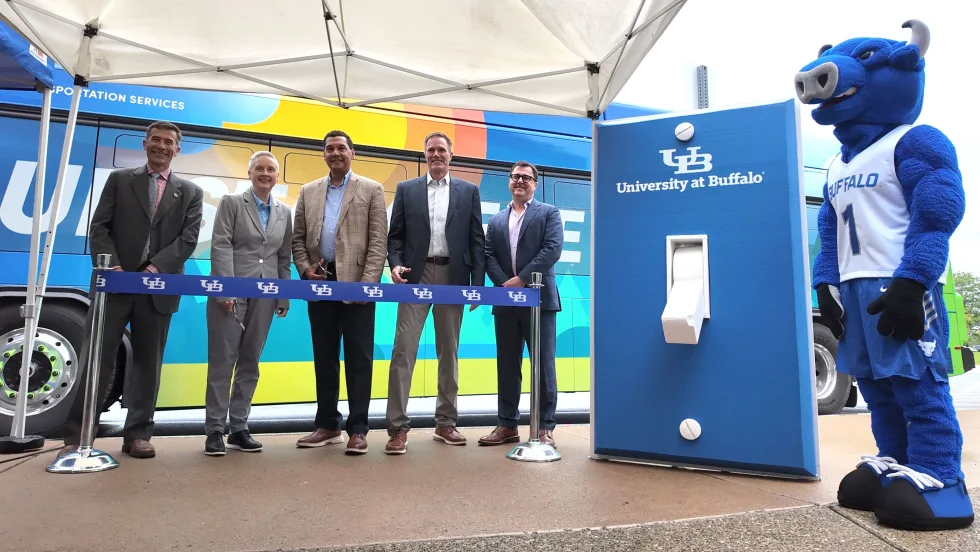
Inside Look: University at Buffalo Puts First 8 Electric Buses Into Stampede Service
UB, transportation solutions provider WeDriveU, and fleet electrification specialist Zenobē marked the deployment in the presence of students, university administrators, and local officials.
Read More →
Biz Briefs: OCTA Taps Clean Energy for Hydrogen Station, Stadler to Supply Via Rail Vehicles, and More
From manufacturers and suppliers to transit agencies and motorcoach operators, these updates offer a snapshot of the projects, partnerships and business moves driving the industry forward.
Read More →
AC Transit’s Cecil Blandon on Building the Next Generation of Transit Maintenance Leaders
The agency’s maintenance chief discusses leadership, workforce development, zero-emission technology, and preparing technicians for the future of public transportation.
Read More →