




RELATED: Report finds L.A., Miami travelers have longest commutes
Sustainable transport on track to bypass cars by 2030 in largest cities
Cycling is predicted to increase by 18%, while walking and public transport usage will rise by 15% and 6% respectively.
February 13, 2020
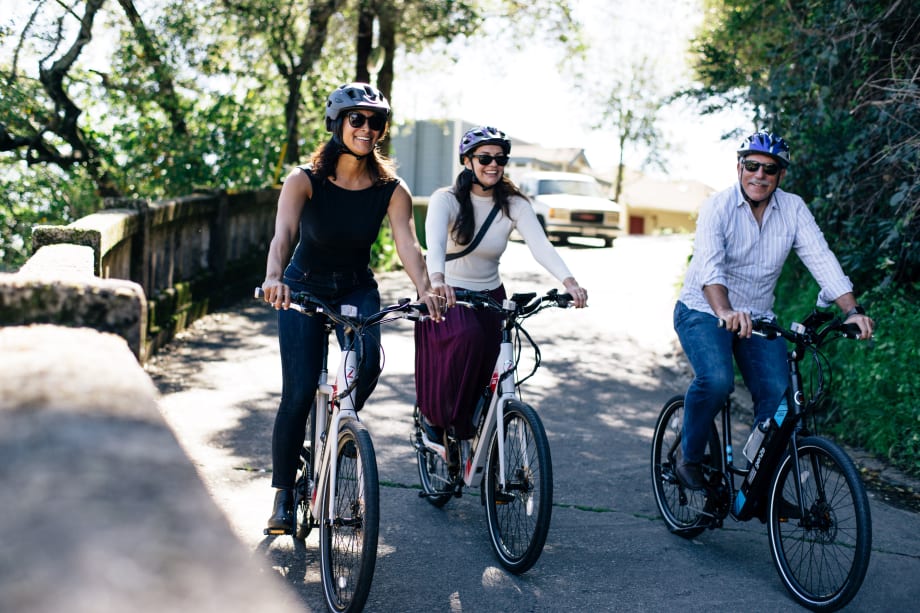
Cycling is predicted to increase by 18% globally in 2030, while walking and public transport usage will rise by 15% and 6% respectively. GenZe
4 min to read
Cycling is on track to become the fastest-growing mode of transport, predicted to increase by 18% between now and 2030. GenZe
2030 will be the global tipping point for sustainable mobility in the world’s largest cities, according to a study by global consulting firm Kantar.
The new analysis from Kantar’s Mobility Futures report predicts that private car journeys in the world’s largest cities will decrease by 10% over the next decade. The rise of the sharing economy, multi-modality and autonomous vehicles, coupled with the ageing global population will all reduce the need for car ownership. This decline will be offset by increased use of public transport, cycling and walking as citizens switch to more environmentally-friendly ways to travel. By 2030, these greener means of transport will represent 49% of all trips undertaken within cities, versus 46% for cars (which currently account for 51% of trips). Taxi and ride sharing/ride hailing trips, along with other modes such as ferries will account for the remaining 5%.
Cycling is on track to become the fastest-growing mode of transport, predicted to increase by 18% between now and 2030. Walking and public transport usage will rise by 15% and 6% respectively. Thousands of infrastructure projects around the world, such as expansion of cycle lanes and bike-sharing schemes, pedestrianisation projects and public transport improvements are all contributing to these new mobility behaviours.
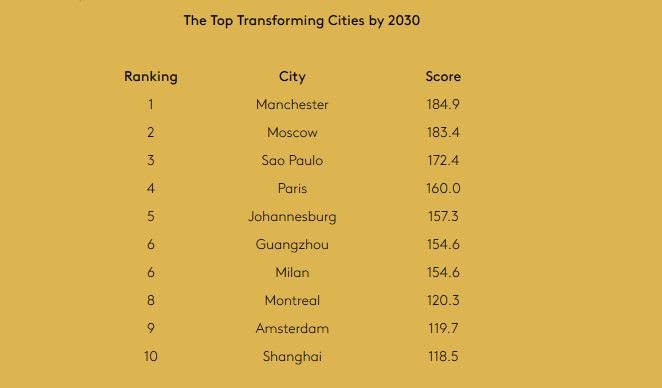
In this context, Kantar projects that across the 31 cities surveyed, as many as 36.7 million city-dwellers will change the way they travel over the next 10 years. Manchester is set to see the biggest shift in transport usage, followed by Moscow and São Paulo.
The Top Transforming Cities by 2030
Kantar
Promoting and investing in technology for urban mobility will be key to facilitating the transition to smarter and more sustainable transport solutions over the next 10 years. Kantar’s research found that 40% of people globally are open to adopting innovative new mobility solutions; but not all cities are ready for mobility transformation. The most tech-ready cities based on Kantar’s analysis of factors such as digital payment infrastructure, openness to sharing and autonomous vehicles, and GDP, are Amsterdam, London and Los Angeles.
What Infrastructure do people want?
To assess which emerging technologies and mobility solutions have the greatest potential to fulfil the needs of tomorrow’s urban travellers, Kantar has partnered with members of the Mobility Futures programme to develop and test over 20 mobility concepts against the preferences of 20,000 citizens globally. The innovations that resonate best are those that deliver both sustainability and convenience, including:
Mobility-as-a-Service (MaaS) – this concept integrates multiple transport modes, such as buses, trams, bikes and car sharing, into a single app and ticket to streamline multi-modal travel into a user experience that matches the convenience of a personal car.
Mobility hubs – located on the outskirts of cities, these hubs enable commuters to switch from polluting cars to zero-emission vehicles like electric buses, e-bikes and e-scooters, to help decrease urban congestion and pollution.
Autonomous parcel delivery – Self-driving delivery vehicles function as mobile parcel stations to reduce unsuccessful delivery journeys that significantly increase traffic congestion.
However, among the cities that are best prepared for the future of mobility, some are facing a lack of confidence from citizens in their municipality’s ability to actively shape a more sustainable future — which could potentially hold back progress. Berlin, Amsterdam and New York all demonstrate a clear gap between the cities’ readiness for change, and their citizens’ trust.
"What works in New York may not resonate in Tokyo — which is why it is imperative to put the human at the centre of the research to better understand and predict future mobility behaviour, and identify future opportunities,” said Guillaume Saint, Global Automotive and Mobility Lead at Kantar.
Kantar’s Mobility Futures study surveyed over 20,000 city dwellers about their current travel experiences and desired modes of transport. It also comprised a series of panel discussions with 53 mobility experts from 14 countries who shared their perspectives on the findings and predictions. Learn more about Kantar’s 2030 forecast.
More New Mobility

From Hardware to Digital Partner: Luminator Charts Its Next Chapter
CEO Magnus Friberg discusses Luminator’s shift toward becoming a digital partner, the growing importance of software and interoperability, and how AI can help agencies improve operations and passenger experience.
Read More →
Biz Briefs: Alstom Lands Canadian Contract, LYT to Supply California TSP, and More
In METRO's latest installment, we take a look at recent news from Complete Coach Works, Beep, FlixBus, and more partnerships making headlines across the transportation sector.
Read More →
CharterUP’s Armir Harris on Technology, AI, and the Future of Group Mobility
In a recent episode of METROspectives, CharterUP Founder/CEO Armir Harris discussed the company’s evolution from an online charter bus marketplace into a technology platform supporting public- and private-sector mobility and much more.
Read More →
Jacksonville’s NAVI Project Charts a New Course for Autonomous Public Transportation
Through its NAVI program, JTA is showing how autonomous vehicles, intelligent infrastructure, and coordinated operations can work together to deliver everyday public transportation.
Read More →
Biz Briefs: Luminator Marks Milestone and More
From manufacturers and suppliers to transit agencies and motorcoach operators, these updates offer a snapshot of the projects, partnerships and business moves driving the industry forward.
Read More →
New Tricks for Old Bureaucracies: Joshua Schank on Making Transit Innovation Stick
Former LA Metro Chief Innovation Officer Joshua Schank discusses why good ideas aren't enough, how transit agencies can overcome resistance to change, and why today's challenges demand more innovation.
Read More →
How DART's GoPass Is Redefining Regional Mobility
Serving 14 transit agencies, GoPass simplifies multimodal travel by allowing riders to plan, pay for, and manage an entire trip through one app.
Read More →
Biz Briefs: OCTA Taps Clean Energy for Hydrogen Station, Stadler to Supply Via Rail Vehicles, and More
From manufacturers and suppliers to transit agencies and motorcoach operators, these updates offer a snapshot of the projects, partnerships and business moves driving the industry forward.
Read More →CharterUP Expands Into New Mobility and Autonomous Transportation
Vice President of New Mobility Stephen Joos discusses how CharterUP is leveraging its nationwide transportation network, technology platform, and autonomous vehicle partnerships to expand into workforce mobility, campus shuttles, and transit solutions.
Read More →
METRO Magazine Announces 2026 Innovative Solutions Awards Winners
Projects Recognized for Advancing Mobility Through Technology, Accessibility, Workforce Innovation, and Operational Excellence
Read More →