




RELATED: 9 Tips for planning electric bus charging infrastructure
Tech Trends: WAVE cuts cord to charge vehicles wirelessly
To enable this grand transition to “new energy” infrastructure, many agencies are already implementing wireless charging for their electric fleets.
April 30, 2019
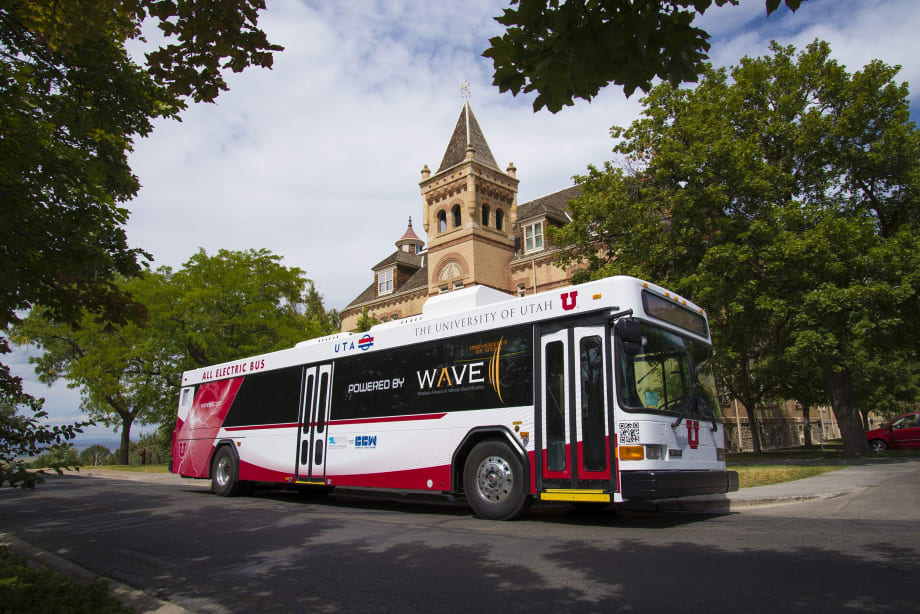
Founded in 2011, WAVE is a technology company focused on creating practical and economical solutions for the transit and off-road industrial electric vehicle markets worldwide.
Photos courtesy WAVE
4 min to read
Founded in 2011, WAVE is a technology company focused on creating practical and economical solutions for the transit and off-road industrial electric vehicle markets worldwide.
Photos courtesy WAVE
As transit agencies all over the world transition to zero-emission electric vehicles, there is a corresponding need to expand the electric utility charging infrastructure that will allow an electric fleet to seamlessly succeed the legacy diesel counterparts. To enable this grand transition to “new energy” infrastructure, many agencies are already implementing wireless charging for their electric fleets, and one of the companies providing this option is Wireless Advanced Vehicle Electrification, or WAVE for short.
Founded in 2011, WAVE is a technology company focused on creating practical and economical solutions for the transit and off-road industrial electric vehicle markets worldwide. WAVE is a developer of inductive charging solutions for medium and heavy-duty vehicles in the U.S., and has demonstrated the capability to develop and integrate high power charging systems onto heavy-duty electric vehicles.
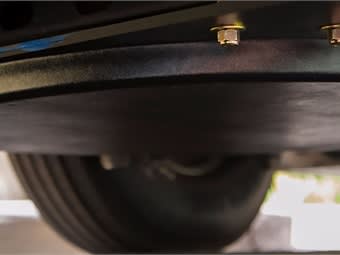
The company’s inductive charging system sends power through the air from a primary pad embedded in the roadway to a secondary receiver pad mounted on the vehicle’s undercarriage, thereby minimizing the need for on-board battery storage. The wireless charging station is comprised of a primary pad embedded in the roadway and an above ground primary enclosure containing power electronics for the system. The charging station is sufficiently ruggedized to serve multiple generations of electric buses, enabled by an easily accessible design that enables future updates and upgrades without major construction.
Benefits
WAVE’s technology offers specific advantages over other charging methods. The inductive power transfer eliminates the hassle of cords or overhead infrastructure. In fact, wireless chargers offer a more aesthetically pleasing option for a transit agency or fleet operator and take up much less space than plug-in or overhead chargers. The system is designed to be interoperable with multiple vehicle OEMs and has completed successful integration with four different vehicle OEMs.
The company initially deployed 50 kW chargers and now has commercial deployments at six U.S. locations. These systems act as en-route chargers, allowing electric buses to charge during layovers as passengers board and disembark, without disrupting normal operations. En-route charging allows electric vehicles to extend their operational range, reduce onboard battery size, and increase the overall life of the battery. The system boasts some of the most successful deployments since 2014, including some running four all-electric buses for up to 16 hours a day, seven-days a week, while maintaining a >50% charger duty-cycle, and prompting the recent installation of an additional charger and four more electric buses.
These successful deployments and increased power demands from more challenging routes have led WAVE to build a 250kW high power wireless charging system that is the most powerful system in the nation, with five times the power of previous wireless charging systems. The 250kW system is a leading-edge product and is already assisting agencies aiming to fully transition their fleets to 100% electric.

The company’s inductive charging system sends power through the air from a primary pad embedded in the roadway (top) to a secondary receiver pad mounted on the vehicle’s undercarriage (bottom), thereby minimizing the need for on-board battery storage.
New implementations
WAVE is now mirroring their success into additional markets, including two projects to demonstrate zero-emission range extension technology with ports in California by integrating 250-500kW wireless charging on electric port vehicles. WAVE is delivering a high-power wireless charger for the first ever demonstration of an all-electric container handler. These wireless chargers will significantly accelerate the adoption of zero-emission electric trucks, allowing ports to meet the new zero-emission targets imposed by the State of California.
WAVE was also selected by the Department of Energy to deploy and demonstrate a first-of-its-kind 500kW inductive charger to support zero-emission battery electric drayage trucks. Embedded directly and discretely into the roadway, WAVE’s system will provide extremely high power en-route charging to the zero-emission drayage trucks, enabling them to complete the rigorous duty cycles associated with around-the-clock freight operations.
Today, wireless charging is widely used among several industries because it offers the promise of increased mobility and advances. The future of wireless charging is not only a world without wires, but a world where charging can be completed while on the move. WAVE continually strives to accelerate its technology to meet the higher power required by heavy-duty electric vehicle markets. With higher power levels and the ability to charge electric vehicles wirelessly, WAVE can be an ideal system for operators. Wireless charging eliminates the need for charging downtime and vehicle rescheduling, illustrating the “Holy Grail” of future transportation.
In the fast-changing environment of electric vehicles and related technologies, the shift toward WAVE would give operators a cutting-edge in an industry based on the growing trend of vehicle autonomy.
Michael Masquelier is CEO at WAVE
More Technology

From Hardware to Digital Partner: Luminator Charts Its Next Chapter
CEO Magnus Friberg discusses Luminator’s shift toward becoming a digital partner, the growing importance of software and interoperability, and how AI can help agencies improve operations and passenger experience.
Read More →
Beyond the Checklist: A Structured Approach to Transit Maintenance
Reliability-Centered Maintenance helps transit agencies move beyond routine checklists to focus limited resources on the assets and failures that have the greatest impact on safety, reliability, and service.
Read More →
NJ TRANSIT Advances Bus Technology Upgrades Across Statewide Fleet
More than 1,500 buses now feature upgraded technology designed to improve arrival predictions and provide free Wi-Fi, with deployment expected to reach nearly 2,000 buses by the end of 2026.
Read More →

Building a Flexible Path to Transit Electrification
John Hroncich discusses BAE Systems’ modular and scalable approach, lessons learned from decades of real-world operations, and how agencies can identify electrification strategies that fit their fleets.
Read More →
Biz Briefs: Alstom Lands Canadian Contract, LYT to Supply California TSP, and More
In METRO's latest installment, we take a look at recent news from Complete Coach Works, Beep, FlixBus, and more partnerships making headlines across the transportation sector.
Read More →
Sponsored•September 8, 2026
From Legacy Silos to Conversational Intelligence
What if transit leaders could ask any operational question and get a trusted answer in seconds? Conversational AI is transforming how agencies use their data.
Read More →
USDOT Announces Rail Vehicle Replacement Grants, Chattanooga AV Shuttle Funding
More than $191 million in federal funding will help three transit agencies replace aging rail vehicles and support a new autonomous shuttle service in Chattanooga.
Read More →
Bus Tech Talk: Keeping Transit Technicians Ahead of the Technology Curve
LA Metro’s Obed Mejia discusses technician training, evolving maintenance technology, fleet replacement, and strategies for getting the most out of today’s transit fleets.
Read More →
Biz Briefs: RIPTA Unveils New Frontrunners, Clevland RTA Adds New Siemens, and More
In METRO's latest installment, we take a look at recent news from Siemens, Prevost, Dodge, and more partnerships making headlines across the transportation sector.
Read More →
Why Simulating Pedestrian Movement Has Become Essential for Modern Rail Stations
Pedestrian microsimulation is helping rail planners identify bottlenecks, test station designs, and prepare complex transit hubs for growing passenger volumes.
Read More →