



Transit App integrates Masabi’s Justride SDK
Users will be able to browse fare types, make payments, and receive mobile tickets — all within the same app they already use for real-time information and multimodal journey planning.

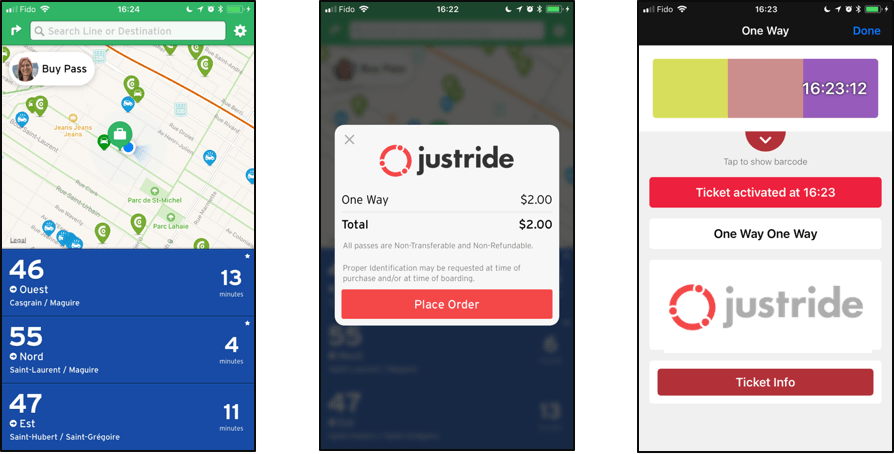
Masabi announced that its Justride SDK is to be integrated into Transit, the most popular public transport app in North America. Users will be able to browse fare types, make payments, and receive mobile tickets — all within the same app they already use for real-time information and multimodal journey planning.
Once a SDK agreement is struck with an agency, tickets will be made available to buy, store, and use inside of Transit’s app. The Justride SDK allows Transit to request fare types, make payments, and deliver visual and barcode tickets to a rider through a ticket wallet. The wallet communicates with Masabi servers to understand complex fare tables and manage the ticket lifecycle and security. Agencies using the SDK will also have access to the Justride Hub, from where they can access a wealth of back office data including real-time sales, usage and validation information, and an extensive customer services interface. Masabi also offers a supporting validation software suite allowing users to scan tickets when boarding the bus, train or subway.
This partnership is a great new option for agencies as Transit is already used by millions of riders across North America for their daily travel. What’s more, Transit lets you natively book carshare vehicles, buy bikeshare passes, and request rideshare. This means agencies can finally offer riders a true one-stop shop that combines every transport mode and lets them buy tickets inside the app that many already use.
The SDK functionality builds on the successful deeplinking integrations that Masabi and Transit have already deployed for NICE Bus on Long Island, Las Vegas RTC, and others. Now with the SDK, mobile ticketing can be deployed to agencies solely through Transit’s app, or run alongside a branded mobile ticketing application. This gives agencies the option of having a dedicated mTicketing service, while increasing ticket access and choice via Transit. The latter is particularly useful for commuters already using Transit, or those visiting one of the 135 cities that Transit already supports.
The Justride SDK is the world’s first mobile ticketing Software Development Kit (SDK) for the public transport industry. Masabi’s mobile ticketing technology is currently in use with more than 30 transport authorities and operators world-wide including; New York’s MTA, Boston’s MBTA, National Express Bus, Las Vegas RTC, Los Angeles Metrolink, and The Hague.
“The smartphone continues to revolutionize the passenger’s relationship with public transport and applications such as Transit are characteristic of this shift,” said Brian Zanghi, CEO of Masabi. “With the addition of Masabi’s mobile ticketing to their app, Transit’s users will be able to plan and execute their journey from a single interface helping make riding public transit more accessible and seamless.”
“This partnership does a fantastic job at leveraging each company’s proven expertise,” said Jake Sion, COO of Transit. “Masabi has invested over a decade at building a world class mobile ticketing solution, and Transit has spent the past five years refining its popular public transport app, achieving widespread adoption among riders and near-perfect app store ratings. We’re excited to finally bring them together for transit riders.”
More Technology

From Hardware to Digital Partner: Luminator Charts Its Next Chapter
CEO Magnus Friberg discusses Luminator’s shift toward becoming a digital partner, the growing importance of software and interoperability, and how AI can help agencies improve operations and passenger experience.
Read More →
Beyond the Checklist: A Structured Approach to Transit Maintenance
Reliability-Centered Maintenance helps transit agencies move beyond routine checklists to focus limited resources on the assets and failures that have the greatest impact on safety, reliability, and service.
Read More →
NJ TRANSIT Advances Bus Technology Upgrades Across Statewide Fleet
More than 1,500 buses now feature upgraded technology designed to improve arrival predictions and provide free Wi-Fi, with deployment expected to reach nearly 2,000 buses by the end of 2026.
Read More →

Building a Flexible Path to Transit Electrification
John Hroncich discusses BAE Systems’ modular and scalable approach, lessons learned from decades of real-world operations, and how agencies can identify electrification strategies that fit their fleets.
Read More →
Biz Briefs: Alstom Lands Canadian Contract, LYT to Supply California TSP, and More
In METRO's latest installment, we take a look at recent news from Complete Coach Works, Beep, FlixBus, and more partnerships making headlines across the transportation sector.
Read More →
From Legacy Silos to Conversational Intelligence
What if transit leaders could ask any operational question and get a trusted answer in seconds? Conversational AI is transforming how agencies use their data.
Read More →
USDOT Announces Rail Vehicle Replacement Grants, Chattanooga AV Shuttle Funding
More than $191 million in federal funding will help three transit agencies replace aging rail vehicles and support a new autonomous shuttle service in Chattanooga.
Read More →
Bus Tech Talk: Keeping Transit Technicians Ahead of the Technology Curve
LA Metro’s Obed Mejia discusses technician training, evolving maintenance technology, fleet replacement, and strategies for getting the most out of today’s transit fleets.
Read More →
Biz Briefs: RIPTA Unveils New Frontrunners, Clevland RTA Adds New Siemens, and More
In METRO's latest installment, we take a look at recent news from Siemens, Prevost, Dodge, and more partnerships making headlines across the transportation sector.
Read More →
Why Simulating Pedestrian Movement Has Become Essential for Modern Rail Stations
Pedestrian microsimulation is helping rail planners identify bottlenecks, test station designs, and prepare complex transit hubs for growing passenger volumes.
Read More →