



TriMet puts first of 70 new Gillig buses into service
Put the first six into service. All the vehicles will be in service by the fall. The 3100s are more fuel- and emissions-efficient and include operator and rider improvements.

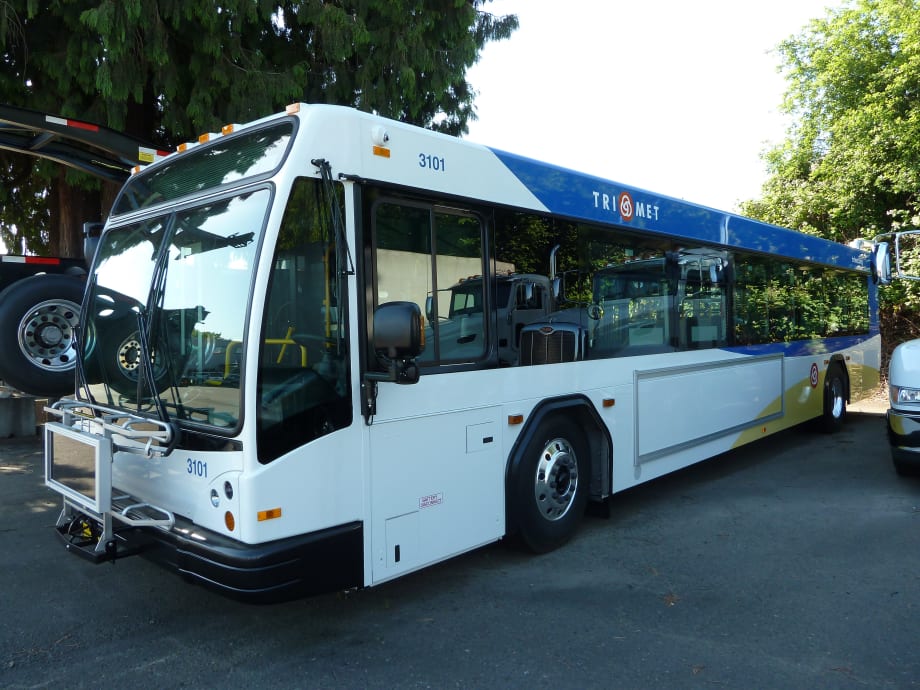
Photo courtesy TriMet.

Portland, Ore.-based TriMet put into service the first six of 70 new Gillig buses to be added to the fleet this summer and fall. Riders will begin to see the new buses, referred to and numbered the 3100-series, on various routes throughout the region.
The 3100s are more fuel- and emissions-efficient and include operator and rider improvements. Like the buses delivered last year, the 3000s, each bus comes with standard air conditioning; automatic stop announcements; easy-to-clean vinyl seats and interior surfaces; larger windows; low floors; handrails and a gently sloping floor at the rear exit; a next-generation GPS dispatch/tracking system and improved windshield visibility for operators.
Many of the exterior features of the new buses match those of the 3000s, including a bright, easy-to-read LED overhead sign on the front of the bus; electric starters for quieter starts; automatic drop-down snow chains; brighter, energy-efficient LED headlights with cornering lights and turning signal lights on the mirrors for safety.
TriMet made modifications to help improve the onboard experience, for both riders and operators, including:
Passenger seats with a composite seat frame that weigh less, costs less, and should show less dirt and finger prints than the stainless steel frames and backs in the 3000s.
Easier boarding for customers in mobility devices due to slight modifications to the lift mobility ramp and a new ramp guard added to help direct mobility devices further into the bus before turning down the aisle.
A ramp warning light inside the vehicle to alert customers on the bus that the ramp is going to deploy.
Higher quality digital cameras, with better image quality, hard drives and improved positioning.
More adjustable operator seats, including the ability to adjust the front of the seat cushion for varying degrees of thigh support or comfort.
Interior side walls will now match the color and texture of the modesty panels, or panels that separate the high seats over the rear wheel well and the seat at the low-floor level.
One bus a day will come off Gillig’s assembly line in Hayward, Calif. The manufacturer will deliver three to five buses per week for roughly 18 weeks this summer and fall. It will take TriMet staff two weeks to get them service ready including DMV title, license and registration. The new buses cost $413,000 each. TriMet will begin to replace fleet vehicles that are highest on the retirement priority list.
The 3100-series have a 2013 EPA compliant engine that has a bit more fuel and emissions efficiency than previous models. The low-emission engines keep pollutants out of the air. Like the 3000-series buses, the new buses have a Cummins diesel engine package designed to reduce tailpipe emissions dramatically. This includes Selective Catalytic Reduction technology, which scrubs nitrogen oxides and particulates from the exhaust.
Additionally, the transmission has a load-based shifting program that can tell when the bus is on a hill with a lot of riders and shifts accordingly to match conditions. Testing in a few 2900s and 3000s has shown improved fuel economy.
Like the 3000 buses, the 3100s have a cooling system that TriMet pioneered, improving fuel efficiency by 5% to 10%. Already in use on many of TriMet’s buses, it uses an electrified subsystem instead of a hydraulic or mechanical fan, so it draws less power off the engine.
More Bus
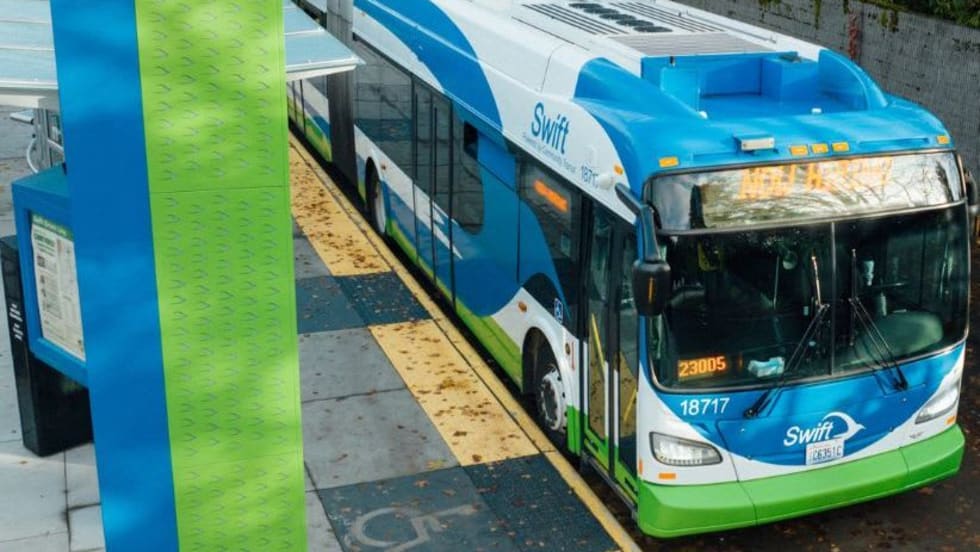
Washington's Community Transit Sets Six-Year Roadmap for Growth, Expansion
Approved TDP targets more bus service, new mobility options, Swift BRT expansion, and a potential Everett Transit annexation.
Read More →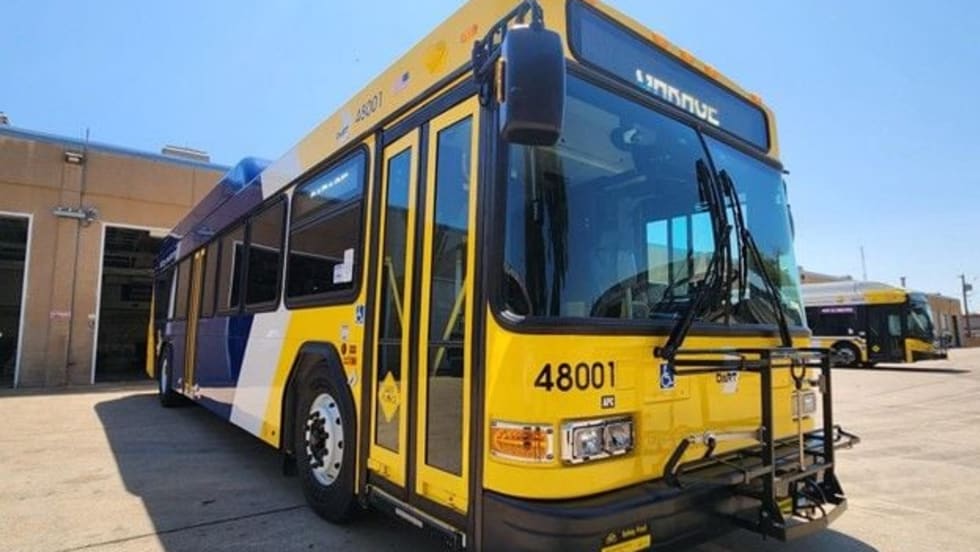
DART Customer Satisfaction Reaches Six-Year High
Overall satisfaction rose to 74.9%, while the agency’s Net Promoter Score reached a record 33.7.
Read More →
How DART's GoPass Is Redefining Regional Mobility
Serving 14 transit agencies, GoPass simplifies multimodal travel by allowing riders to plan, pay for, and manage an entire trip through one app.
Read More →
Biz Briefs: OCTA Taps Clean Energy for Hydrogen Station, Stadler to Supply Via Rail Vehicles, and More
From manufacturers and suppliers to transit agencies and motorcoach operators, these updates offer a snapshot of the projects, partnerships and business moves driving the industry forward.
Read More →
METRO Magazine Announces 2026 Innovative Solutions Awards Winners
Projects Recognized for Advancing Mobility Through Technology, Accessibility, Workforce Innovation, and Operational Excellence
Read More →
Biz Briefs: STV teams with Amtrak, Motorcoach Operators Boost Fleet and Land Contracts, and More
From manufacturers and suppliers to transit agencies and motorcoach operators, these updates offer a snapshot of the projects, partnerships and business moves driving the industry forward.
Read More →
LA Metro Marks Banner Year, Sets Ambitious Goals for New Fiscal Year
Incoming LA Metro Board Chair and Los Angeles Mayor Karen Bass joined outgoing Board Chair Fernando Dutra and LA Metro CEO Stephanie Wiggins to review accomplishments from fiscal year 2026, which included the opening of new rail extensions, advancement of major transit projects, expanded safety programs, and new rider amenities.
Read More →
DART Taps Nathaniel P. Ford Sr. as Next President/CEO
Since 2012, Ford has served as the CEO of the Jacksonville Transportation Authority
Read More →
AC Transit’s Cecil Blandon on Building the Next Generation of Transit Maintenance Leaders
The agency’s maintenance chief discusses leadership, workforce development, zero-emission technology, and preparing technicians for the future of public transportation.
Read More →
Building the Next Generation of Transit Technology
In this edition of METROspectives, Luminator CEO Magnus Friberg discusses the company's transformation, the growing role of AI and software, and what's next for transit technology.
Read More →