



University of Iowa bus system handles high waters
Service provided transportation for all but two days of unprecedented flooding.


Employees of the campus bus service at the University of Iowa helped to protect the bus garage from floodwaters.
[IMAGE]Iowa-Sandbagging.jpg[/IMAGE]
Record flooding last month put extraordinary stress on the University of Iowa in Iowa City. The university, with east and west campuses bisected by the Iowa River, saw as many as 19 buildings damaged by the flood waters.
But the university transit service, called Cambus, was able to provide transportation for all but two days of the unprecedented flooding. “We canceled service for just one weekend, June 14 and 15, and ran modified service for the following week,” said Cambus spokesperson Carol Pustell.
Pustell said Cambus was kept apprised of flood developments by the public safety department but was often left to its own devices. “It was very chaotic,” she said. “Honestly, we figured things out as we went.”
Pustell said the fleet’s 25 buses suffered little damage, thanks to preventive measures taken by the department. Cambus employees, she said, sandbagged the fleet’s maintenance facility, located on the riverfront, before waters reached flood levels. “We also moved as much equipment as we could to our office locations,” she said. The only damage at the bus garage was a flooded pit.
Cambus also assisted emergency evacuation of a student apartment building called Hawkeye Court. Pustell said Cambus shuttled students from the complex to a downtown location on the other side of the river. Cambus also helped to shuttle sandbagging volunteers to various areas of the campus.
Although some street sinkholes still require campus buses to make some route deviations, “the worst of it is pretty much over,” Pustell said.
More Bus

Finding the ‘Happy Medium’: Optimizing Maintenance Without Sacrificing Reliability
The key to maintenance optimization isn’t doing less work—it’s doing the right work at the right time on the right assets.
Read More →
LA Metro, City of West Hollywood, and Partners Advance Smarter Bus Lane Enforcement
The award-winning partnership combines AI-powered detection with human oversight to improve bus reliability, accessibility, and enforcement efficiency.
Read More →
PSTA Modernizes Workforce Management with Digital Bidding System
The award-winning Workforce Transit Modernization project replaced paper bidding with a transparent digital platform, cutting administrative effort while improving access for operators.
Read More →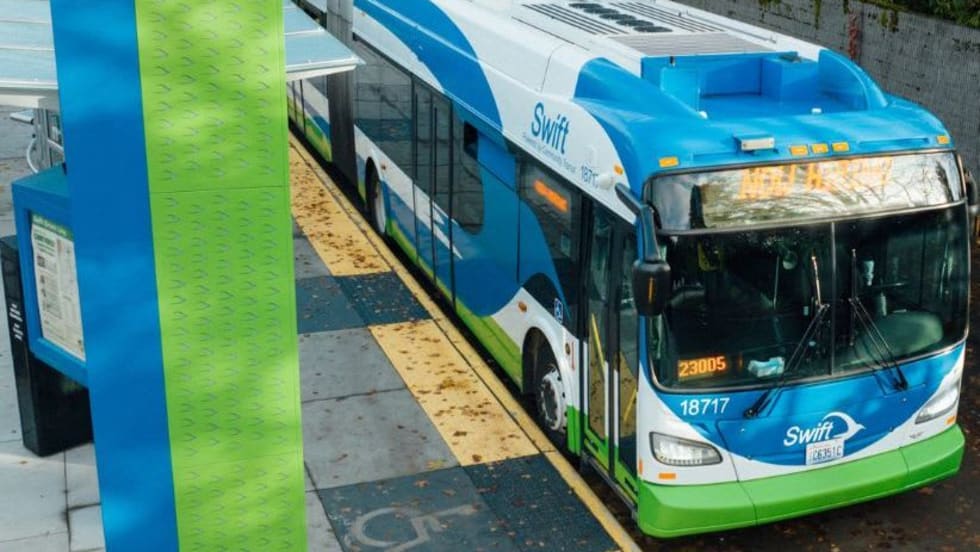
Washington's Community Transit Sets Six-Year Roadmap for Growth, Expansion
Approved TDP targets more bus service, new mobility options, Swift BRT expansion, and a potential Everett Transit annexation.
Read More →
DART Customer Satisfaction Reaches Six-Year High
Overall satisfaction rose to 74.9%, while the agency’s Net Promoter Score reached a record 33.7.
Read More →
How DART's GoPass Is Redefining Regional Mobility
Serving 14 transit agencies, GoPass simplifies multimodal travel by allowing riders to plan, pay for, and manage an entire trip through one app.
Read More →
Biz Briefs: OCTA Taps Clean Energy for Hydrogen Station, Stadler to Supply Via Rail Vehicles, and More
From manufacturers and suppliers to transit agencies and motorcoach operators, these updates offer a snapshot of the projects, partnerships and business moves driving the industry forward.
Read More →
METRO Magazine Announces 2026 Innovative Solutions Awards Winners
Projects Recognized for Advancing Mobility Through Technology, Accessibility, Workforce Innovation, and Operational Excellence
Read More →
Biz Briefs: STV teams with Amtrak, Motorcoach Operators Boost Fleet and Land Contracts, and More
From manufacturers and suppliers to transit agencies and motorcoach operators, these updates offer a snapshot of the projects, partnerships and business moves driving the industry forward.
Read More →
LA Metro Marks Banner Year, Sets Ambitious Goals for New Fiscal Year
Incoming LA Metro Board Chair and Los Angeles Mayor Karen Bass joined outgoing Board Chair Fernando Dutra and LA Metro CEO Stephanie Wiggins to review accomplishments from fiscal year 2026, which included the opening of new rail extensions, advancement of major transit projects, expanded safety programs, and new rider amenities.
Read More →