



UT Profile: Baylor U. shuttles crucial to easing congestion
As the University moves parking to the perimeters of campus in an effort to become more pedestrian-friendly and ease traffic, the Baylor University Shuttle and the DASH have gained a 30 percent increase in ridership.

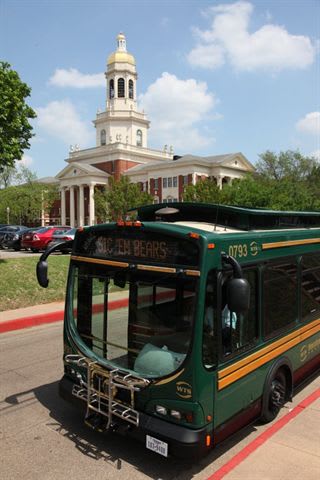
The Baylor University Shuttle (BUS) significantly mitigates much of the parking congestion on campus. The Red route, which travels to two major apartment complexes that are located across a major thoroughfare, is almost filled to capacity in peak hours.
[IMAGE]BaylorBUS-2.jpg[/IMAGE] Waco, Texas-based Baylor University’s two shuttle bus systems, the DASH and the Baylor University Shuttle (BUS), are helping the school in its effort to make the campus more pedestrian-friendly and ease traffic congestion.
The University has held a contract with Waco Transit since 2000. The agency provides six 35-foot Opus buses to circulate both on and off-campus, Matt Penney, director, parking and transportation services, Baylor University, said. All six BUS routes begin running at 7:30 a.m. on 15-minute headways, and conclude service by 5:30 p.m. daily.
[IMAGE]BaylorUDASHbus2011-6.jpg[/IMAGE] The DASH, which began operating in August, 2009 to provide more access to downtown Waco, was created through collaboration between the Downtown Merchants Association Development and Public Improvement District and Baylor University. It brings students to campus from nearby apartments and offers an outlet for anyone on campus to visit downtown retailers and restaurants.
Before 2000, there were only a handful of buses running on the campus. The system gradually developed from one or two buses into the well-planned system that it is today, Penney said. Students pay a small fee to fund the service and get to ride without paying a fare. “You can just hop on, whether you’re a student or not, and ride to wherever you need to go on campus,” he added.
The biggest benefit of the two shuttle services is bringing those students that use a car to commute to Baylor from some of the remote parking areas on campus. “That connection can’t be made without the transit service,” Penney explained. “Without the shuttles, it [would be] really hard to require students to go certain places or do certain things because they wouldn’t be able to get there.”
BUS also significantly mitigates much of the parking congestion on campus. The Red route, which travels to two major apartment complexes that are located across a major thoroughfare, is almost filled to capacity in peak hours. It brings students right to the heart of campus. “Those are all students that don’t bring cars, which benefits the entire campus,” Penney said.
To enhance the service further, Baylor is looking into using real-time data. In a couple of years the University also plans to offer a later night campus bus service. “We’ve had one in the past, but the demand wasn’t there, so with limited resources we decided not to continue that, but we still see a limited need for it. That’s one of the things we evaluate every year.”
One of Baylor’s most recent changes has been to slowly remove interior parking and head toward parking on the perimeters of campus. The University is currently transitioning to a residential campus. “We’re starting to remove the parking from the interior of campus to the exterior and making it a walking campus,” Penney said. "Consequently, BUS fulfills that increasing need for on-campus transportation and the students are responding to that by riding. It’ll continue to head in that direction for the next several years.”
Promotion of the service, which includes showcasing a BUS vehicle at Freshman Orientation, and during the first couple of days of the fall semester, while students are moving in, is paying off, Penney said. Ridership, on the DASH in particular, is up by 30 percent. “We’ve done something right with our bus service, and we just need to continue doing what we’re doing.”
METRO Editor: If you would like to see a UT profile of your university transit system here, send your information to info@metro-magazine.com.
More Bus
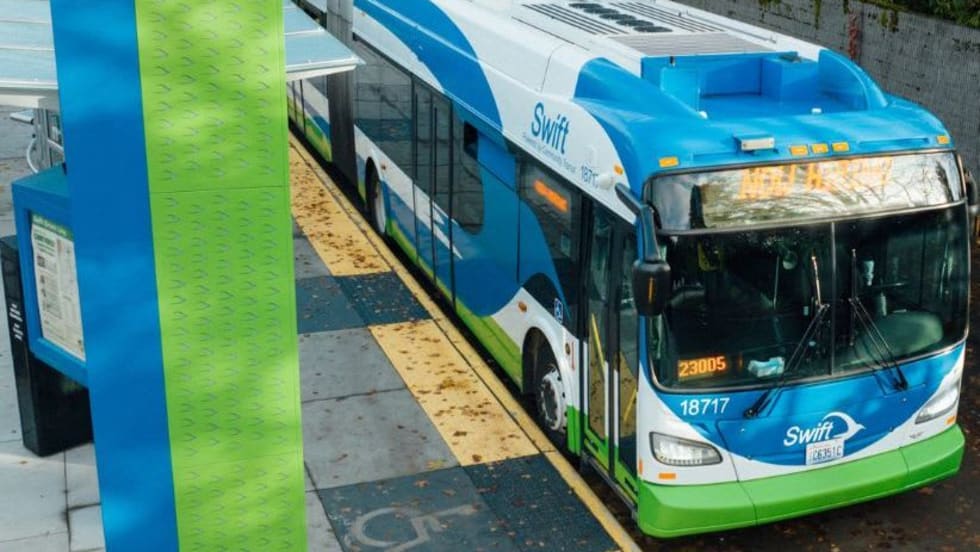
Washington's Community Transit Sets Six-Year Roadmap for Growth, Expansion
Approved TDP targets more bus service, new mobility options, Swift BRT expansion, and a potential Everett Transit annexation.
Read More →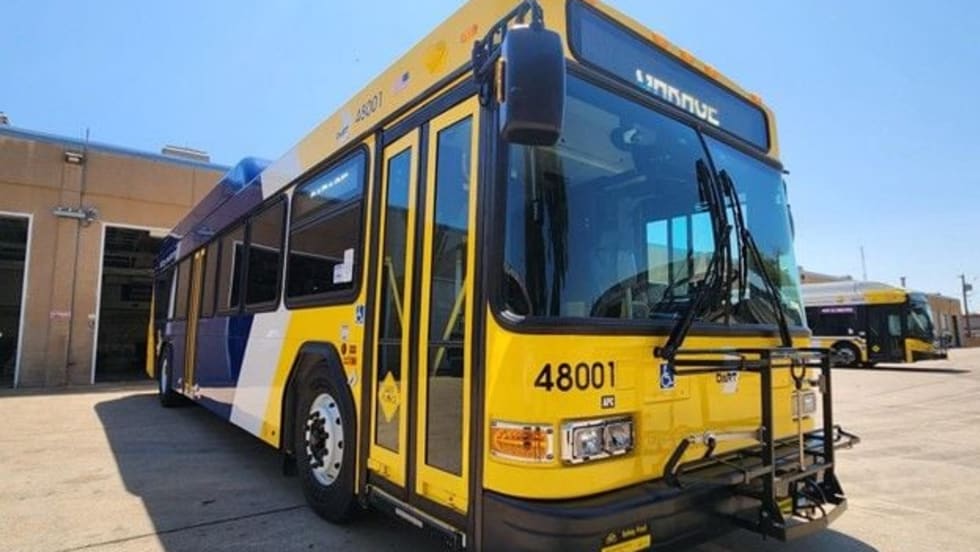
DART Customer Satisfaction Reaches Six-Year High
Overall satisfaction rose to 74.9%, while the agency’s Net Promoter Score reached a record 33.7.
Read More →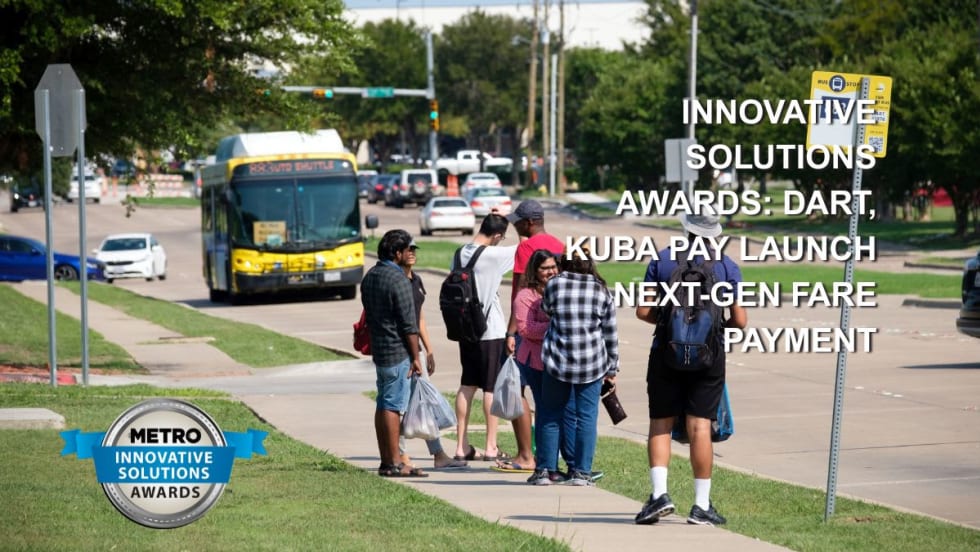
How DART's GoPass Is Redefining Regional Mobility
Serving 14 transit agencies, GoPass simplifies multimodal travel by allowing riders to plan, pay for, and manage an entire trip through one app.
Read More →
Biz Briefs: OCTA Taps Clean Energy for Hydrogen Station, Stadler to Supply Via Rail Vehicles, and More
From manufacturers and suppliers to transit agencies and motorcoach operators, these updates offer a snapshot of the projects, partnerships and business moves driving the industry forward.
Read More →
METRO Magazine Announces 2026 Innovative Solutions Awards Winners
Projects Recognized for Advancing Mobility Through Technology, Accessibility, Workforce Innovation, and Operational Excellence
Read More →
Biz Briefs: STV teams with Amtrak, Motorcoach Operators Boost Fleet and Land Contracts, and More
From manufacturers and suppliers to transit agencies and motorcoach operators, these updates offer a snapshot of the projects, partnerships and business moves driving the industry forward.
Read More →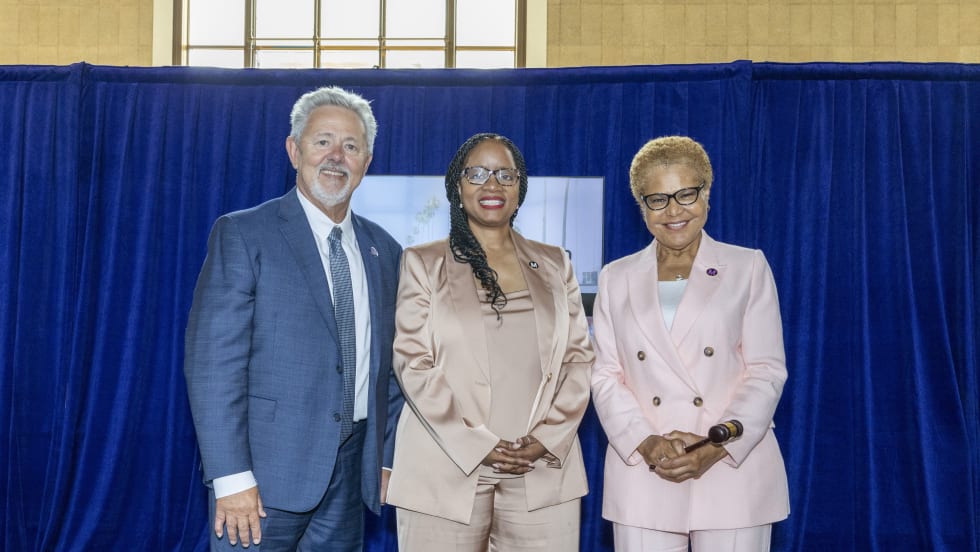
LA Metro Marks Banner Year, Sets Ambitious Goals for New Fiscal Year
Incoming LA Metro Board Chair and Los Angeles Mayor Karen Bass joined outgoing Board Chair Fernando Dutra and LA Metro CEO Stephanie Wiggins to review accomplishments from fiscal year 2026, which included the opening of new rail extensions, advancement of major transit projects, expanded safety programs, and new rider amenities.
Read More →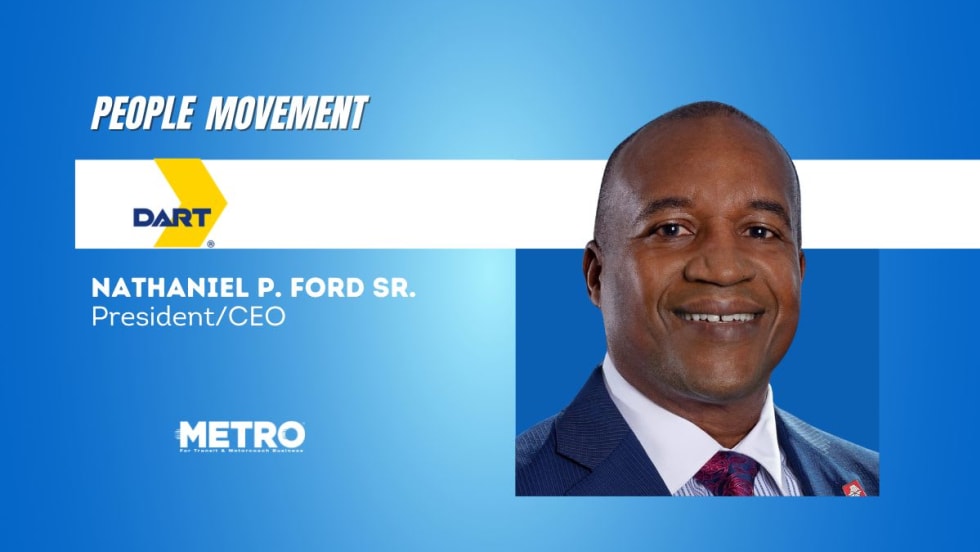
DART Taps Nathaniel P. Ford Sr. as Next President/CEO
Since 2012, Ford has served as the CEO of the Jacksonville Transportation Authority
Read More →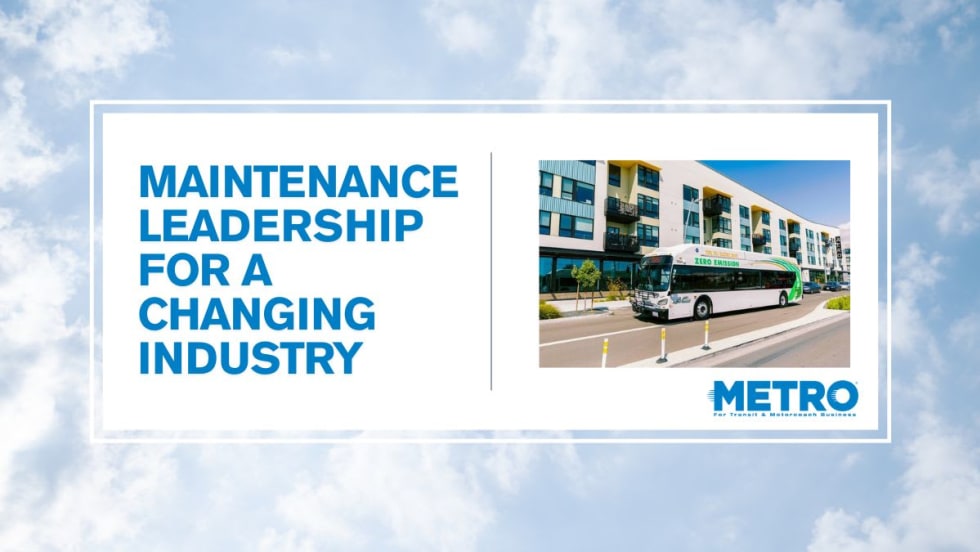
AC Transit’s Cecil Blandon on Building the Next Generation of Transit Maintenance Leaders
The agency’s maintenance chief discusses leadership, workforce development, zero-emission technology, and preparing technicians for the future of public transportation.
Read More →
Building the Next Generation of Transit Technology
In this edition of METROspectives, Luminator CEO Magnus Friberg discusses the company's transformation, the growing role of AI and software, and what's next for transit technology.
Read More →