



Visa, partners bring contactless fare payment to worldwide transit operators
Rather than installing brand new turnstiles or hardware, transit operators can install the Visa SAM, which is based on secure EMV® contactless technology, directly into existing systems.

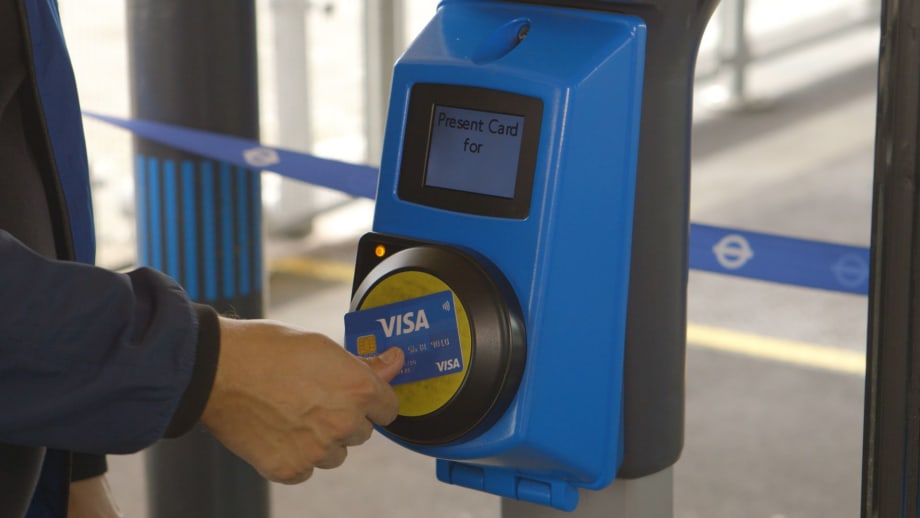
The Visa SAM is the first technology of its kind for the transit industry, available to all Visa Ready technology partners, making it easy for other transit hardware and software companies to incorporate it into their offerings.
Visa
The Visa SAM is the first technology of its kind for the transit industry, available to all Visa Ready technology partners, making it easy for other transit hardware and software companies to incorporate it into their offerings.
Visa
Visa and Planeta Informatica are launching new technology that enables public transit operators worldwide to implement contactless payments “faster and easier than ever.” The Visa Secure Access Module (SAM) makes it easy for transit organizations and operators to begin offering riders the ability to tap to pay with a contactless card, phone, or wearable device, without the expense and technical requirements of replacing current turnstiles or terminal hardware.
Contactless payments are shaping the future of mass transit in major cities around the world, helping riders save valuable time by eliminating the need to stand in line to buy or re-load a ticket. For transit operators that have invested in turnstiles and terminal readers recently, the Visa SAM may be a cost-effective solution to offer the benefits of a contactless transit experience, including improving the customer experience, boosting ridership, and reducing ticketing overheads. Rather than installing brand new turnstiles or hardware, transit operators can install the Visa SAM, which is based on secure EMV® contactless technology, directly into existing systems, significantly decreasing cost and implementation time.
The Visa SAM is the first technology of its kind for the transit industry, available to all Visa Ready technology partners, making it easy for other transit hardware and software companies to incorporate it into their offerings.
“Through our work with Planeta Informatica, we have pioneered a way to accelerate the shift to contactless transit that is scalable and highly secure, while generating time and cost savings for transit operators by removing the hurdles of replacing potentially thousands of transit readers across the transport system,” said Nick Mackie, global head of urban mobility for Visa.
In a global study commissioned by Visa, “The Future of Transportation: Mobility in the Age of the Megacity,” Visa found complexity in payment is often a point of frustration among commuters on mass transit today, so, solutions like contactless transit that make payments easier could be critical to increasing ridership and satisfaction in the future. Commuters reported that the average use of mass transit would increase by 27% if it was easier to pay, with 47% saying the need to obtain different tickets for different modes of travel is an issue.
The launch of the Visa SAM builds on Visa’s experience helping transit operators around the world find the best, most cost-effective way to address increasing pressures on their existing infrastructure while also investing in the technologies that will serve them in the future. Over the past year alone, Visa helped launch contactless transit solutions in 20 cities across 12 countries, with more than 150 projects currently underway.
Visa and Planeta Informatica have partnered with Ingenico Group to implement the Visa SAM as part of the launch of contactless transit with Metro Rio in late April.
More Technology

From Hardware to Digital Partner: Luminator Charts Its Next Chapter
CEO Magnus Friberg discusses Luminator’s shift toward becoming a digital partner, the growing importance of software and interoperability, and how AI can help agencies improve operations and passenger experience.
Read More →
Beyond the Checklist: A Structured Approach to Transit Maintenance
Reliability-Centered Maintenance helps transit agencies move beyond routine checklists to focus limited resources on the assets and failures that have the greatest impact on safety, reliability, and service.
Read More →
NJ TRANSIT Advances Bus Technology Upgrades Across Statewide Fleet
More than 1,500 buses now feature upgraded technology designed to improve arrival predictions and provide free Wi-Fi, with deployment expected to reach nearly 2,000 buses by the end of 2026.
Read More →

Building a Flexible Path to Transit Electrification
John Hroncich discusses BAE Systems’ modular and scalable approach, lessons learned from decades of real-world operations, and how agencies can identify electrification strategies that fit their fleets.
Read More →
Biz Briefs: Alstom Lands Canadian Contract, LYT to Supply California TSP, and More
In METRO's latest installment, we take a look at recent news from Complete Coach Works, Beep, FlixBus, and more partnerships making headlines across the transportation sector.
Read More →
From Legacy Silos to Conversational Intelligence
What if transit leaders could ask any operational question and get a trusted answer in seconds? Conversational AI is transforming how agencies use their data.
Read More →
USDOT Announces Rail Vehicle Replacement Grants, Chattanooga AV Shuttle Funding
More than $191 million in federal funding will help three transit agencies replace aging rail vehicles and support a new autonomous shuttle service in Chattanooga.
Read More →
Bus Tech Talk: Keeping Transit Technicians Ahead of the Technology Curve
LA Metro’s Obed Mejia discusses technician training, evolving maintenance technology, fleet replacement, and strategies for getting the most out of today’s transit fleets.
Read More →
Biz Briefs: RIPTA Unveils New Frontrunners, Clevland RTA Adds New Siemens, and More
In METRO's latest installment, we take a look at recent news from Siemens, Prevost, Dodge, and more partnerships making headlines across the transportation sector.
Read More →
Why Simulating Pedestrian Movement Has Become Essential for Modern Rail Stations
Pedestrian microsimulation is helping rail planners identify bottlenecks, test station designs, and prepare complex transit hubs for growing passenger volumes.
Read More →