




Check Out:WMATA Adding New Bus Stop Signs as Part of Better Bus Network
WMATA Celebrates Three Years of Joint Development Project Successes
Agency projects add homes, offices, and millions in tax revenue as WMATA fast-tracks more joint development deals.
July 3, 2025
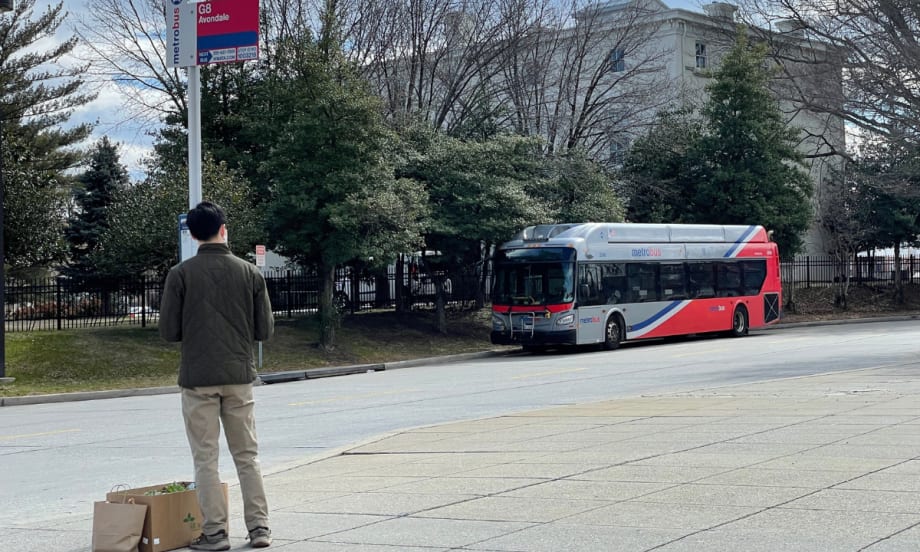
WMATA is nearly halfway towards achieving its goal of 20 additional joint development agreements by 2032.
Photo: Washington Metropolitan Area Transit Authority
3 min to read
The Washington Metropolitan Area Transit Authority (WMATA) recently announced a new progress report highlighting three years of success for the metro’s joint development real estate program.
The agency’s joint development program collaborates with developers to build housing, offices, and other amenities on WMATA's property. It is a form of transit-oriented development that generates new ridership and revenue and adds new housing, jobs, and tax revenue to the region.
So far, the program has delivered eight projects in three years totaling 1,490 residential units (813 affordable) and one million square feet of office space, resulting in $15 million in new annual tax revenue for local jurisdictions according to a new progress report on the metro’s 10-Year Strategic Plan.
Five new developments, either under construction or expected to break ground in 2025, will add another 1,270 residential units and 422,000 square feet of office, generating $22 million in new annual tax revenue.
“Metro has completed more joint development projects than any other transit system in the nation, and we’re not slowing down,” said WMATA GM/CEO Randy Clarke. “Over the last three years, the metro team has developed and implemented strategies to accelerate joint development because we know the value that it brings to the region’s economy, residents, and the metro system.”
WMATA Accelerates Joint Development Push, Unveils New Tracker
WMATA is nearly halfway towards achieving its goal of 20 additional joint development agreements by 2032. Since 2022, the agency’s board has approved five new joint development agreements, and staff are in negotiations on four additional agreements.
To achieve this milestone, WMATA has updated transaction templates, streamlined processes, and retained external real estate advisors and counsel, with a goal to complete future negotiations in six to nine months.
Plus, the agency recently executed an amended Joint Development Agreement for Takoma with EYA for a 434-unit residential building with 17,000 square ft. of retail and a 1.8-acre park, and a Joint Development Agreement for Twinbrook with Hines will be executed this month. The Twinbrook joint development includes a 437-unit residential building with 5,000 square feet of retail. Both projects are expected to break ground in 2027.
To give the WMATA’s stakeholders and the public increased visibility into the joint development program, the agency is launching a new Joint Development Tracker that shows all completed projects, their fiscal impact, and future development sites.
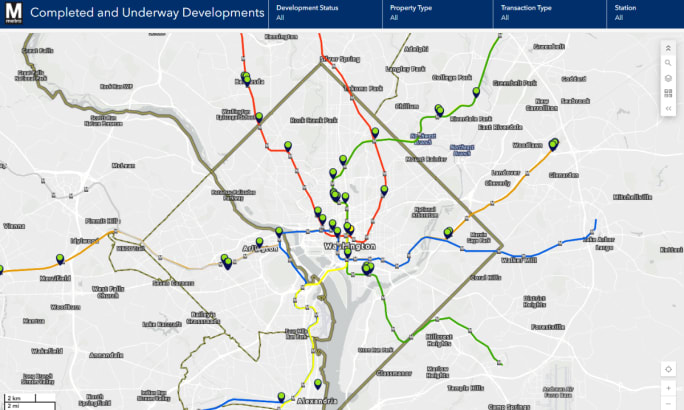
WMATA is launching a new Joint Development Tracker that shows all completed projects, their fiscal impact, and future development sites.
Source: Washington Metropolitan Area Transit Authority
Plotting the Next Wave of Transit Growth
In 2024, WMATA released four solicitations, from which they selected developers for two stations and a third is expected this fall.
According to an agency statement, the agency’s site planning and solicitation process reduces risk and increases site marketability through right-sizing transit facilities, controlling the cost of replacement assets, and utilizing updated solicitation templates.
WMATA’s 2025 Progress Report identifies 29 million square feet of remaining development potential across 41 stations, with the potential to generate an additional $300 million in new annual tax revenue. Station prioritization groupings help the metro staff manage internal resources, and local jurisdictions understand and proactively address challenges to development.
Since 1975, WMATA’s 59 projects have created 10,800 residential units, 5.7 million square feet of office development, and 1.3 million square feet of retail development across 32 stations, generating $220 million in annual tax revenue.
More Management
APTA Honors 2026 Award Winners, Hall of Fame Inductees at TRANSform & EXPO
Innovations in autonomous and zero-emission transportation, standout transit systems, and industry leadership took center stage among this year's honorees.
Read More →
7 Ways to Build a Better Transit Internship Program
Lessons from DRPA/PATCO’s approach to creating a meaningful internship experience—and developing the next generation of transportation professionals.
Read More →
Scenes from APTA TRANSform & EXPO 2026
Transit leaders, manufacturers, and industry professionals gathered in Chicago to explore new technologies, share ideas, and discuss the future of public transportation.
Read More →
Building Stronger Leaders, More Resilient Transit Teams
Dr. Carol Parker Walsh discusses leadership development, employee retention, workplace culture, and preparing transit’s workforce for AI and automation.
Read More →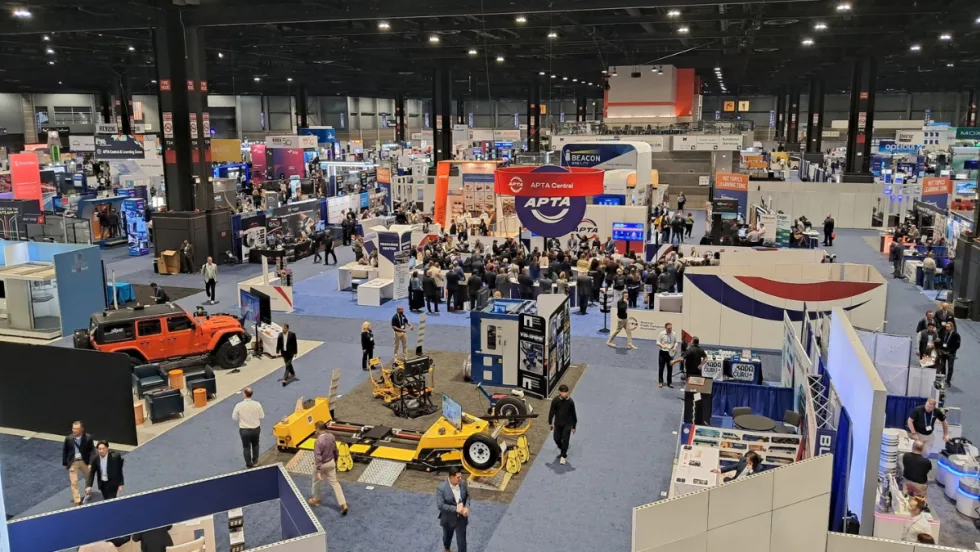
APTA 2026 TRANSform & EXPO Kicks Off in Chicago
After 45 years, APTA returns to Chicago with a focus on next-generation fleets, AI, connected transit networks, and the funding strategies shaping public transportation’s future.
Read More →
New York MTA Warns Federal Tariffs Could Add $1 Billion to Rolling Stock Costs
The agency said tariffs on specialized imported components could reduce the purchasing power of its $23 billion investment in new subway cars, railcars, and buses.
Read More →
From the Show Floor: What Happened at APTA TRANSform & EXPO 2026
See the latest product launches, partnerships, technology updates, and transit industry announcements from APTA TRANSform & EXPO in Chicago.
Read More →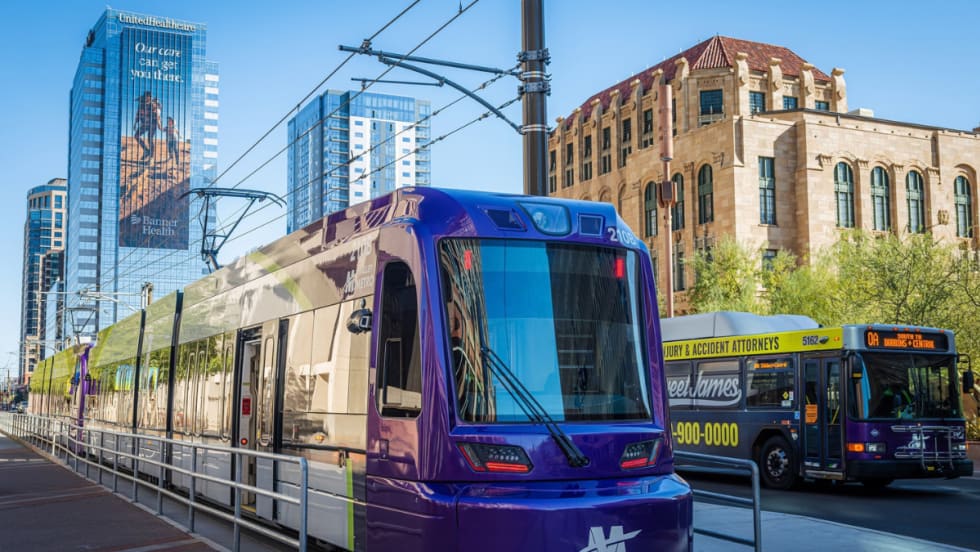
How Valley Metro Is Balancing Transit Growth With the Rider Experience
The APTA award-winning agency is pairing rapid system expansion with investments in workforce, safety, technology, and the fundamentals of transit service.
Read More →
Bus Tech Talk: Keeping Transit Technicians Ahead of the Technology Curve
In this episode of Bus Tech Talk, Complete Coach Works’ Business Development Manager Mark Hollenbeck and METRO’s Executive Editor Alex Roman sit down with Obed Mejia, Senior Technical Trainer for Bus Maintenance, at LA Metro to discuss how rapidly evolving bus technology is changing the maintenance shop — and the skills technicians need to keep pace.
Read More →
Michael Schneider Joins Paslay Group to Expand Transportation Practice
The longtime transportation executive will help Paslay Group grow its advisory and program management work across transit, highway, and other infrastructure sectors.
Read More →