



WMATA Adding New Bus Stop Signs as Part of Better Bus Network
The agency will start installing new bus stop signs in Virginia, with about 7,000 bus stop signs being replaced by WMATA crews over the next three months in anticipation of the June 29 official Better Bus launch date.

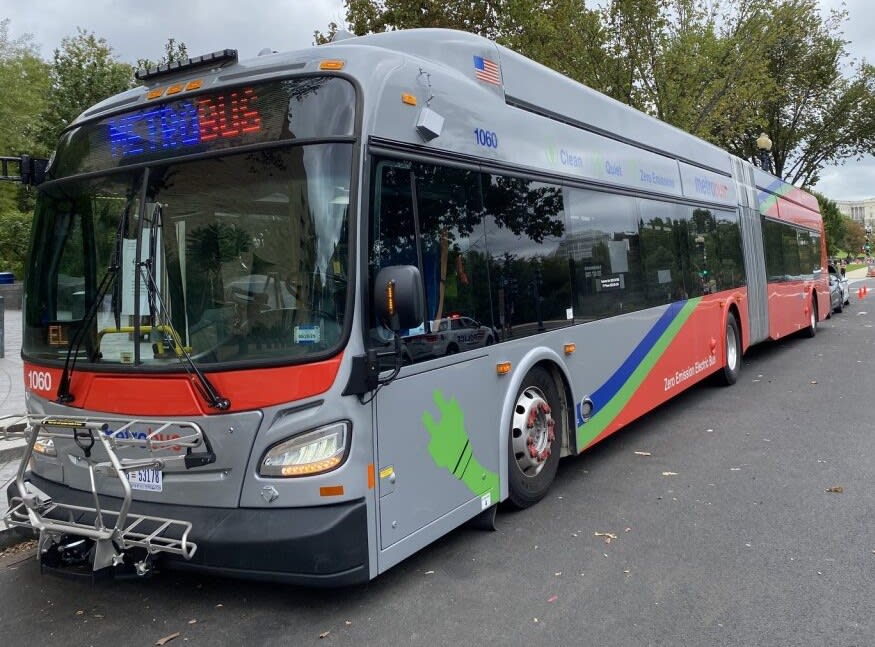
The new bus network will feature new route names, plus route and bus frequency changes that will optimize service for customers across the region.
Photo: WMATA
Some Washington Metropolitan Area Transit Authority (WMATA) Metrobus customers may notice new signage at their bus stop starting the first week of March as the authority marches forward in the effort to implement the newly redesigned Better Bus Network.
The agency will start installing new bus stop signs in Virginia, with about 7,000 bus stop signs being replaced by WMATA crews over the next three months in anticipation of the June 29 official Better Bus launch date.
New Signage, Better Bus Network
The new bus network will feature new route names, plus route and bus frequency changes that will optimize service for customers across the region. The new route names will begin with a letter to indicate the area served.
During the installation, informational signs will be posted at eye level in English and Spanish on signposts to provide riders with additional information, including contact information for reaching WMATA.
Each sign will have the current route name highlighted in blue and the route's ending date, June 28, listed. The new route name will be highlighted in red immediately below the old route with a new start date of June 29.
The bus stop signs will display the destination-end point of the bus, so customers can ensure they are standing on the correct side of the street, providing easier wayfinding.
It will also highlight customer information such as whether the route is 24-hour, the identifying stop number, and a new contact phone number for WMATA’s customer call center.
Customer Feedback, Next Steps
WMATA conducted extensive customer research, including surveying more than 1,000 Transit App users and meeting with representatives from the agency’s Accessibility Advisory Committee to make sure the text, colors, and icons are easy to read and understand.
If a stop has only one bus route, the route name will be displayed at twice the size compared to the old signs making it easier to see.
Signs will also mark the changes at about 500 bus stops that will be consolidated to make bus service faster with fewer stops.
The temporary signs will eventually be replaced with permanent ones. WMATA is using this opportunity to collaborate with local bus providers to imagine a future permanent bus stop sign that displays bus service information across all regional transit providers on a unified sign.
The agency’s plans for the coming months include:
March 3: New signs begin to go up in Virginia.
Winter/Spring: Bus operator training continues.
Spring: New bus signs continue to go up across the region.
Spring: Trip planner updated with new bus routes and names.
Late Spring/Early Summer: In-person education and outreach at bus stops and on buses.
May: Onboard bus announcements alert customers of coming changes.
June 29: New route names, route changes, and bus stop consolidation go into effect.
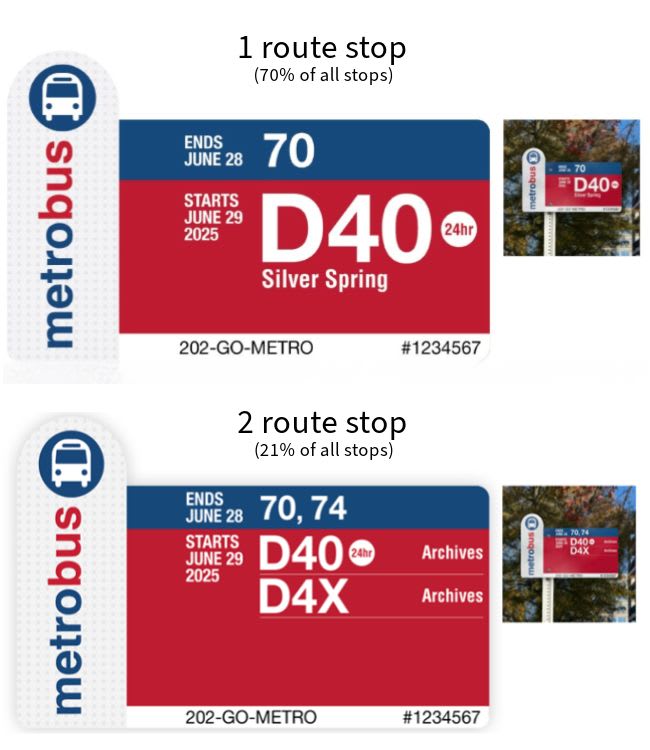
During the installation, informational signs will be posted at eye level in English and Spanish on signposts to provide riders with additional information, including contact information.
Photo: WMATA
WMATA’s Better Bus
Better Bus is WMATA's overarching initiative to improve Metrobus for the region.
In the coming years, Better Bus will mean many things for the region, including new facilities, zero-emissions vehicles, improved bus communications, and more bus lanes and transit signals.
The 2025 Network represents WMATA's commitment to improving service and connections using the resources available to the agency today. It provides a more frequent, consistent bus service between places where people want to go, according to the agency.
Customer input was used to finalize the network, which was approved by WMATA’s board in November 2024.
More Bus

New York MTA Plans Largest Bus Fleet Upgrade in More Than a Decade
The agency is seeking manufacturers for 650 new CNG buses to replace aging vehicles, improve reliability, and advance its broader fleet modernization strategy.
Read More →
Building a Flexible Path to Transit Electrification
John Hroncich discusses BAE Systems’ modular and scalable approach, lessons learned from decades of real-world operations, and how agencies can identify electrification strategies that fit their fleets.
Read More →
Bus Tech Talk: Keeping Transit Technicians Ahead of the Technology Curve
LA Metro’s Obed Mejia discusses technician training, evolving maintenance technology, fleet replacement, and strategies for getting the most out of today’s transit fleets.
Read More →
Biz Briefs: RIPTA Unveils New Frontrunners, Clevland RTA Adds New Siemens, and More
In METRO's latest installment, we take a look at recent news from Siemens, Prevost, Dodge, and more partnerships making headlines across the transportation sector.
Read More →
People Movement: Holly Arnold Joins Transdev and More
In this edition, we also cover recent appointments and announcements at Pace, CamTran, MCI, and more, showcasing the individuals helping to shape the future of transportation.
Read More →
The High Cost of Transit Buses: Industry Leaders Look to Procurement Reform
Transit leaders and policymakers examine how standardized bus designs, streamlined procurement, and predictable funding could help agencies stretch budgets and deliver better service.
Read More →
The Business Voice Behind Public Transportation
As chair of APTA’s Business Members Board of Governors, Ray Melleady explains how more than 850 business members are partnering with transit agencies to advance funding, innovation, and industry-wide collaboration.
Read More →
From Surviving to Thriving: Building Stronger Transportation Organizations
Bus Business Consultants founder Brian Dickson shares lessons on leadership, organizational health, and creating options for long-term success in a changing transportation industry.
Read More →
Finding the ‘Happy Medium’: Optimizing Maintenance Without Sacrificing Reliability
The key to maintenance optimization isn’t doing less work—it’s doing the right work at the right time on the right assets.
Read More →
LA Metro, City of West Hollywood, and Partners Advance Smarter Bus Lane Enforcement
The award-winning partnership combines AI-powered detection with human oversight to improve bus reliability, accessibility, and enforcement efficiency.
Read More →