



WMATA Launches Fare Evasion Warning Campaign
The warning period will conclude in November, and MTPD officers will issue citations to anyone caught not tapping SmarTrip® cards or mobile phones at fare gates, exiting emergency gates in stations, and not tapping fare boxes on Metrobuses.

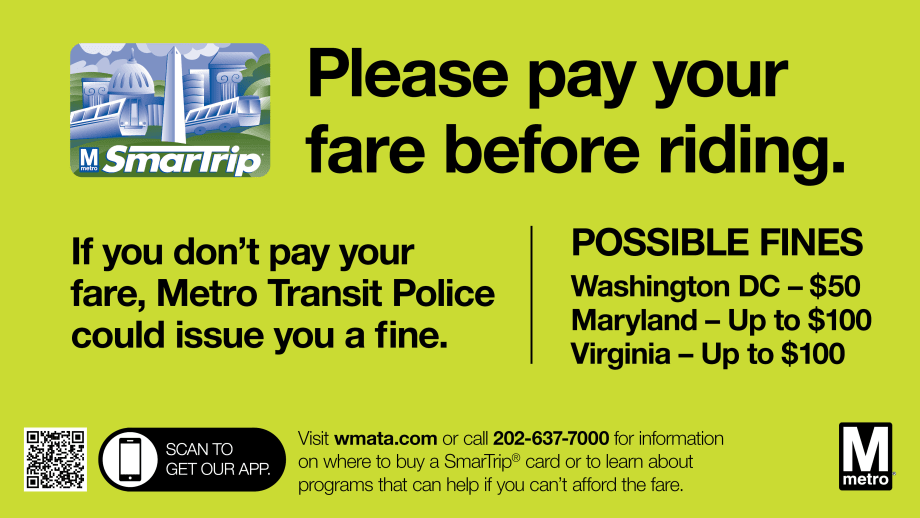
The campaign is designed to raise awareness of fines currently associated with Maryland and Virginia and inform fare evaders of the new civil penalties in the District that will take effect in November.
WMATA
Beginning this week, Washington Metropolitan Area Transit Authority (WMATA) launched a warning campaign to alert people who neglect to pay fares that there are fines associated with fare evasion in each jurisdiction.
The warning campaign will begin with notices displayed on digital signs throughout the system. After the digital signs run for two weeks, Metro Transit Police (MTPD) officers and other WMATA personnel will start distributing physical fliers to fare evaders with the same warning information.
"As I mentioned previously, the region needs to decide what we want Metro to be, and fare policy should be part of the conversation," said GM/CEO Randy Clarke. "Many people have mentioned going to a fare-free model, but fare-free does not mean free. There are costs associated with running the community’s transit system and therefore the necessary revenues must exist to deliver the services the community needs.”
The warning period will conclude in November, and MTPD officers will issue citations to anyone caught not tapping SmarTrip® cards or mobile phones at fare gates, exiting emergency gates in stations, and not tapping fare boxes on Metrobuses.
The campaign is designed to raise awareness of fines currently associated with Maryland and Virginia and inform fare evaders of the new civil penalties in the District that will take effect in November.
In Maryland and Virginia, fare evasion is a criminal offense, while the District has now put in place newly established procedures necessary for MTPD to proceed with enforcing civil citations systemwide.
Tickets are provided by each jurisdiction and until recent action in the District establishing an adjudication and appeals process, WMATA did not have tickets to use in the District. Therefore, the agency did not have the ability to issue fare evasion citations in the District.
Fare evasion is responsible for significant revenue losses and is part of the focus to close a shortfall of nearly $185 million in the upcoming budget. Using data from Metrobus and pre-pandemic industry averages for Metrorail, WMATA conservatively estimates revenue losses due to fare evasion totaling $40 million in fiscal year 2022, or 22% of the total upcoming budget gap. New faregate technology, currently being installed, will allow WMATA to more accurately measure the scale of the problem.
As part of the campaign, the agency is working with local partners to offer resources to make public transit more equitable and affordable for those in need. A low-income fare pilot is getting underway in the District, in addition to a proposal to provide $100 in SmarTrip credit for qualified residents to ride buses and trains.
WMATA is also exploring other methods that will prevent customers from entering rail stations without paying. In November, the agency is expected to begin testing faregate modifications as a preventative measure. Prototypes are in development and will be installed at a selected rail station for employees to test. Some of the modifications being explored include tactile deterrents on top of faregates and higher barriers. Once the initial round of employee testing is completed, customers will be able to try the modified faregate and provide feedback early next year.
More Security and Safety

Transit Agencies Highlight Safety Gains at National Summit
Leaders from 15 major transit systems shared crime-reduction results and safety initiatives while discussing the role of continued federal support.
Read More →
DART Launches Major Security, Fare Enforcement Initiative
The 90-day demonstration will deploy coordinated security teams at five light rail stations while testing controlled access and gathering data to guide future investments.
Read More →
RTD Launches NextRide App to Consolidate Trip Planning, Fares, Security Reporting
The app expands on RTD’s existing NextRide web application and allows customers to view real-time vehicle locations and service alerts, purchase and store digital fares, and access customer support.
Read More →

TAPTCO Updates OSHA Compliance Training for Transit Maintenance Operations
The revamped program addresses 26 OSHA standards for maintenance facilities, with TAPTCO pointing to training, documentation, and everyday shop hazards as continuing challenges for transit operations.
Read More →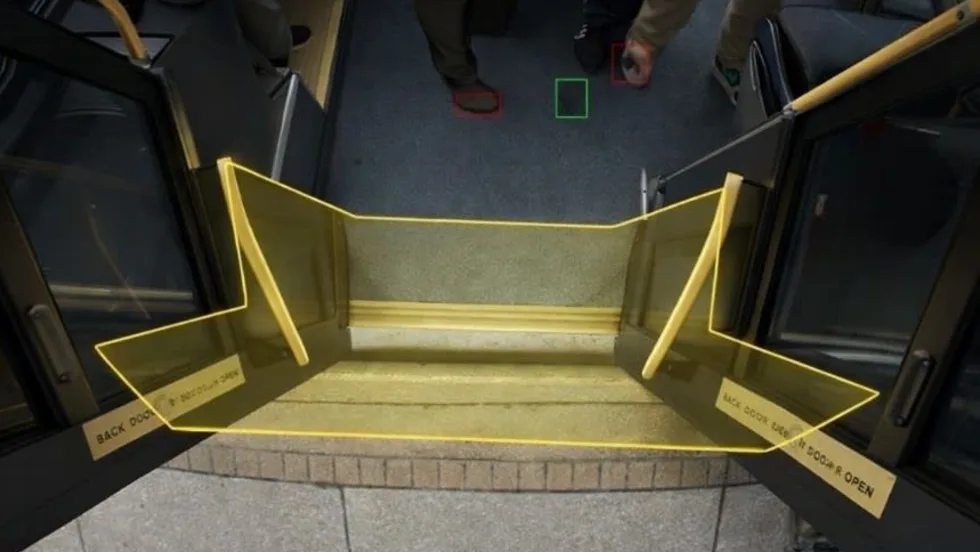
How VaporVision Adds Value to Transit Door Systems
Wabtec engineers explain how the system improves doorway detection, strengthens diagnostics and gives transit agencies and OEMs greater operating flexibility.
Read More →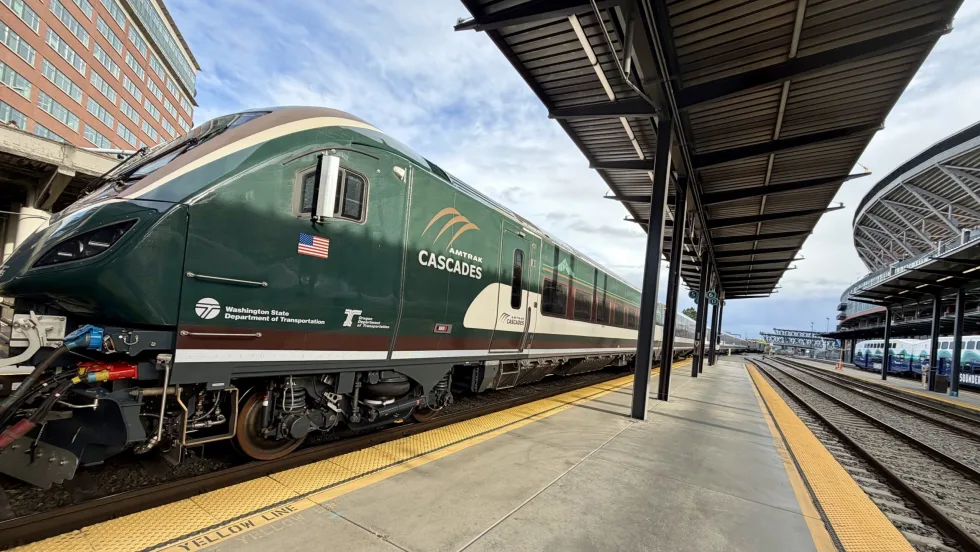
FRA Announces $5.3B in Rail Investments, Including $2B for Amtrak
Funding will support grade-crossing improvements, infrastructure upgrades, and new Amtrak equipment in 23 states.
Read More →
Chicago, Maryland Expand Non-Law-Enforcement Safety, Rider Support
The CTA and MTA are launching new programs aimed at de-escalation, crisis response, rider assistance, and greater transparency.
Read More →
LA Metro, City of West Hollywood, and Partners Advance Smarter Bus Lane Enforcement
The award-winning partnership combines AI-powered detection with human oversight to improve bus reliability, accessibility, and enforcement efficiency.
Read More →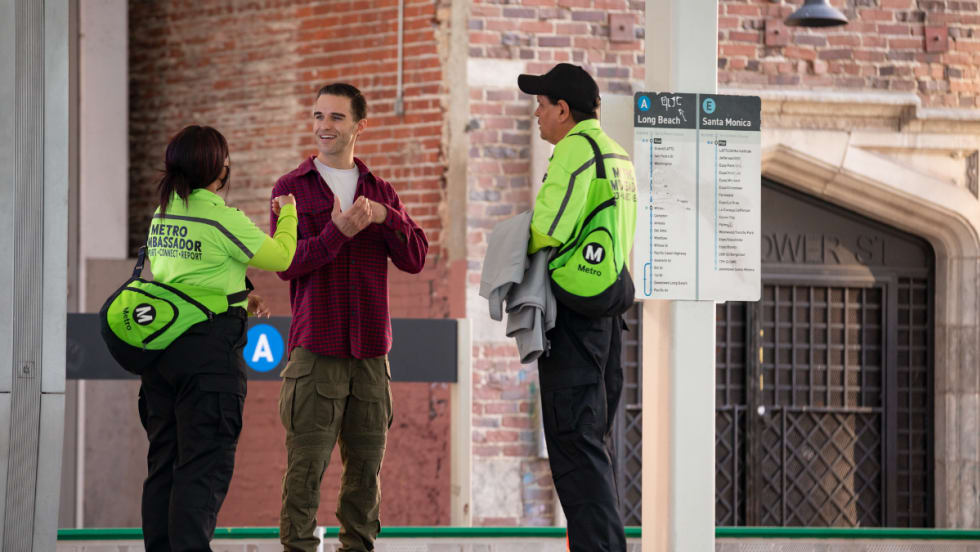
LA Metro Reports 57% Decline in Homelessness on Transit System Since 2024
The agency's latest homelessness count offers new data on how care-based services and cross-sector partnerships can complement traditional transit security strategies.
Read More →
FTA Launches 'Transit Moves America' Dashboard to Highlight Agency Safety and Performance
The online dashboard transforms National Transit Database information into a public-facing resource that allows users to compare transit agencies on key operational and safety metrics.
Read More →