



WMATA Opens Public Comment Period for Proposed Budget
The $4.5 billion capital and operating budget proposal provides a worst-case scenario; however, WMATA’s funding partners are currently working through legislation that may reduce some of the most detrimental fare and service changes proposed.

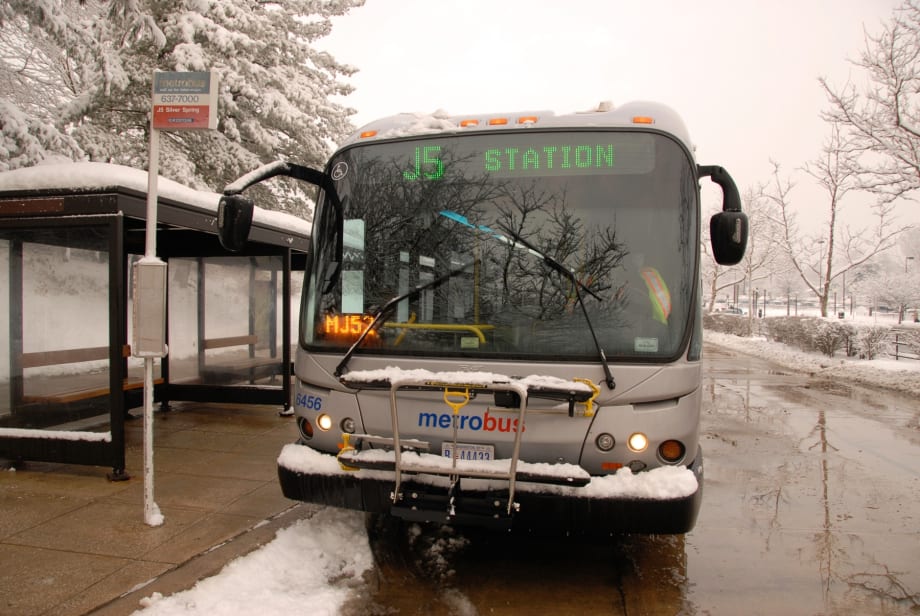
WMATA has taken steps to close the funding gap by reducing administrative costs, using capital funds to cover operating maintenance expenses, and decreasing fare evasion.
WMATA/Larry Levine
Facing an unprecedented $750 million budget shortfall in the coming year, the Washington Metropolitan Area Transit Authority (WMATA) is asking the public to provide feedback on the proposed Fiscal Year 2025 (FY25) Budget, which includes drastic service cuts, fare increases, layoffs, and other severe cost cutting measures.
The $4.5 billion capital and operating budget proposal provides a worst-case scenario; however, WMATA’s funding partners are currently working through legislation that may reduce some of the most detrimental fare and service changes proposed.
The public is being encouraged to review the proposed FY25 budget and provide comments through the agency’s online survey tool, or by attending an in-person or virtual public hearing.
WMATA’s Projected Budget Shortfall
The budget shortfall is the result of several factors, including the end of federal pandemic relief funds, historic inflation pushing costs up, and slower than expected ridership recovery.
The agency has taken steps to close the funding gap by reducing administrative costs, using capital funds to cover operating maintenance expenses, and decreasing fare evasion.
The steps taken alone are not enough, according to the agency. WMATA is legally required to present a balanced budget each year, and the FY25 budget proposals reflect the significant cuts that would be needed if the agency’s local, state, and federal partners are unable to supply the necessary funding.
WMATA’s Proposed Budget
The agency has released a revised FY25 proposed budget based on public funding commitments that keeps operating spending flat with Fiscal Year 2024 and minimizes service changes. Pending this funding, the FY25 Budget proposal would severely limit service and increase costs for customers. These include:
Fares
Up to 25% fare increase.
20% parking rate increase.
Metrobus Service
Eliminate service on 83 of 184 routes.
Reduce service on 51 of 184 routes.
Shorten routes with rail service.
Metrorail Service
Close 10 lower ridership stations.
Decrease service on all lines — weekdays every 15 minutes, weekends every 20 minutes.
Decrease Hours of operation: Close the rail system at 10pm.
Or, keep existing rail system hours and open earlier and close later on weekends: open at 6 a.m. on Saturdays and Sundays, close at 2 a.m. on Fridays and Saturdays.
MetroAccess Paratransit Service
Reduced service area due to a reduction in fixed-route bus service.
Approximately 20% of MetroAccess trips would no longer be served.
More Management

METRO Opens Submissions for 2026 Motorcoach Awards
Nominations are now being accepted for METRO Magazine’s Operator of the Year and Innovative Operator of the Year awards.
Read More →
New York MTA Advances Final Contract for Second Avenue Subway Expansion
Contract Four is the largest in the Second Avenue Subway Phase 2 project and includes construction of station infrastructure, tracks, and signals for the subway expansion, MTA officials said. Work on Contract Four will begin in 2027.
Read More →
Transit Agencies Highlight Safety Gains at National Summit
Leaders from 15 major transit systems shared crime-reduction results and safety initiatives while discussing the role of continued federal support.
Read More →

NITA Names New Leadership, Expands Reduced-Fare Program at First Board Meeting
The new regional transit authority appointed its first board chair and interim executive director while extending reduced fares across CTA, Metra, and Pace for eligible riders.
Read More →
Beyond the Checklist: A Structured Approach to Transit Maintenance
Reliability-Centered Maintenance helps transit agencies move beyond routine checklists to focus limited resources on the assets and failures that have the greatest impact on safety, reliability, and service.
Read More →
APTA 2026 Nominating Committee Selects Leadership Slate, Names Chair and Vice Chair Nominees
Leadership changes will help shape the association’s priorities and its representation of the transportation industry during the 2026–2027 term.
Read More →
DART Launches Major Security, Fare Enforcement Initiative
The 90-day demonstration will deploy coordinated security teams at five light rail stations while testing controlled access and gathering data to guide future investments.
Read More →
Advancing Fare Collection Through Technology and Innovation
Learn about delivering 1300 gates at 91 stations while managing fare evasion. Explore the large scale deployment, solution customization and real-world results that affect the region. Prepare for deployment in your region now.
Read More →
Game Day in Motion: Moving Millions During the 2026 World Cup
Between packed transit stations and team motorcoaches, see how agencies and operators across North America tackled the transportation demands of the 2026 FIFA World Cup.
Read More →
Surface Transportation Extension Averts Shutdown, Leaves Transit Funding Gap
The stopgap keeps federal transportation programs moving, but missing advance funding could complicate the transit and rail projects agencies are planning next.
Read More →