As ridership grows, the agency will continue to incorporate innovative ways to serve customers throughout the region and keep them safe on their journey.
WMATA has taken several steps to reduce fare evasion, including retrofitted faregates at 33 of 98 stations so far, resulting in a 79% decrease in fare evasion at those locations; new, more reliable fareboxes on 60% of WMATA’s 1,500 buses, with a goal of upgrading all buses by the end of summer; and easier access to fare payment through mobile wallet; mobile payments are up 74% on rail and 35% on bus over last year.
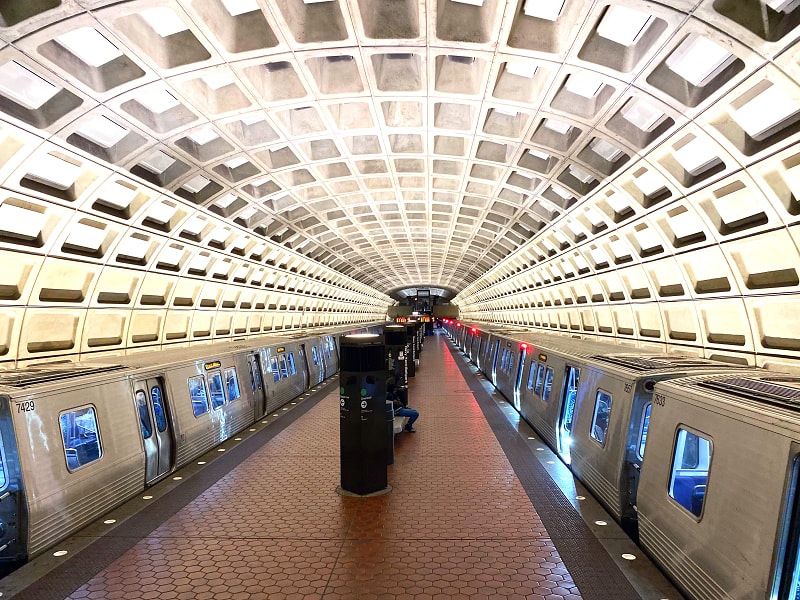
Photo: Larry Levine/WMATA
3 min to read
The Washington Metropolitan Area Transit Authority (WMATA) has seen positive trends in recent months with growing ridership and more customers paying their fares, showing efforts to reduce fare evasion and increase safety are working.
Fare evasion is down 50% on rail compared to last year.
Crime is down 19% in 2024 compared to last year.
Ad Loading...
The Commute is Strong
Peak commute hours in March saw an average of 50,000 entries an hour (from 8-9 a.m. and 5-6 p.m. Monday through Thursday) — a 25% increase over March 2023.
Federal employee trips increased by 33%.
Weekends, Special Events Bring A Boost
Weekend bus and rail ridership is above 2019 levels, thanks to more frequent service.
Smithsonian Station recorded its busiest days since 2019 with 69,000 customers trips on Saturday, March 30.
Navy Yard hit a new post-pandemic high, with 40,000 customer trips on the day of the Nationals home opener.
Connecting the Region
Union Station Metrorail ridership increased 23% over March 2023.
Dulles International Airport station ridership increased 38% over March 2023.
“We have made great efforts to improve service and safety across all hours and all days of the week, and it is paying off,” said WMATA GM/CEO Randy Clarke. “We are moving customers in numbers that we haven’t seen in years, which boosts the economy, decreases congestion, and supports sustainability throughout the region. We thank everyone for taking transit and our team for delivering great service.”
Thanks to new legislation in the District, Metro Transit Police have stepped up fare enforcement efforts, writing hundreds of citations for fare evasion in March and arresting more than 20 people with outstanding warrants.
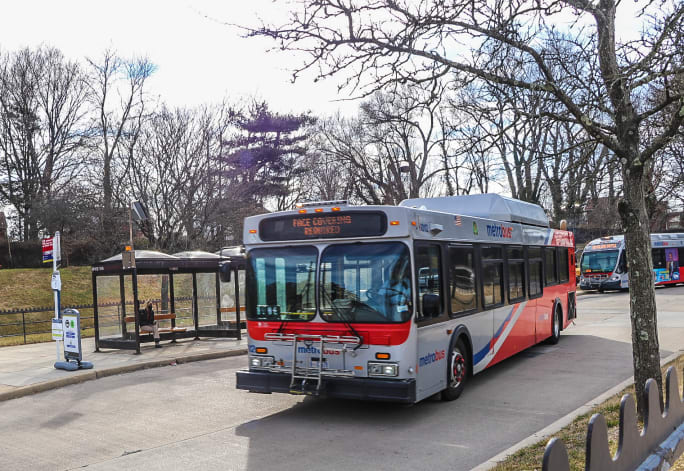
Photo: Larry Levine/WMATA
WMATA Ridership Progress
Meanwhile, paid ridership is up 24% — which means fare evasion is on the decline across the system.
Ad Loading...
WMATA has taken several steps to reduce fare evasion, including:
Retrofitted faregates at 33 of 98 stations so far, resulting in a 79% decrease in fare evasion at those locations.
New, more reliable fareboxes on 60% of WMATA’s 1,500 buses, with a goal of upgrading all buses by the end of summer.
Easier access to fare payment through mobile wallet; mobile payments are up 74% on rail and 35% on bus over last year.
Simplified fare structure and reduced-fare programs for seniors, students, and low-income customers (MetroLift customers have taken more than 500,000 trips since the launch last July).
Fare Enforcement, Crime Impact
Thanks to new legislation in the District, Metro Transit Police have stepped up fare enforcement efforts, writing hundreds of citations for fare evasion in March and arresting more than 20 people with outstanding warrants. Systemwide, fare evasion is down 50% compared to last year.
With the addition of Special Police Officers and increased MTPD patrols throughout the system, crime is down 19% in 2024. Also, WMATA continues to look out for customers with 30,000 cameras systemwide and real-time communication channels to report safety concerns, including the MYMTPD text line.
As ridership grows, the agency will continue to incorporate innovative ways to serve customers throughout the region and keep them safe on their journey.
Proposed legislation would link federal transit dollars to safety measures while requiring security investments, onboard cameras, and new fare collection standards.
The federal agency closed its remaining special directive to the Massachusetts Department of Public Utilities following a safety review that began in 2022.
The 90-day demonstration will deploy coordinated security teams at five light rail stations while testing controlled access and gathering data to guide future investments.
The app expands on RTD’s existing NextRide web application and allows customers to view real-time vehicle locations and service alerts, purchase and store digital fares, and access customer support.
The revamped program addresses 26 OSHA standards for maintenance facilities, with TAPTCO pointing to training, documentation, and everyday shop hazards as continuing challenges for transit operations.
The award-winning partnership combines AI-powered detection with human oversight to improve bus reliability, accessibility, and enforcement efficiency.
The agency's latest homelessness count offers new data on how care-based services and cross-sector partnerships can complement traditional transit security strategies.