



Customer is Always Right: WMATA Taps Reflexions to Modernize Digital Experience
WMATA to Fix Wheels on 7000-Series Railcars
As a preliminary estimate, it will take up to 36 months at a cost of approximately $55 million to repress all 7K wheels.
by Staff
March 1, 2023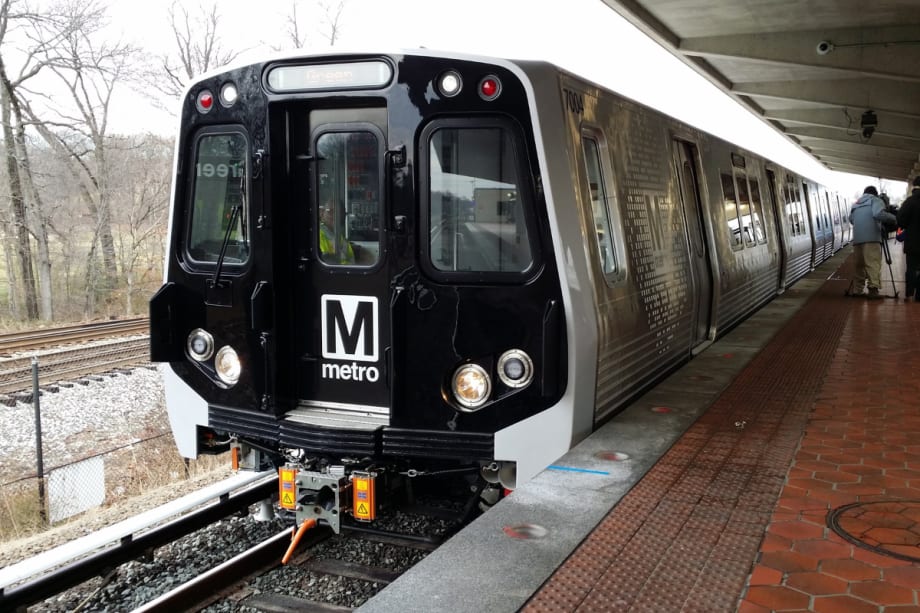
Metro will continue its inspections of wheels with measurements for every 7000-series rail car.
Photo: Ben Schumin (CC BY-SA 2.0)
2 min to read
The Washington Metropolitan Area Transit Authority (Metro) announced its plan to change the way it presses wheels on 7000-series railcars (7Ks) is under development, based on technical data released by the National Transportation Safety Board (NTSB).
“We appreciate the NTSB making the technical reports available so that we can develop our plan to begin repressing wheels on these trains at a higher standard, including the fit onto the axles,” said COO Brian Dwyer. “We are preparing the technical documents and training plan, while we collaboratively advance the next version of our return to service plan for approval by the Washington Metrorail Safety Commission.”
NTSB’s investigation docket release makes it possible for Metro to transparently work toward addressing the cause of the wheel movement with a revised Return to Service Plan (version 4), according to the agency's news release.
While a cause has not been formally announced by NTSB, among the documents released was a report from experts at engineering firm Hatch-LTK which identified a technical issue — microslip due to reduction in contact pressure.
Metro added that its internal and external engineering experts agree that an increase to the fit and press tonnage used to mount rail wheels onto axles is required for the 7Ks. As a preliminary estimate, it will take up to 36 months at a cost of approximately $55 million to repress all 7K wheels.
“The process of changing all 5,984 wheels on 2,992 axles for 748 railcars may take a couple of years to complete,” said Dwyer. “We thank our customers for their patience and want them to know that the good news is we will be able to fix about 20 cars a month to safely build up more trains and restore the safe, frequent, and reliable service the region needs.”
The latest phase of Metro’s Return to Service Plan was activated on Jan. 28, 2023. The current phase marks a move to measuring the wheels every seven days instead of every four days and will remain in effect until Metro receives concurrence from WMSC on the revised plan.
Metro said it will continue its inspections of wheels with measurements for every 7000-series railcar until its wheels are reassembled at the new standard.
More Rail
Amtrak, CN Reach Agreements to Strengthen Passenger Rail Service, Safety
The agreement resolves a more than decade-long proceeding before the Surface Transportation Board concerning the terms and conditions for Amtrak services, such as the City of New Orleans, Illini/Saluki, and Wolverine.
Read More →
New York MTA Advances Final Contract for Second Avenue Subway Expansion
Contract Four is the largest in the Second Avenue Subway Phase 2 project and includes construction of station infrastructure, tracks, and signals for the subway expansion, MTA officials said. Work on Contract Four will begin in 2027.
Read More →
San Diego MTS Breaks Monthly Trolley Ridership Record
Agency officials said July’s ridership indicates MTS’s continued recovery from the pandemic.
Read More →
Report Examines NJ TRANSIT Reliability, Funding Challenges
The Garden State Initiative analysis examines the roles of Amtrak infrastructure, fleet management, and agency operations while recommending a more performance-based approach to improving reliability.
Read More →
Stadler, CapMetro Sign Long-Term Rail Fleet Support Agreement
Beginning in 2027, Stadler will provide on-site technical expertise, spare parts support, training, and obsolescence management to help extend the reliability and longevity of CapMetro’s GTW fleet.
Read More →
Biz Briefs: Alstom Lands Canadian Contract, LYT to Supply California TSP, and More
In METRO's latest installment, we take a look at recent news from Complete Coach Works, Beep, FlixBus, and more partnerships making headlines across the transportation sector.
Read More →
CATS Gold Line Marks 5 Years of Service, 2.8M Passenger Trips
With a six-mile expansion planned, the Charlotte streetcar is positioned to connect more neighborhoods and major transit hubs across the region.
Read More →
Why Simulating Pedestrian Movement Has Become Essential for Modern Rail Stations
Pedestrian microsimulation is helping rail planners identify bottlenecks, test station designs, and prepare complex transit hubs for growing passenger volumes.
Read More →
Amtrak Begins Major Construction at New York’s Sunnyside Yard
The new maintenance facility will support Amtrak’s Airo trainsets while improving maintenance efficiency and turnaround times in New York.
Read More →
Chicago Leaders Unveil Plans for O’Hare Airport Express Train
The privately developed project would offer a 15-minute trip between downtown and O’Hare’s Terminal 2, with trains operating every 15 minutes on a dedicated track. The service would use battery-electric trains and three existing freight rail rights-of-way.
Read More →