




RELATED: [Video] WTC Transportation Hub Offers Unmatched Mass Transit Access
World Trade Center transportation hub to open March 2016
Oculus opening in first week of March will provide greater ease of commute for PATH riders; Will eventually provide access to 11 NYC subway lines
January 19, 2016

The Oculus.
Photo: PATH NYNJ
3 min to read
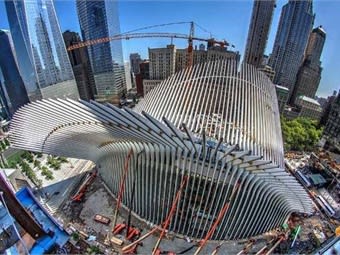
The Oculus.
Photo: PATH NYNJ
The Port Authority of New York/New Jersey announced Tuesday that the World Trade Center Transportation Hub Oculus — the iconic centerpiece of the sprawling transit facility — will open in the first week of March. The opening will provide a greatly enhanced commute for the 100,000 weekday PATH riders who travel through the station, with quicker, climate-controlled access to the Wall Street area and other destinations to the north and south of the site.
The Oculus — with its soaring wings designed by Santiago Calatrava — will enable travelers to have a seamless connection with 11 New York City subway lines and the East River ferries in addition to access to PATH trains.
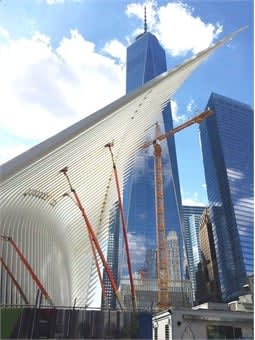
Photos of the WTC Transportation Hub progress in 2015. Photo: PATH NYNJ
When the Oculus opens, PATH commuters will take new underground passageways to One World Trade Center, 4 World Trade Center, the corner of Liberty and Church streets a few blocks from Wall Street and to Vesey Street on the northern edge of the site. The new facility contains state-of-the-art escalators and elevators for convenient vertical circulation between the trains and street level.
The Westfield mall shops located throughout the Oculus and in the adjoining passageways are anticipated to open in phases starting in the spring.
"More than a decade ago, planners envisioned a rebuilt transportation complex on the World Trade Center site that would provide critical links between various modes of transit for the first time. By later this year, this vision will become reality," said Port Authority Chairman John Degnan. "When the Oculus opens, commuters, visitors and residents of Lower Manhattan will have a greatly enhanced commute to and from the site for the first time."
"This project is a testament to the spirit of New York City, and our commitment to rebuilding and providing improved public transportation connections for everyone who lives, works or visits Lower Manhattan," said Federal Transit Administration Acting Administrator Therese McMillan.
The Federal Transit Administration has agreed to fund approximately $2.872 billion of the World Trade Center Transportation Hub, more than half of the total cost of the project.
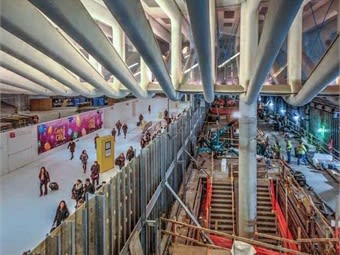
PATH Hall passengers arriving on platform A while work continues above platform B.
Photo: PATH NYNJ
The transportation hub will serve as a 21st century state of the art transit center in the heart of Lower Manhattan, now a thriving 24-hour business and residential community. The World Trade Center Transportation Hub will conveniently connect visitors to 11 subway lines, PATH, Battery Park City Ferry Terminal, the World Trade Center Memorial site, One World Trade Center, Towers 3 and 4 and a future Tower 2, and Brookfield Place. It will represent the most integrated network of underground pedestrian connections in New York City.
When completed, the World Trade Center Transportation Hub will be the third largest transportation center in New York City, with ultimately upwards of 250,000 daily commuters and millions of annual visitors from around the world.
Founded in 1921, the Port Authority of New York and New Jersey builds, operates, and maintains many of the most important transportation and trade infrastructure assets in the country. The agency’s network of aviation, ground, rail, and seaport facilities is among the busiest in the country, supports more than 550,000 regional jobs, and generates more than $23 billion in annual wages and $80 billion in annual economic activity.
The Port Authority also owns and manages the 16-acre World Trade Center site, where the 1,776-foot-tall One World Trade Center is now the tallest skyscraper in the Western Hemisphere. The Port Authority receives no tax revenue from either the State of New York or New Jersey or from the City of New York. The agency raises the necessary funds for the improvement, construction or acquisition of its facilities primarily on its own credit.
More Rail

New York MTA Advances Final Contract for Second Avenue Subway Expansion
Contract Four is the largest in the Second Avenue Subway Phase 2 project and includes construction of station infrastructure, tracks, and signals for the subway expansion, MTA officials said. Work on Contract Four will begin in 2027.
Read More →
San Diego MTS Breaks Monthly Trolley Ridership Record
Agency officials said July’s ridership indicates MTS’s continued recovery from the pandemic.
Read More →
Report Examines NJ TRANSIT Reliability, Funding Challenges
The Garden State Initiative analysis examines the roles of Amtrak infrastructure, fleet management, and agency operations while recommending a more performance-based approach to improving reliability.
Read More →
Stadler, CapMetro Sign Long-Term Rail Fleet Support Agreement
Beginning in 2027, Stadler will provide on-site technical expertise, spare parts support, training, and obsolescence management to help extend the reliability and longevity of CapMetro’s GTW fleet.
Read More →
Biz Briefs: Alstom Lands Canadian Contract, LYT to Supply California TSP, and More
In METRO's latest installment, we take a look at recent news from Complete Coach Works, Beep, FlixBus, and more partnerships making headlines across the transportation sector.
Read More →
CATS Gold Line Marks 5 Years of Service, 2.8M Passenger Trips
With a six-mile expansion planned, the Charlotte streetcar is positioned to connect more neighborhoods and major transit hubs across the region.
Read More →
Why Simulating Pedestrian Movement Has Become Essential for Modern Rail Stations
Pedestrian microsimulation is helping rail planners identify bottlenecks, test station designs, and prepare complex transit hubs for growing passenger volumes.
Read More →
Amtrak Begins Major Construction at New York’s Sunnyside Yard
The new maintenance facility will support Amtrak’s Airo trainsets while improving maintenance efficiency and turnaround times in New York.
Read More →
Chicago Leaders Unveil Plans for O’Hare Airport Express Train
The privately developed project would offer a 15-minute trip between downtown and O’Hare’s Terminal 2, with trains operating every 15 minutes on a dedicated track. The service would use battery-electric trains and three existing freight rail rights-of-way.
Read More →
OCTA Maps Out 30-Year Strategy to Protect Coastal Rail Corridor
The draft feasibility report identifies strategies to protect the coastal rail line for decades as the agency continues near-term stabilization and sand placement efforts.
Read More →