




RELATED: Proterra Catalyst E2 sets world record, drives 1K miles on single charge
Yosemite National Park to add 2 Proterra electric buses
Represents the first U.S. National Park to permanently add zero-emission buses to its shuttle fleet, offering its visitors a modern, ecologically-friendly transportation option.
December 4, 2017
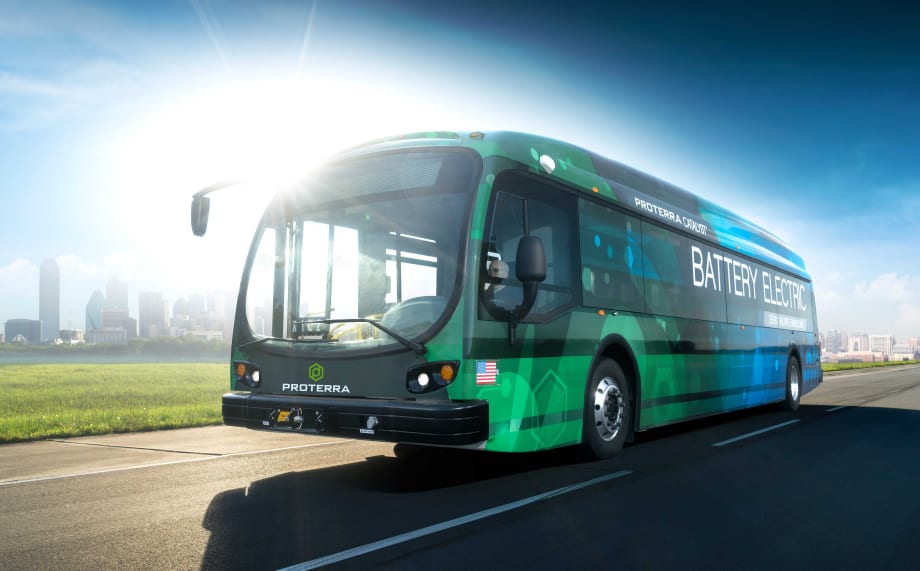
The new Catalyst buses are expected annually to reduce 887,000 lbs. of greenhouse gas emissions and save approximately $150,500 on maintenance and operating costs.
Proterra
2 min to read
The new Catalyst buses are expected annually to reduce 887,000 lbs. of greenhouse gas emissions and save approximately $150,500 on maintenance and operating costs.
Proterra
Yosemite National Park will add two Proterra Catalyst® buses to its fleet. Situated in California’s iconic Sierra Nevada Mountains, Yosemite represents the first U.S. National Park to permanently add zero-emission buses to its shuttle fleet, offering its visitors a modern, ecologically-friendly transportation option.
Last year, the National Park Service (NPS) recorded 331 million visits. This August alone, the parks attracted 40 million people nationwide with 609,676 visitors at Yosemite. With millions of visitors coming to Yosemite each year from around the world, Yosemite has relied heavily on their shuttle program to encourage park visitors to park once and use a bus to circulate among lodges, waterfalls, and trailheads.
With more than five million visitors each year, Yosemite has seen its free shuttle service travel annually 436,000 miles with 3.8 million boardings. In 2001, the park began replacing its diesel bus fleet with diesel-electric hybrid vehicles. Yosemite is now taking the next steps toward a state-of-the-art clean transportation system with the adoption of Proterra zero-emission, battery-electric buses. The new Catalyst buses are expected annually to reduce 887,000 lbs. of greenhouse gas emissions and save approximately $150,500 on maintenance and operating costs. They will begin service in late 2018 and will operate year-round, transporting up to 1,480 visitors per day through the park’s Yosemite Valley.
“Our mission has always been to preserve our nation’s natural and cultural heritage for future generations, and Proterra’s zero-emission vehicle technology will be indispensable as we continue to work toward this goal,” said Chip Jenkins, acting superintendent, Yosemite National Park. “Since its establishment in 1890, airborne pollutants have steadily degraded Yosemite’s resources. Deploying Proterra’s battery-electric buses will help with this ongoing challenge and will greatly improve local air quality.”
In addition, the U.S. General Services Administration has committed to greening the federal fleet, including our National Parks, working with businesses to make cleaner, quieter transportation readily available and affordable to partner agencies. Citing Proterra for its innovative technologies and best practices, the GSA added the Proterra Catalyst to federal fleet acquisition options.
“Yosemite was the first wildland protected in the United States, by President Abraham Lincoln, over 150 years ago. Of Yosemite, John Muir once said, ‘It is by far the grandest of all the special temples of Nature I was ever permitted to enter,’” said Ryan Popple, CEO of Proterra. “The Proterra team is especially proud to directly contribute to the preservation of Yosemite National Park. We believe that upholding the environmental integrity of our nation’s most precious resources is of paramount importance, and we are honored to partner with the National Park Service to provide clean, quiet transportation to the millions of visitors who love to visit our National Parks.”
More Technology

From Hardware to Digital Partner: Luminator Charts Its Next Chapter
CEO Magnus Friberg discusses Luminator’s shift toward becoming a digital partner, the growing importance of software and interoperability, and how AI can help agencies improve operations and passenger experience.
Read More →
Beyond the Checklist: A Structured Approach to Transit Maintenance
Reliability-Centered Maintenance helps transit agencies move beyond routine checklists to focus limited resources on the assets and failures that have the greatest impact on safety, reliability, and service.
Read More →
NJ TRANSIT Advances Bus Technology Upgrades Across Statewide Fleet
More than 1,500 buses now feature upgraded technology designed to improve arrival predictions and provide free Wi-Fi, with deployment expected to reach nearly 2,000 buses by the end of 2026.
Read More →

Building a Flexible Path to Transit Electrification
John Hroncich discusses BAE Systems’ modular and scalable approach, lessons learned from decades of real-world operations, and how agencies can identify electrification strategies that fit their fleets.
Read More →
Biz Briefs: Alstom Lands Canadian Contract, LYT to Supply California TSP, and More
In METRO's latest installment, we take a look at recent news from Complete Coach Works, Beep, FlixBus, and more partnerships making headlines across the transportation sector.
Read More →
Sponsored•September 8, 2026
From Legacy Silos to Conversational Intelligence
What if transit leaders could ask any operational question and get a trusted answer in seconds? Conversational AI is transforming how agencies use their data.
Read More →
USDOT Announces Rail Vehicle Replacement Grants, Chattanooga AV Shuttle Funding
More than $191 million in federal funding will help three transit agencies replace aging rail vehicles and support a new autonomous shuttle service in Chattanooga.
Read More →
Bus Tech Talk: Keeping Transit Technicians Ahead of the Technology Curve
LA Metro’s Obed Mejia discusses technician training, evolving maintenance technology, fleet replacement, and strategies for getting the most out of today’s transit fleets.
Read More →
Biz Briefs: RIPTA Unveils New Frontrunners, Clevland RTA Adds New Siemens, and More
In METRO's latest installment, we take a look at recent news from Siemens, Prevost, Dodge, and more partnerships making headlines across the transportation sector.
Read More →
Why Simulating Pedestrian Movement Has Become Essential for Modern Rail Stations
Pedestrian microsimulation is helping rail planners identify bottlenecks, test station designs, and prepare complex transit hubs for growing passenger volumes.
Read More →