



Valley Metro celebrates 10-year 'Railversary'
There has been $11 billion of investment and 35,000 jobs created within one-half mile of the 26-mile corridor, according to a report.

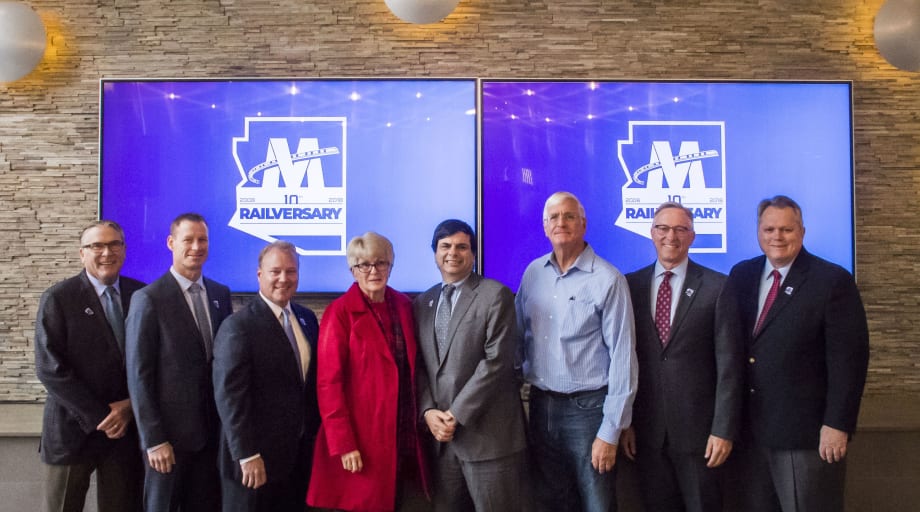
Rail champions celebrate kick-off of 10-year Valley Metro Rail celebration and Quality of Life report. From left, Skip Rimsza, Former Phoenix Mayor; Nate Stum, Vice President of Development for LMC; Tempe Mayor Mark Mitchell; Phoenix Mayor Thelda Williams, Phil Gordon, Former Phoenix Mayor; Keno Hawker, Former Mesa Mayor; Mesa Mayor John Giles; Scott Smith, Valley Metro CEO and Former Mesa Mayor.
Valley Metro
Rail champions celebrate kick-off of 10-year Valley Metro Rail celebration and Quality of Life report. From left, Skip Rimsza, Former Phoenix Mayor; Nate Stum, Vice President of Development for LMC; Tempe Mayor Mark Mitchell; Phoenix Mayor Thelda Williams, Phil Gordon, Former Phoenix Mayor; Keno Hawker, Former Mesa Mayor; Mesa Mayor John Giles; Scott Smith, Valley Metro CEO and Former Mesa Mayor.
Valley Metro
Leaders past, present, and future gathered to kickoff Valley Metro Rail’s 10-year anniversary, also known as the “Railversary.” Valley Metro CEO Scott Smith welcomed a prestigious slate of speakers, including rail city mayors, who shared the transformation that has occurred in their cities over the past 10 years.
“Since light rail opened, we’ve transformed from a quiet downtown into a bustling hot spot for innovation, education, and business,” said Phoenix Mayor and Valley Metro Rail Board Chair Thelda Williams.
Former Phoenix mayor and early light rail champion, Skip Rimsza, gave credit to city and business partners for making the original 20-mile system a reality.
Along with public sector support, investment from developers helped boost the transformation of communities near light rail. According to the Quality of Life impact report, there has been $11 billion of investment and 35,000 jobs created within one-half mile of the 26-mile corridor. The report also focuses on how light rail contributes to fostering community health and connecting communities.
“Light rail gives families the freedom of transportation mobility without all the costs of owning one or even two cars,” said Diana Yazzie Devine, president and CEO of Native American Connections. “That means families have greater housing stability with more disposable income for taking care of their family’s basic needs and enjoying a better quality of life.”
More Rail
Amtrak, CN Reach Agreements to Strengthen Passenger Rail Service, Safety
The agreement resolves a more than decade-long proceeding before the Surface Transportation Board concerning the terms and conditions for Amtrak services, such as the City of New Orleans, Illini/Saluki, and Wolverine.
Read More →
New York MTA Advances Final Contract for Second Avenue Subway Expansion
Contract Four is the largest in the Second Avenue Subway Phase 2 project and includes construction of station infrastructure, tracks, and signals for the subway expansion, MTA officials said. Work on Contract Four will begin in 2027.
Read More →
San Diego MTS Breaks Monthly Trolley Ridership Record
Agency officials said July’s ridership indicates MTS’s continued recovery from the pandemic.
Read More →
Report Examines NJ TRANSIT Reliability, Funding Challenges
The Garden State Initiative analysis examines the roles of Amtrak infrastructure, fleet management, and agency operations while recommending a more performance-based approach to improving reliability.
Read More →
Stadler, CapMetro Sign Long-Term Rail Fleet Support Agreement
Beginning in 2027, Stadler will provide on-site technical expertise, spare parts support, training, and obsolescence management to help extend the reliability and longevity of CapMetro’s GTW fleet.
Read More →
Biz Briefs: Alstom Lands Canadian Contract, LYT to Supply California TSP, and More
In METRO's latest installment, we take a look at recent news from Complete Coach Works, Beep, FlixBus, and more partnerships making headlines across the transportation sector.
Read More →
CATS Gold Line Marks 5 Years of Service, 2.8M Passenger Trips
With a six-mile expansion planned, the Charlotte streetcar is positioned to connect more neighborhoods and major transit hubs across the region.
Read More →
Why Simulating Pedestrian Movement Has Become Essential for Modern Rail Stations
Pedestrian microsimulation is helping rail planners identify bottlenecks, test station designs, and prepare complex transit hubs for growing passenger volumes.
Read More →
Amtrak Begins Major Construction at New York’s Sunnyside Yard
The new maintenance facility will support Amtrak’s Airo trainsets while improving maintenance efficiency and turnaround times in New York.
Read More →
Chicago Leaders Unveil Plans for O’Hare Airport Express Train
The privately developed project would offer a 15-minute trip between downtown and O’Hare’s Terminal 2, with trains operating every 15 minutes on a dedicated track. The service would use battery-electric trains and three existing freight rail rights-of-way.
Read More →