
Metro Magazine

 MENU
MENU SEARCHMENUSEARCH
Loading data...

Because of the increase in efficiency, cost savings, and more, the MBTA and AlphaRoute have won one of METRO’s Innovative Solutions Awards for Paratransit.
Read More →







Branded wayfinding, station designs, and corridor upgrades aim to create a modern, user-friendly travel experience between Boulder and Longmont.
Read More →The notion of agencies being over- or underfunded, I argued, doesn’t hold up. If an agency wants to turn up the heat — to grow beyond the status quo — it must demonstrate measurable value.
Read More →To mark MV’s 50th anniversary, METRO Magazine sat down with Gary Coles, the company’s chief customer success officer, to discuss how MV honors its founding values, continues to innovate across service models, and helps transit agencies meet the evolving demands of modern mobility.
Read More →More than 4,800 riders shared concerns as the agency warns of deep service cuts and fare hikes without urgent state funding support.
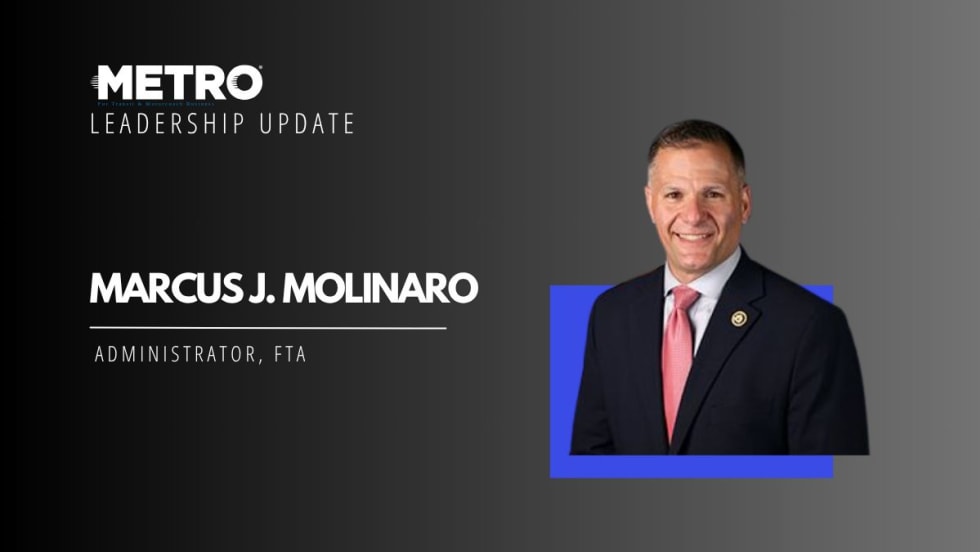
Read More →Molinaro assumes leadership of the FTA following the tenure of Acting Administrator Tariq Bokhari, who will now serve as deputy administrator.
Read More →Community input, new tech, and smarter routes drive Arrowhead Transit's system changes, reshaping rural mobility in Minnesota.
Read More →Some agencies might suggest they are funded in the public transportation space. Some complain that they are funded too little. I have never heard a public transportation executive proclaim that they are funded too much. And if no public agencies are funded too much, then, by definition, none are funded too little. To steal from Goldilocks’ thinking, they are all funded just right.
Read More →Autonomous vehicle technology has advanced dramatically and will likely reach mass markets in 2027. We examine how the technology is developed and what it means for public transportation systems and driverless buses.
Read More →As principal program manager for Toronto’s Ontario Line, he reflects on lessons learned and the importance of keeping community needs at the center of every decision.
Read More →