



Transit Builds Stronger Pathways for Veterans
Known for their discipline, teamwork, and technical skills, veterans bring a mission-first mindset to the workplace, a quality that aligns well with public transportation’s commitment to serving the community.

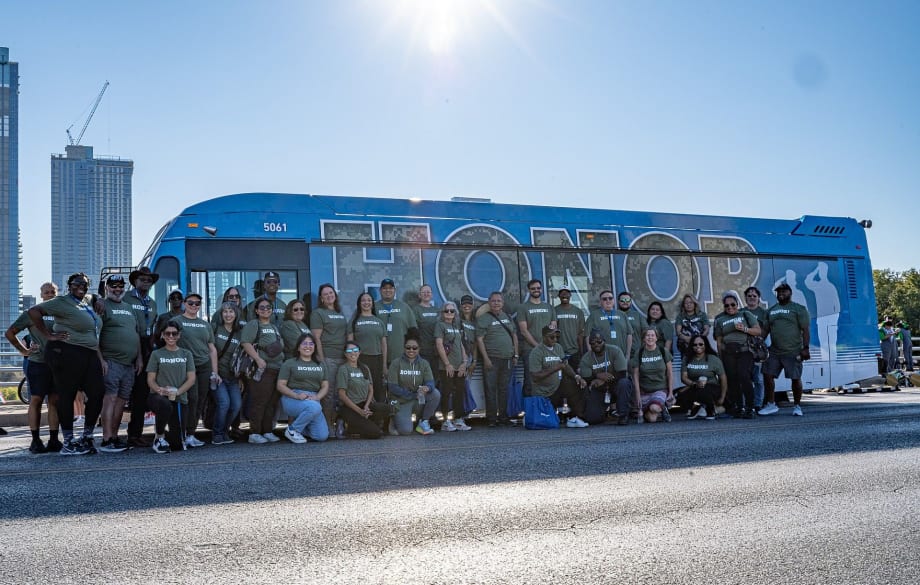
As of March 2025, veterans make up 10.3% of CapMetro’s frontline workforce and 12.2% of its corporate staff.
Photo: CapMetro
- Veterans contribute discipline, teamwork, and technical skills to the workforce.
- Their mission-first mindset aligns well with public transportation’s goals.
- Public transit benefits from veterans’ commitment to community service.
*Summarized by AI
Across the country, transit agencies are tapping into a proven talent pool: U.S. military veterans.
Known for their discipline, teamwork, and technical skills, veterans bring a mission-first mindset to the workplace, a quality that aligns well with public transportation's commitment to serving the community.
At the forefront of this movement is CapMetro in Austin, Texas.
The agency’s targeted efforts to recruit and retain veterans have earned formal recognition through the Texas Veterans Commission’s “We Hire Vets” program, a distinction given to employers whose workforce is at least 10% veteran.
CapMetro not only currently meets that threshold but also has plans in place to continue boosting that percentage.
A Culture of Service
“Public transit provides a structured, mission-driven, 24/7 environment that aligns with the values of public service,” explained Adam Rosenfield, CapMetro’s program manager, workforce outreach. “Many military roles translate directly into transit careers, from operations to technical and leadership positions.”
As of March 2025, veterans make up 10.3% of CapMetro’s frontline workforce and 12.2% of its corporate staff — a testament to the agency’s commitment to helping service members transition into meaningful civilian careers.
Rosenfield has established a robust outreach network with various organizations, including the Texas Veterans Commission, the Fort Cavazos Transition Assistance Program, VA Work Therapy, the American GI Forum, and the National Veterans Outreach Program.
“CapMetro’s veteran outreach strategy has grown significantly in both scope and sophistication over the past few years,” said Rosenfield. “We began by attending veteran-focused career fairs, showcasing that approximately 12% of our workforce has prior military experience. That helped us establish a foundation, but we realized that deeper engagement was necessary to build trust and establish CapMetro as a long-term, viable career destination for veterans, extending beyond entry-level roles.”
To engage more deeply, CapMetro’s team developed new tactics, including facility tours for veteran service organizations, executive-led briefings for transitioning soldiers, and webinars such as “Tech in Transit,” which resulted in direct veteran hires.
“At Fort Cavazos, we focused on Mega Career Fairs and trained advocates to highlight roles beyond traditional driving and mechanical positions,” said Rosenfield. “These efforts built trust with transition specialists, resulting in referrals of higher-level officers and diverse MOS backgrounds. We’ve since filled roles such as EV Maintenance Trainer and Technical Project Portfolio Specialist, which are positions essential to our zero-emissions future.”
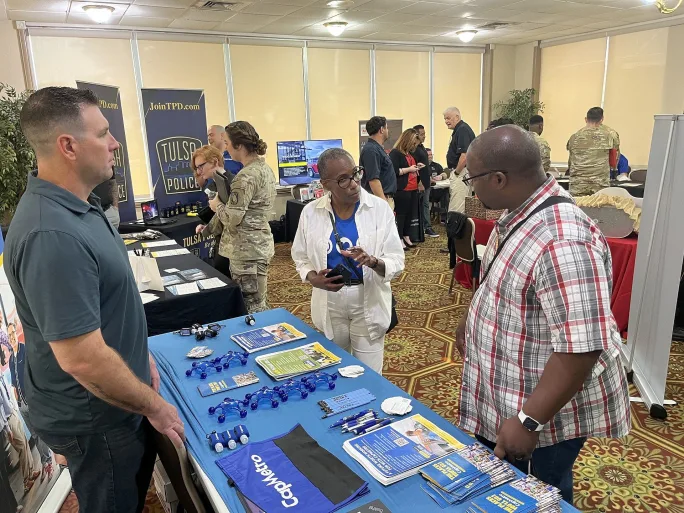
To engage more deeply, CapMetro’s team developed new tactics, including facility tours for veteran service organizations, executive-led briefings for transitioning soldiers, and webinars such as “Tech in Transit,” which resulted in direct veteran hires.
Photo: CapMetro
Measurable Impact, Best Practices
The results speak for themselves. In 2024, CapMetro hired 12 veterans, primarily into operations roles.
By 2025, it had already added 11 more, including several officer-level candidates with expertise in logistics, IT, engineering, and project management.
And like Rosenfeld explained, the agency’s new hires have directly strengthened the agency’s capacity to execute its zero-emissions fleet and facility modernization initiatives.
“We’ve seen time-to-fill for technical and skilled trades positions decrease as we’ve built stronger pipelines through our military connections,” he noted. “Our strategy has evolved from transactional to transformational, fostering long-term partnerships and career pathways for veterans.”
Rosenfield shared five key lessons for agencies seeking to build similar programs:
- Show up consistently. Attend military job fairs and webinars regularly — relationships are built through repetition.
- Learn to “speak military.” Translating MOS experience reveals leadership and technical strengths that are often overlooked on paper.
- Leverage financial incentives. Programs like WOTC and VR&E can offset hiring and training costs.
- Use DoD SkillBridge internships. These no-cost programs let employers evaluate and train service members during their transition.
- Partner widely. Working with veteran-serving groups strengthens candidate pipelines and community trust.
CapMetro is also refining its Military Skills Translator tool, which matches military occupational specialties (MOS) to transit job openings, making it easier for veterans to find a role that fits their background.
Building A National Model
CapMetro’s work aligns closely with efforts led by the Transit Workforce Center (TWC), a federally funded technical assistance center that helps agencies nationwide attract, train, and retain transit talent.
Shayna Gleason, senior researcher at TWC, said CapMetro’s approach reflects what’s working nationally.
“One approach we’ve heard from transit agencies that has been successful in helping veterans transition into transit careers is assistance during the application phase in translating résumés out of ‘military speak,’” Gleason explained. “Los Angeles Metro, for instance, has conducted résumé and interview preparation classes for prospective applicants to bridge this gap.”
The Transit Workforce Center offers no-cost technical assistance to agencies across the U.S.
“We welcome conversations with agencies about how to match qualified candidates, including veterans, with the right job opportunities,” said Gleason. “We’ve even developed skills crosswalks that map military occupation codes to transit roles like signals maintenance, a practical tool that helps align veteran experience with job requirements.”
Beyond recruitment, Gleason noted, training, and mentorship are critical to retention.
“The kinds of training and supportive services that are effective in transit more generally are likely to be effective for veterans as well,” she said. “Apprenticeship programs, peer mentorship, and supportive services such as childcare can make a big difference. Peer groups centered on shared experiences of transitioning into civilian life are especially promising.”
For smaller agencies, TWC recommends starting with local partnerships. To complement these partnerships, Rosenfield mentioned a “key tactic” that involved partnering with Yvonne Wilson, an account executive on CapMetro’s marketing team, Madhu Singh, one of the organization’s writers, alongside the marketing group to create veteran-specific recruiting materials rather than using general ones.
CapMetro also developed a career journey brochure to help veteran hires visualize progression opportunities available to them within the organization.
TWC’s Veterans in Transit resources are available free at the TWC Resource Center

CapMetro is also refining its Military Skills Translator tool, which matches military occupational specialties to transit job openings, making it easier for veterans to find a role that fits their background.
Photo: CapMetro
Bridging Service and Community
Together, CapMetro and TWC are demonstrating that veteran recruitment isn’t just a good workforce strategy; it’s a natural alignment of values.
Veterans enter transit careers with a strong sense of mission, discipline, and teamwork. Transit agencies, in turn, offer them a new way to serve, keeping their communities connected and moving forward.
“Veterans bring the kind of leadership and dedication that define public transit,” said Rosenfield. “When we hire veterans, we’re not just filling positions, we’re strengthening the future of our agency and the community we serve.”
Quick Answers
Veterans are considered a good fit for public transportation careers because their discipline, teamwork, and technical skills align well with the industry's mission-first mindset and community service orientation.
*Summarized by AI
More Management

METRO Opens Submissions for 2026 Motorcoach Awards
Nominations are now being accepted for METRO Magazine’s Operator of the Year and Innovative Operator of the Year awards.
Read More →
New York MTA Advances Final Contract for Second Avenue Subway Expansion
Contract Four is the largest in the Second Avenue Subway Phase 2 project and includes construction of station infrastructure, tracks, and signals for the subway expansion, MTA officials said. Work on Contract Four will begin in 2027.
Read More →
Transit Agencies Highlight Safety Gains at National Summit
Leaders from 15 major transit systems shared crime-reduction results and safety initiatives while discussing the role of continued federal support.
Read More →

NITA Names New Leadership, Expands Reduced-Fare Program at First Board Meeting
The new regional transit authority appointed its first board chair and interim executive director while extending reduced fares across CTA, Metra, and Pace for eligible riders.
Read More →
Beyond the Checklist: A Structured Approach to Transit Maintenance
Reliability-Centered Maintenance helps transit agencies move beyond routine checklists to focus limited resources on the assets and failures that have the greatest impact on safety, reliability, and service.
Read More →
APTA 2026 Nominating Committee Selects Leadership Slate, Names Chair and Vice Chair Nominees
Leadership changes will help shape the association’s priorities and its representation of the transportation industry during the 2026–2027 term.
Read More →
DART Launches Major Security, Fare Enforcement Initiative
The 90-day demonstration will deploy coordinated security teams at five light rail stations while testing controlled access and gathering data to guide future investments.
Read More →
Advancing Fare Collection Through Technology and Innovation
Learn about delivering 1300 gates at 91 stations while managing fare evasion. Explore the large scale deployment, solution customization and real-world results that affect the region. Prepare for deployment in your region now.
Read More →
Game Day in Motion: Moving Millions During the 2026 World Cup
Between packed transit stations and team motorcoaches, see how agencies and operators across North America tackled the transportation demands of the 2026 FIFA World Cup.
Read More →
Surface Transportation Extension Averts Shutdown, Leaves Transit Funding Gap
The stopgap keeps federal transportation programs moving, but missing advance funding could complicate the transit and rail projects agencies are planning next.
Read More →