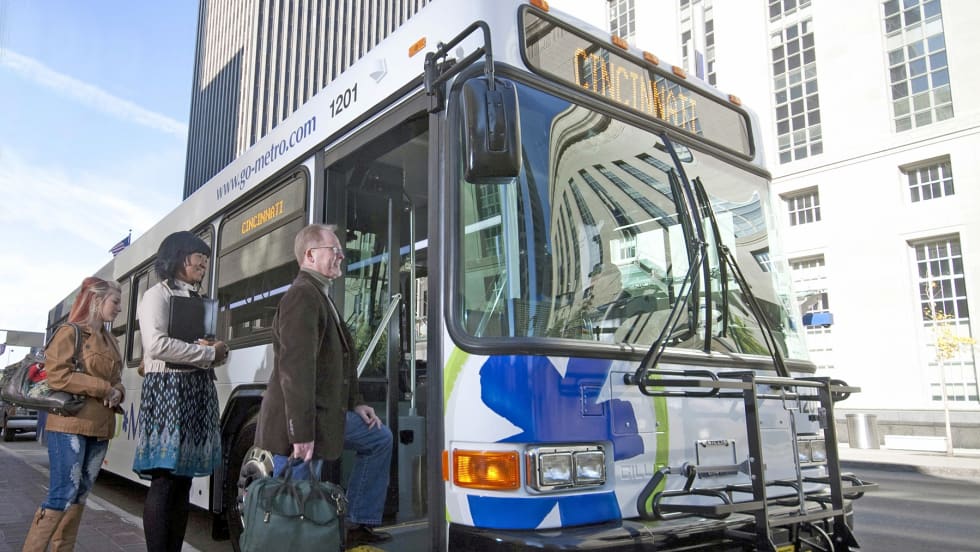
University of Washington researchers have developed an inexpensive system that uses Wi-Fi and Bluetooth signals from passengers’ mobile phones and devices to collect better data about where bus riders get on and off, how many people use a given stop and even how long they wait to transfer to another bus.
Read More →
The Michigan Translational Research and Commercialization Transportation program, in partnership with the Michigan Economic Development Corp., offers an avenue for U-M researchers and innovators to discover commercial opportunities to advance their projects out of the lab and into the market.
Read More →
After months of research and development and rigorous testing, the company is introducing its new GrabHold seating for mass transit buses and the newly redesigned Torino GT for motorcoach vehicles.
Read More →
In a report presented at the plenary session of the World Congress, UITP research points to a general increase in public transport modal share thanks to efforts to boost supply, control private car use and increase urban density.
Read More →
The Appropriations Committee vote tells FMCSA to stop spending money to write a rule or do research; that would raise the federal insurance minimums above the current $5 million figure.
Read More →
The researchers found an increase in bus systems’ per capita operating expenditures is associated with a decrease in employee turnover. In turn, businesses save money by not having to train new workers or rebuild institutional knowledge within the firm.
Read More →The first phase of the plan would construct a four-mile section elevated guideway above a section of abandoned railroad tracks. The first section of the elevated railway could connect Clemson University's International Center for Automotive Research campus with downtown Greenville.
Read More →
The most commonly found organism (46.9%) was bacteria. Despite some riders' fears of catching cold or flu from fellow straphangers, viruses were rare — they made up .032% of the samples. However, some seasonal viruses are RNA viruses, not DNA viruses, and they would not be identified with the collection methods used in the study.
Read More →The number of younger people getting drivers’ licenses has continually declined since 1996 and that adults between the ages of 20 to 30 are more likely to stay in cities rather than move to suburbs, according to the United States Public Interest Research Group. This data, then, would indicate that the millennial generation (the largest generation) is a major contributor to the surge in ridership transportation organizations across the country are experiencing.
Read More →
Research found that about 90% of Britons said they would donate an organ, but most people were not signed up.
Read More →