




Related: Upholstery-Free Seating Options Pave the Way in Transit
4ONE unveils new transit bus, motorcoach seating products
After months of research and development and rigorous testing, the company is introducing its new GrabHold seating for mass transit buses and the newly redesigned Torino GT for motorcoach vehicles.
July 7, 2015
2 min to read
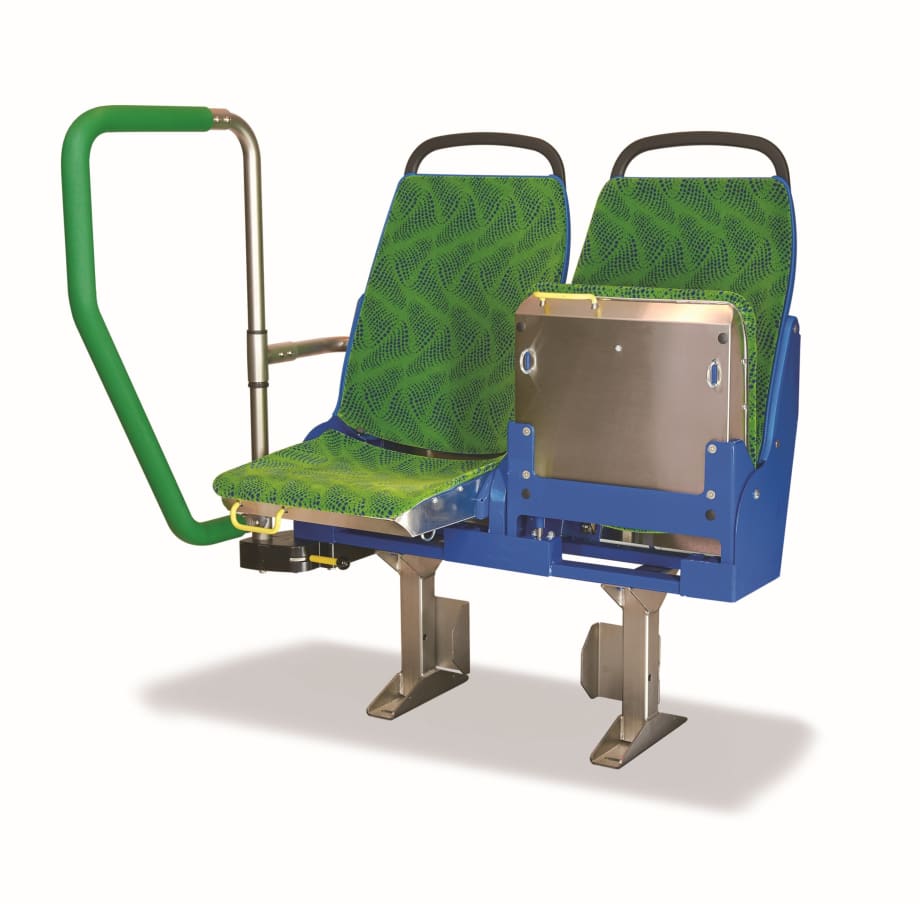
After months of research and development and rigorous testing, 4ONE introduced its new GrabHold seating for mass transit buses and the newly redesigned Torino GT for motorcoach vehicles.
The new, ergonomically designed GrabHold, with built-in safety grab handle, helps protect passengers from sudden shifts in bus movement. For the first time, passengers who sit in the aisle position on a forward-facing flip seat have something to grab onto during sudden stops and decelerations.
Bus company owners and transit agencies will also benefit from GrabHold’s space-saving design, ADA-accessibility features and economical retrofit capabilities, according to the company.
Because of the size and shape of the Grabhold’s built-in grab handle, it eliminates the cost and bulk of adding a stanchion for passenger stabilization. By pulling GrabHold’s easy-release lever, it allows the seats to flip up and the grab handle to rotate/pivot inward freeing up space. That extra space makes room for a wheelchair, which in a normal bus with regular seats would be underutilized or not used at all. The flip-up seats also allow excess capacity for walk-on items when not in use by a wheelchair occupant.
In addition, GrabHold’s sturdy and compact structure allows a clean installation and easy retrofit that’s compatible with 4ONE seating (Gemini, Aries, CitiSeat and CitiPro) and most others on the market. And, as part of 4ONE’s commitment to comfort and aesthetics, the GrabHold seat comes standard with padding and special order colors are available.
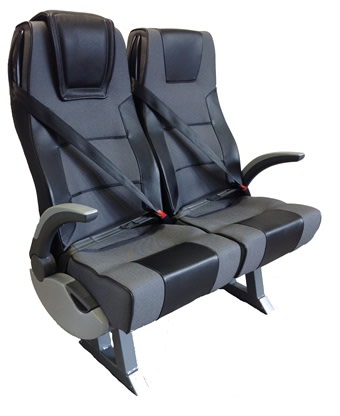
Already an industry pace-setting seat for motorcoach buses, 4ONE’S ergonomically-designed and best-selling Torino G seat reemerges as the new Torino GT.
The newly redesigned Torino GT seat has many enhancements, the main one being a full 2.25 inches more hip-to-knee room. This is a key factor that expert analysis and 4ONE’s extensive and scientific ergonomic research showed is critical to physical comfort. This key Torino GT feature, along with its waterfall front-edge, contoured cushion, will help motorcoach operators accommodate an even wider range of body types, ages, shapes and sizes.
In addition, the Torino GT is the only motorcoach seat on the market with an advanced three-point safety belt system, which automatically adjusts for height, providing optimal comfort and safety for both adults and children. Also included is a built-in restraint anchorage system for a child’s car seat. Belts originate from the side of the backrest, which frees passengers from any potential back and shoulder discomfort.
The Torino GT boasts the industry’s strongest recliner mechanism and is tested to exceed the normal Federal Motor Vehicle Safety Standards (FMVSS) for 2016.
More Management

LIT Marks 10-Year Milestone at Annual Summit
Hosted by the COTA from September 10 to 13, the Summit carried the theme “Celebrating 10 Years of Excellence, Leadership, and Impact,” with every part of the program honoring the people, agencies, and partners who built LIT over its first decade.
Read More →
People Movement: Dan Dipert Coaches Adds Third-Generation Leader, Keolis Names New Valley Metro VP/GM, and More
In this edition, we also cover recent appointments and announcements at the Wabtec, SilverRide, HNTB, and more, showcasing the individuals helping to shape the future of transportation.
Read More →
METRO Opens Submissions for 2026 Motorcoach Awards
Nominations are now being accepted for METRO Magazine’s Operator of the Year and Innovative Operator of the Year awards.
Read More →

New York MTA Advances Final Contract for Second Avenue Subway Expansion
Contract Four is the largest in the Second Avenue Subway Phase 2 project and includes construction of station infrastructure, tracks, and signals for the subway expansion, MTA officials said. Work on Contract Four will begin in 2027.
Read More →
Transit Agencies Highlight Safety Gains at National Summit
Leaders from 15 major transit systems shared crime-reduction results and safety initiatives while discussing the role of continued federal support.
Read More →
NITA Names New Leadership, Expands Reduced-Fare Program at First Board Meeting
The new regional transit authority appointed its first board chair and interim executive director while extending reduced fares across CTA, Metra, and Pace for eligible riders.
Read More →
Beyond the Checklist: A Structured Approach to Transit Maintenance
Reliability-Centered Maintenance helps transit agencies move beyond routine checklists to focus limited resources on the assets and failures that have the greatest impact on safety, reliability, and service.
Read More →
APTA 2026 Nominating Committee Selects Leadership Slate, Names Chair and Vice Chair Nominees
Leadership changes will help shape the association’s priorities and its representation of the transportation industry during the 2026–2027 term.
Read More →
DART Launches Major Security, Fare Enforcement Initiative
The 90-day demonstration will deploy coordinated security teams at five light rail stations while testing controlled access and gathering data to guide future investments.
Read More →
Sponsored•September 9, 2026
Advancing Fare Collection Through Technology and Innovation
Learn about delivering 1300 gates at 91 stations while managing fare evasion. Explore the large scale deployment, solution customization and real-world results that affect the region. Prepare for deployment in your region now.
Read More →