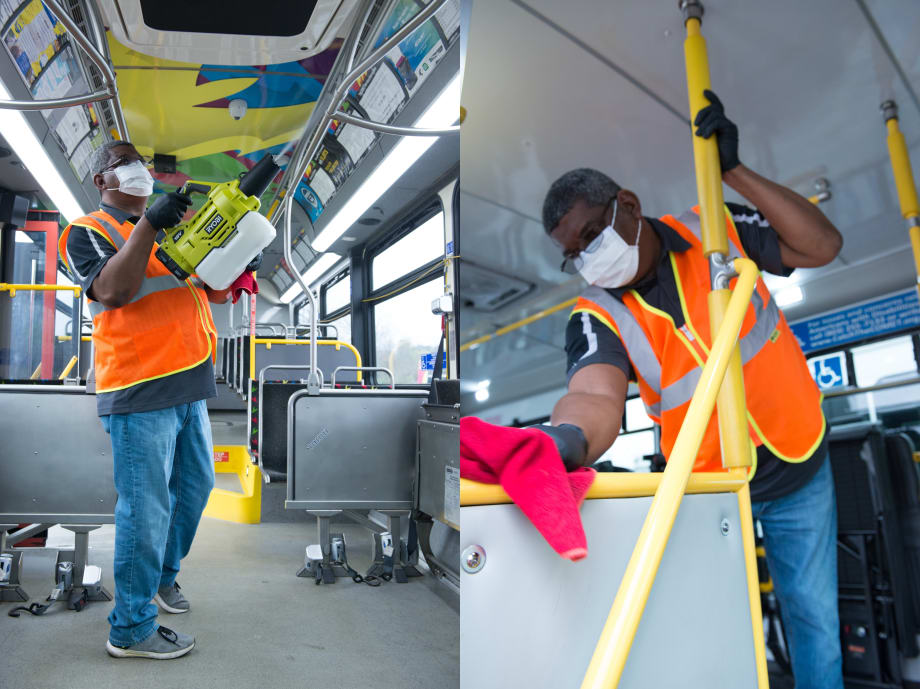
Due to the coronavirus, the S.C.-based Central Midlands Regional Transit Authority (The COMET) has increased the frequency of bio-clean disinfection of its fleet to nightly. Michael Dantzler
The Federal Transit Administration (FTA) announced that expanded eligibility of federal assistance is available under FTA’s Emergency Relief Program to help transit agencies respond to the coronavirus (COVID-19) in states where the Governor has declared an emergency. This includes allowing all transit providers, including those in large urban areas, to use federal formula funds for emergency-related capital and operating expenses, and raises the cap on the federal government’s share of those expenses.
Ad Loading...
“Today, I have issued a notice of concurrence with declarations of emergencies issued by Governors that relate to COVID-19. FTA grantees may now use their Urbanized Area and Rural formula funds to take measures to protect the health and safety of their riders and their workforce,” said FTA Acting Administrator K. Jane Williams. “Expansion of the permissible uses of federal funds will allow transit providers greater flexibility in the areas of the country that need it most. Invoking the eligibility of the Emergency Relief Program also provide funds at a higher federal share.”
The announcement allows all transit providers in states where the Governor has declared an emergency related to COVID-19 to use their federal formula funds for operating expenses in addition to capital expenses and permits operating expenses to be covered at an 80% federal share rather than 50%.
In addition to allowing the expanded use of formula funds for transit providers, FTA has established an Emergency Relief docket that allows transit providers in states where the Governor has declared an emergency related to COVID-19 to request temporary relief from Federal requirements under 49 U.S.C. Chapter 53 as well as any non-statutory FTA requirements.
The U.S. Department of Transportation is working closely with the Centers for Disease Control and Prevention and other federal partners to provide guidance to the public transportation industry in response to COVID-19.
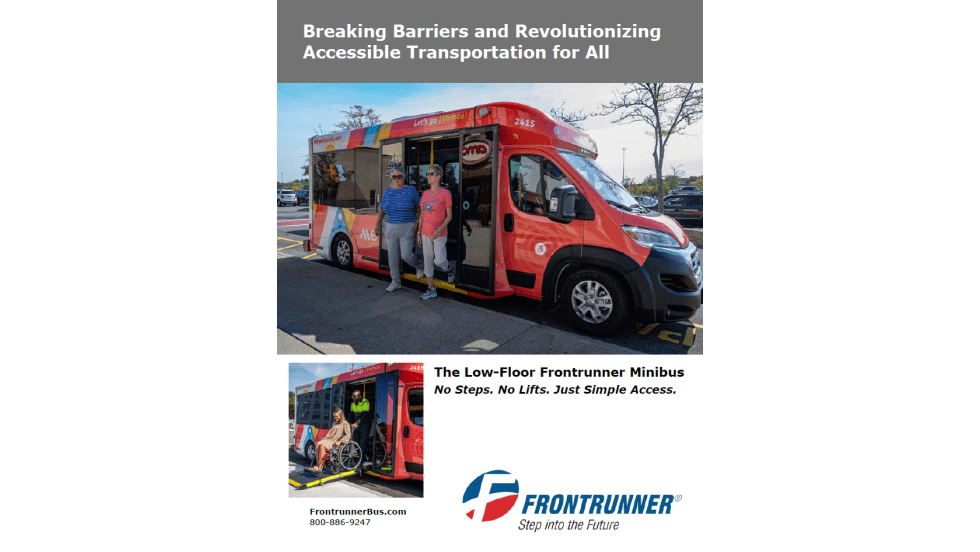
Accessible transit isn’t a feature—it’s a responsibility. This whitepaper explores how the Low-Floor Frontrunner is redefining mobility with a breakthrough design that removes barriers, empowers riders, and delivers measurable operational advantages for agencies. Discover why this next generation minibus is setting a new standard for inclusive transportation.
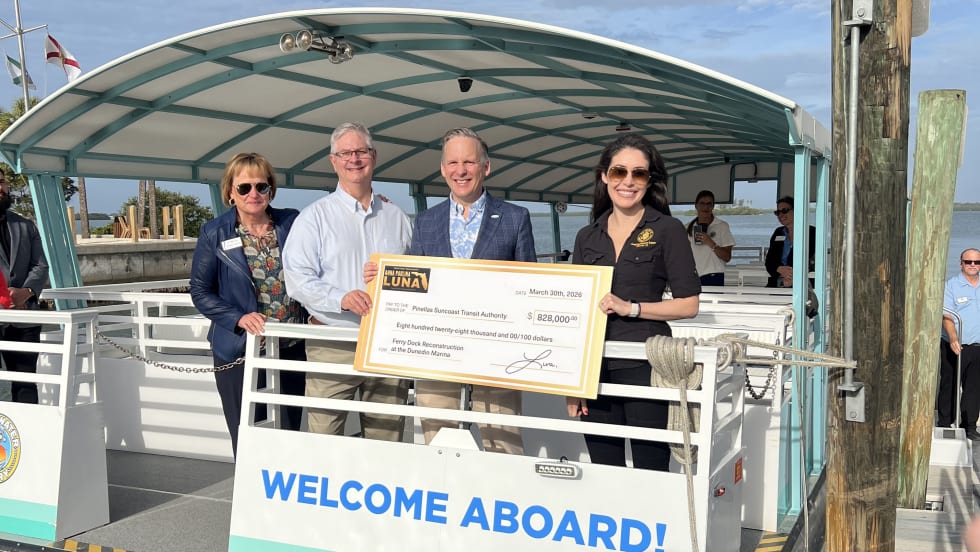
The funds will specifically reconstruct the portion of the pier used by PSTA’s Clearwater Ferry, creating a permanent dock for the ferry service, which serves as an important transportation and tourism link to other Pinellas County communities.
Between accident prevention and insurance savings, new research outlines how transportation fleets are leveraging intelligent video and telematics technologies.
The Plan is CTA's formal response to an FTA Special Directive issued in December and details how the agency will significantly expand the law enforcement surge it launched.
On a recent episode of METROspectives, METRO Magazine’s Executive Editor Alex Roman sat down with Ana-Maria Tomlinson, Director of Strategic & Cross-Sector Programs at the CSA Group, to explore a bold initiative aimed at addressing those challenges: the development of a National Code for Transit and Passenger Rail Systems in Canada.