



N.Y.'s MTA joins UN agreement to reduce greenhouse gas emissions
The agency is only the second government entity in the U.S. to commit to a science-based target to drive down greenhouse gas emissions.

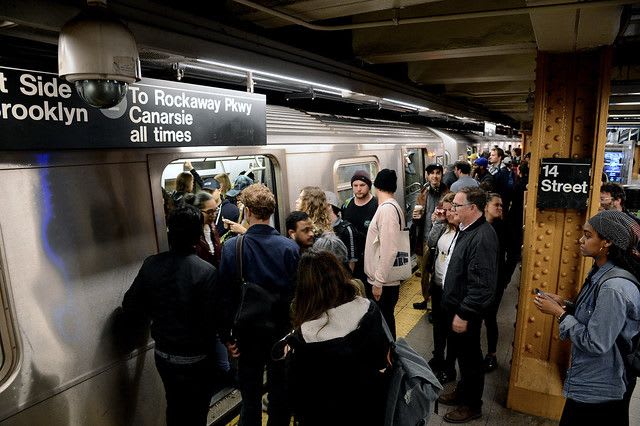
Potential absolute reduction pathways for MTA include bus electrification and the electrification of diesel-powered commuter rail lines.
Marc A. Hermann

Potential absolute reduction pathways for MTA include bus electrification and the electrification of diesel-powered commuter rail lines.
Marc A. Hermann
New York’s Metropolitan Transportation Authority (MTA) joined the United Nations-sponsored Science Based Targets initiative (SBTi) to reduce greenhouse gas emissions in line with the Paris Climate Agreement.
Through the SBTi, a partnership between U.N. Global Compact, the World Resources Institute, World Wildlife Fund, and CDP, the MTA will develop a defined set of emissions reduction targets using the most up-to-date climate science to help keep the global temperature rise this century below two degrees Celsius. The MTA is only the second government agency in the U.S. to commit to a science-based target to drive down greenhouse gas emissions.
As the nation’s largest public transportation provider, the MTA offsets effects of global warming and climate change by keeping New Yorkers’ carbon emissions to the lowest per-capita in the country. The MTA plans to continue these efforts by setting defined targets to reduce greenhouse emissions across transportation and non-transportation activities throughout the organization. The agency will have two years to establish targets for emissions reductions, and up to 15 years to meet these targets. The targets will set the emissions threshold around which the MTA will develop its emissions reduction pathway.
The MTA’s science-based target will be set in both absolute and intensity reductions. Potential absolute reduction pathways include bus electrification, the electrification of diesel-powered commuter rail lines, increased energy efficiency at facilities, and working with our vendors to reduce emissions throughout its supply chain. Emissions per-passenger-mile can be reduced by looking into increasing capacity across its public transportation modes. As a large electricity consumer, the MTA’s carbon footprint also stands to benefit from the increasing share of renewable energy incorporated into New York State’s energy portfolio.
The MTA is already setting the bar to reduce its energy consumption. Through Gov. Cuomo’s BuildSmartNY clean energy initiative, the MTA will complete more than 75 energy efficiency projects with New York Power Authority by the end of 2020, making the MTA a leader in energy efficiency across every New York State agency.
Furthermore, the MTA plans to achieve a significant emissions reduction by converting the diesel bus fleet to electric, with the current plan calling for the MTA to have all electric buses by 2040. This process is well under way, highlighted by the inclusion of 500 electric buses in the next capital plan.
More Technology

From Hardware to Digital Partner: Luminator Charts Its Next Chapter
CEO Magnus Friberg discusses Luminator’s shift toward becoming a digital partner, the growing importance of software and interoperability, and how AI can help agencies improve operations and passenger experience.
Read More →
Beyond the Checklist: A Structured Approach to Transit Maintenance
Reliability-Centered Maintenance helps transit agencies move beyond routine checklists to focus limited resources on the assets and failures that have the greatest impact on safety, reliability, and service.
Read More →
NJ TRANSIT Advances Bus Technology Upgrades Across Statewide Fleet
More than 1,500 buses now feature upgraded technology designed to improve arrival predictions and provide free Wi-Fi, with deployment expected to reach nearly 2,000 buses by the end of 2026.
Read More →

Building a Flexible Path to Transit Electrification
John Hroncich discusses BAE Systems’ modular and scalable approach, lessons learned from decades of real-world operations, and how agencies can identify electrification strategies that fit their fleets.
Read More →
Biz Briefs: Alstom Lands Canadian Contract, LYT to Supply California TSP, and More
In METRO's latest installment, we take a look at recent news from Complete Coach Works, Beep, FlixBus, and more partnerships making headlines across the transportation sector.
Read More →
From Legacy Silos to Conversational Intelligence
What if transit leaders could ask any operational question and get a trusted answer in seconds? Conversational AI is transforming how agencies use their data.
Read More →
USDOT Announces Rail Vehicle Replacement Grants, Chattanooga AV Shuttle Funding
More than $191 million in federal funding will help three transit agencies replace aging rail vehicles and support a new autonomous shuttle service in Chattanooga.
Read More →
Bus Tech Talk: Keeping Transit Technicians Ahead of the Technology Curve
LA Metro’s Obed Mejia discusses technician training, evolving maintenance technology, fleet replacement, and strategies for getting the most out of today’s transit fleets.
Read More →
Biz Briefs: RIPTA Unveils New Frontrunners, Clevland RTA Adds New Siemens, and More
In METRO's latest installment, we take a look at recent news from Siemens, Prevost, Dodge, and more partnerships making headlines across the transportation sector.
Read More →
Why Simulating Pedestrian Movement Has Become Essential for Modern Rail Stations
Pedestrian microsimulation is helping rail planners identify bottlenecks, test station designs, and prepare complex transit hubs for growing passenger volumes.
Read More →