



Lytx report details impact of solar eclipse on drivers
Analyzing its database of more than 70 billion driving miles, Lytx looked back at driving event data for the daylight hours of Mondays for the past five months to benchmark the normal volume and type of Monday driving behaviors.


Lytx reviewed 43 behaviors associated with driving events of 239,000 vehicles on 20 consecutive Mondays leading up to Aug. 13, 2017, the Monday before the eclipse, and separately analyzed the same data set for driving events captured during the daylight hours of Aug. 21, 2017.
Lytx
Lytx reviewed 43 behaviors associated with driving events of 239,000 vehicles on 20 consecutive Mondays leading up to Aug. 13, 2017, the Monday before the eclipse, and separately analyzed the same data set for driving events captured during the daylight hours of Aug. 21, 2017.
Lytx
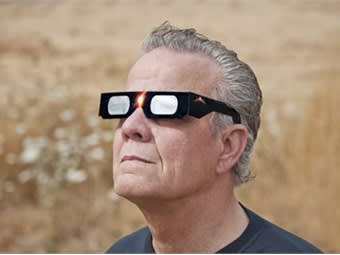
According to video telematics provider Lytx, driver behavior on the day of the solar eclipse was as extraordinary as the events in the sky.
The company is the maker of DriveCam® video safety program, which analyzes video clips triggered by driving events, such as a hard swerve or a sudden break. The video clips provide insight into driver behavior at the time of the event. More than 2,200 commercial and government fleets comprising more than 400,000 vehicles use the DriveCam program.
Analyzing its database of more than 70 billion driving miles, Lytx looked back at driving event data for the daylight hours of Mondays for the past five months to benchmark the normal volume and type of Monday driving behaviors. The company then compared the benchmark data to driving events during the daylight hours of last Monday, Aug. 21, the date of the solar eclipse.
The data tells a curious story. The rate of drivers "off identifiable roadway" (pulling off to the side of the road) was 68% higher on the day of the eclipse, and events involving "other communications device" (something other than a cell phone) were 47% higher. The takeaway: Commercial drivers, as a group, were just as excited about the eclipse as the rest of us and likely pulled over to take a picture.
But the real telltale sign? Vehicles recorded as "driving faster than the posted speed limit" increased by 35% on the day of the eclipse, which could be drivers trying to make up time after playing hooky to watch the celestial events unfold.
About the study: Lytx reviewed 43 behaviors associated with driving events of 239,000 vehicles on 20 consecutive Mondays leading up to Aug. 13, 2017, the Monday before the eclipse, and separately analyzed the same data set for driving events captured during the daylight hours of Aug. 21, 2017. The vehicles spanned all commercial driving segments: trucking, distribution, waste, transit, construction, and services.
More Technology

From Hardware to Digital Partner: Luminator Charts Its Next Chapter
CEO Magnus Friberg discusses Luminator’s shift toward becoming a digital partner, the growing importance of software and interoperability, and how AI can help agencies improve operations and passenger experience.
Read More →
Beyond the Checklist: A Structured Approach to Transit Maintenance
Reliability-Centered Maintenance helps transit agencies move beyond routine checklists to focus limited resources on the assets and failures that have the greatest impact on safety, reliability, and service.
Read More →
NJ TRANSIT Advances Bus Technology Upgrades Across Statewide Fleet
More than 1,500 buses now feature upgraded technology designed to improve arrival predictions and provide free Wi-Fi, with deployment expected to reach nearly 2,000 buses by the end of 2026.
Read More →

Building a Flexible Path to Transit Electrification
John Hroncich discusses BAE Systems’ modular and scalable approach, lessons learned from decades of real-world operations, and how agencies can identify electrification strategies that fit their fleets.
Read More →
Biz Briefs: Alstom Lands Canadian Contract, LYT to Supply California TSP, and More
In METRO's latest installment, we take a look at recent news from Complete Coach Works, Beep, FlixBus, and more partnerships making headlines across the transportation sector.
Read More →
From Legacy Silos to Conversational Intelligence
What if transit leaders could ask any operational question and get a trusted answer in seconds? Conversational AI is transforming how agencies use their data.
Read More →
USDOT Announces Rail Vehicle Replacement Grants, Chattanooga AV Shuttle Funding
More than $191 million in federal funding will help three transit agencies replace aging rail vehicles and support a new autonomous shuttle service in Chattanooga.
Read More →
Bus Tech Talk: Keeping Transit Technicians Ahead of the Technology Curve
LA Metro’s Obed Mejia discusses technician training, evolving maintenance technology, fleet replacement, and strategies for getting the most out of today’s transit fleets.
Read More →
Biz Briefs: RIPTA Unveils New Frontrunners, Clevland RTA Adds New Siemens, and More
In METRO's latest installment, we take a look at recent news from Siemens, Prevost, Dodge, and more partnerships making headlines across the transportation sector.
Read More →
Why Simulating Pedestrian Movement Has Become Essential for Modern Rail Stations
Pedestrian microsimulation is helping rail planners identify bottlenecks, test station designs, and prepare complex transit hubs for growing passenger volumes.
Read More →