



Toronto Transit Commission launches first electric bus into service
The New Flyer bus is the first of many for the agency, who also plans on procuring buses from Proterra and BYD as it moves toward a 100% zero-emission fleet.

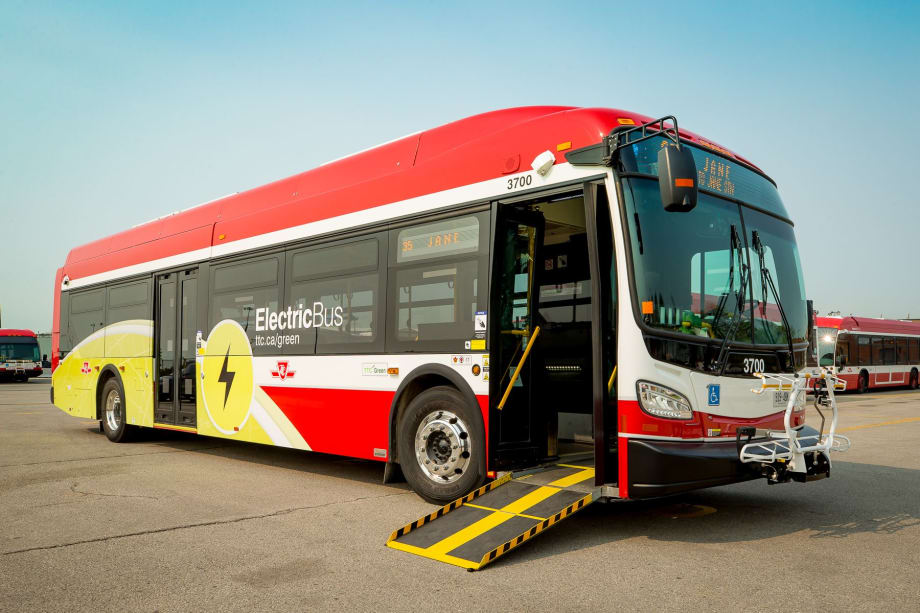
The TTC will have 60 eBuses delivered by the end of Q1 2020.
TTC/New Flyer
The TTC will have 60 eBuses delivered by the end of Q1 2020.
TTC/New Flyer
The Toronto Transit Commission (TTC) launched the first of its all-electric buses into service on the 35 Jane route.
The bus, manufactured by New Flyer Industries Inc., arrived in Toronto in April and has since undergone testing and commissioning as well as operator training. It is the first of 60 electric buses the TTC will have by the first quarter of 2020, making up one of the largest mini-fleets of electric buses in North America.
The TTC will have 60 eBuses delivered by the end of Q1 2020. In addition to New Flyer, the TTC is also procuring electric buses from Proterra Inc. and BYD, allowing the TTC to inform future procurement through a head-to-head evaluation.
The TTC is working with partners at Toronto Hydro and Panasonic Eco Solutions Canada to prepare for the arrival of the new vehicles by performing hydro service upgrades, installing switchgear and transformers to lay the groundwork for the installation of chargers and retrofitting the garages to be all-electric. This also includes conducting electrical and civil construction upgrades, providing supporting infrastructure for the bus garage (e.g., substation, backup generator and related equipment).
In total, up to $1.8 billion is being invested in Toronto through PTIF, which was launched in August 2016.
TTC/New Flyer
The electrification of vehicles is a key component of the City's TransformTO climate action strategy, which targets an 80% reduction in local greenhouse gas emissions by 2050. To meet that target, 100% of vehicles in Toronto must transition to low-carbon energy by 2050. The electrification of buses is an example of the City's commitment to lead by example. Vehicles generate about one-third of the emissions in Toronto today.
The TTC’s new eBuses operate on truly green propulsion technology with zero tailpipe emissions. In Ontario, generation of electricity for overnight charging is 100% nuclear and completely free of GHG emissions.
The Government of Canada and the City of Toronto are investing $140 million in the electric buses as part of the federal Public Transit Infrastructure Fund (PTIF). This fund is helping keep Torontonians moving through investments in the repair, modernization, and expansion of the city’s transit and active transportation networks. In total, up to $1.8 billion is being invested in Toronto through PTIF, which was launched in August 2016.
More Technology

From Hardware to Digital Partner: Luminator Charts Its Next Chapter
CEO Magnus Friberg discusses Luminator’s shift toward becoming a digital partner, the growing importance of software and interoperability, and how AI can help agencies improve operations and passenger experience.
Read More →
Beyond the Checklist: A Structured Approach to Transit Maintenance
Reliability-Centered Maintenance helps transit agencies move beyond routine checklists to focus limited resources on the assets and failures that have the greatest impact on safety, reliability, and service.
Read More →
NJ TRANSIT Advances Bus Technology Upgrades Across Statewide Fleet
More than 1,500 buses now feature upgraded technology designed to improve arrival predictions and provide free Wi-Fi, with deployment expected to reach nearly 2,000 buses by the end of 2026.
Read More →

Building a Flexible Path to Transit Electrification
John Hroncich discusses BAE Systems’ modular and scalable approach, lessons learned from decades of real-world operations, and how agencies can identify electrification strategies that fit their fleets.
Read More →
Biz Briefs: Alstom Lands Canadian Contract, LYT to Supply California TSP, and More
In METRO's latest installment, we take a look at recent news from Complete Coach Works, Beep, FlixBus, and more partnerships making headlines across the transportation sector.
Read More →
From Legacy Silos to Conversational Intelligence
What if transit leaders could ask any operational question and get a trusted answer in seconds? Conversational AI is transforming how agencies use their data.
Read More →
USDOT Announces Rail Vehicle Replacement Grants, Chattanooga AV Shuttle Funding
More than $191 million in federal funding will help three transit agencies replace aging rail vehicles and support a new autonomous shuttle service in Chattanooga.
Read More →
Bus Tech Talk: Keeping Transit Technicians Ahead of the Technology Curve
LA Metro’s Obed Mejia discusses technician training, evolving maintenance technology, fleet replacement, and strategies for getting the most out of today’s transit fleets.
Read More →
Biz Briefs: RIPTA Unveils New Frontrunners, Clevland RTA Adds New Siemens, and More
In METRO's latest installment, we take a look at recent news from Siemens, Prevost, Dodge, and more partnerships making headlines across the transportation sector.
Read More →
Why Simulating Pedestrian Movement Has Become Essential for Modern Rail Stations
Pedestrian microsimulation is helping rail planners identify bottlenecks, test station designs, and prepare complex transit hubs for growing passenger volumes.
Read More →