




RELATED: Bestmile partners with self-driving tech. co. StreetDrone
Tech company taps Bestmile to plan, manage, optimize AV fleet
Beep is the first distributor for NAVYA in the U.S. and is the exclusive dealer for NAVYA in Florida.
August 13, 2019
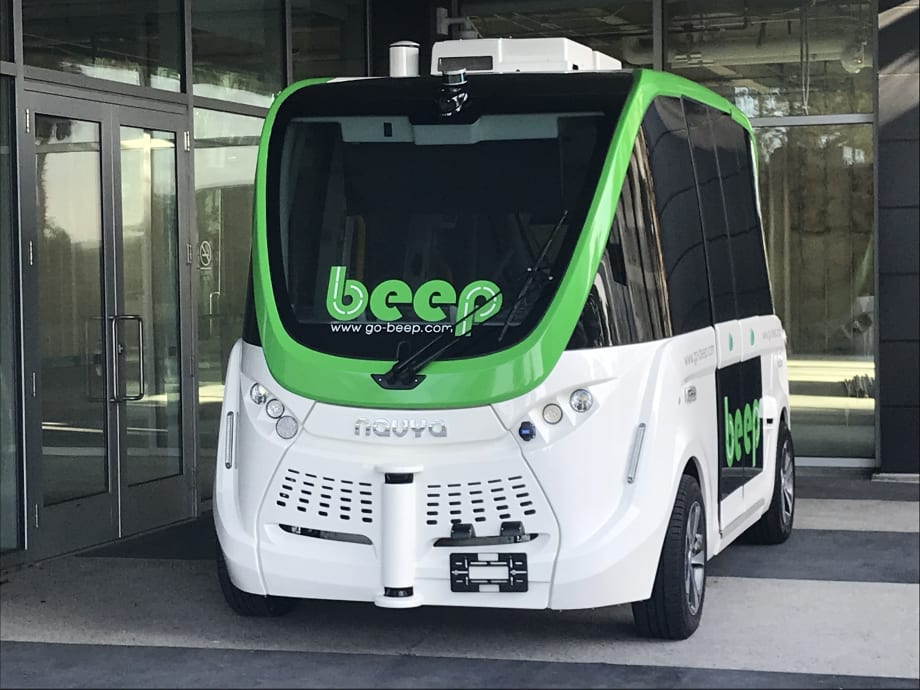
The Bestmile platform will enable Beep to continually optimize all aspects of its autonomous fleet performance.
Beep
2 min to read
The Bestmile platform will enable Beep to continually optimize all aspects of its autonomous fleet performance.
Beep
Beep, a Florida-based autonomous mobility solutions company, formed a partnership with fleet orchestration platform Bestmile. Through the partnership, Beep will leverage the market leading technology and tools that Bestmile offers to plan, manage, and orchestrate its autonomous shuttle fleets.
Beep, headquartered in Orlando, offers autonomous mobility solutions to fleet owners and operators in low-speed environments across the public and private sector. From route planning to fully-managed autonomous vehicle transportation services, Beep's offerings are designed to drive differentiation, innovation, and a superior passenger experience, providing safe, clean, and efficient transportation between defined locations on private and public roads. The company's solutions are underpinned by NAVYA's AUTONOM shuttle, a driverless electric 15-passenger vehicle equipped with state-of-the-art sensor technology. Beep is the first distributor for NAVYA in the U.S. and is the exclusive dealer for NAVYA in Florida.
Beep will integrate Bestmile's fleet orchestration solutions into its managed service offering that includes the management and monitoring of its AV fleet. The Bestmile platform will enable Beep to continually optimize all aspects of its autonomous fleet performance, including vehicle maintenance and service delivery to data analytics and machine learning for continuous improvement.
Bestmile's platform has supported fleets on three continents since 2014, including the first autonomous fleets to operate on city streets as part of public transport networks. The Bestmile platform includes a complete suite of operator control systems and supports mobile applications that can be easily configured, and the platform's APIs can be used to integrate operator tools and applications. The technology is cloud-based and can manage multiple fleets and locations, and offers multiple points of integration with operator, vehicle, driver, traveler, and external data.
More Technology

From Hardware to Digital Partner: Luminator Charts Its Next Chapter
CEO Magnus Friberg discusses Luminator’s shift toward becoming a digital partner, the growing importance of software and interoperability, and how AI can help agencies improve operations and passenger experience.
Read More →
Beyond the Checklist: A Structured Approach to Transit Maintenance
Reliability-Centered Maintenance helps transit agencies move beyond routine checklists to focus limited resources on the assets and failures that have the greatest impact on safety, reliability, and service.
Read More →
NJ TRANSIT Advances Bus Technology Upgrades Across Statewide Fleet
More than 1,500 buses now feature upgraded technology designed to improve arrival predictions and provide free Wi-Fi, with deployment expected to reach nearly 2,000 buses by the end of 2026.
Read More →

Building a Flexible Path to Transit Electrification
John Hroncich discusses BAE Systems’ modular and scalable approach, lessons learned from decades of real-world operations, and how agencies can identify electrification strategies that fit their fleets.
Read More →
Biz Briefs: Alstom Lands Canadian Contract, LYT to Supply California TSP, and More
In METRO's latest installment, we take a look at recent news from Complete Coach Works, Beep, FlixBus, and more partnerships making headlines across the transportation sector.
Read More →
Sponsored•September 8, 2026
From Legacy Silos to Conversational Intelligence
What if transit leaders could ask any operational question and get a trusted answer in seconds? Conversational AI is transforming how agencies use their data.
Read More →
USDOT Announces Rail Vehicle Replacement Grants, Chattanooga AV Shuttle Funding
More than $191 million in federal funding will help three transit agencies replace aging rail vehicles and support a new autonomous shuttle service in Chattanooga.
Read More →
Bus Tech Talk: Keeping Transit Technicians Ahead of the Technology Curve
LA Metro’s Obed Mejia discusses technician training, evolving maintenance technology, fleet replacement, and strategies for getting the most out of today’s transit fleets.
Read More →
Biz Briefs: RIPTA Unveils New Frontrunners, Clevland RTA Adds New Siemens, and More
In METRO's latest installment, we take a look at recent news from Siemens, Prevost, Dodge, and more partnerships making headlines across the transportation sector.
Read More →
Why Simulating Pedestrian Movement Has Become Essential for Modern Rail Stations
Pedestrian microsimulation is helping rail planners identify bottlenecks, test station designs, and prepare complex transit hubs for growing passenger volumes.
Read More →