



We would implore anyone who serves
the transit industry to consider how they
can advance the cause of research and
provide agencies with forward-thinking
solutions that better address the needs of
the entire spectrum of ridership.
Linking Research to Practice to Advance Accessible Transit
How partnerships between public agencies, universities, and the private sector are driving innovative research-based approaches.
by Sasha Pejcic, Dr. Jordana Maisel, & Brittany Perez
December 24, 2018
A new TTC program includes plans
to design and implement the agency’s first-ever travel training program. Photo: Toronto Transit Commission
5 min to read
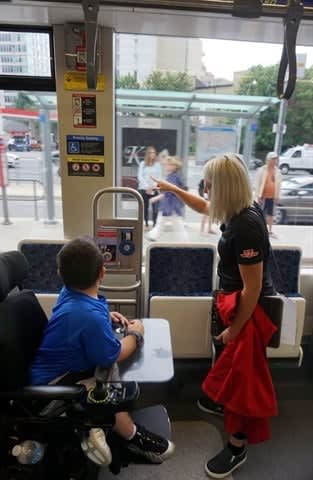
A new TTC program includes plans
to design and implement the agency’s first-ever travel training program. Photo: Toronto Transit Commission
Historically, there’s often been a disconnect between the research that universities do related to transit and the actual policies and practices introduced by transit agencies. The research might be promising, but the links haven’t always been made to practical implementation.
Here, we’ll take a look at how partnerships between public agencies, universities, and the private sector are driving innovative new research-based approaches to meeting the needs of accessible transit ridership.
A number of public/private/higher education studies in the works right now are trying to change that. By getting the transit industry involved from the beginning of a grant or research project, universities are seeking to ensure that their research findings are more useful, applicable, and therefore, adopted as practice by more agencies.
Leveraging University Partnerships
Last month, Carnegie Melon University announced that a 10-year partnership, between its Robotics Institute and the University at Buffalo’s (UB) Center for Inclusive Design and Environmental Access (IDeA), to advance physical access and public transportation for people with disabilities, has been extended for another five years.
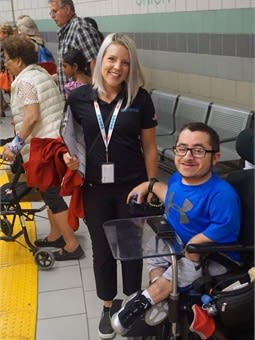
In a collaboration with the Toronto Transit Commission, Stantec is developing a future-proofed fleet plan for the agency's paratransit service. Photo: Toronto Transit Commission
The universities’ joint Rehabilitation Engineering Research Center (RERC) on Accessible Public Transportation was awarded a five-year, $4.6 million grant from the U.S. National Institute on Disability, Independent Living, and Rehabilitation Research. This center develops ways to empower consumers, manufacturers, and service providers in the design and evaluation of accessible transportation equipment, information services, and physical environments.
As one part of this grant, the universities will use a mixed-methods approach to study current gaps in transit service and first/last mile challenges for individuals with disabilities. The first part of this research examines innovative, flexible transit service delivery models that augment traditional fixed-route transit service.
The research includes interviews with transit agencies and an online survey and focus groups with transit riders who have experience using both paratransit and flexible transit services. The findings will then identify the benefits and challenges of implementing innovative, flexible transit service models into public transit.
The second part of the universities’ research will study the usability of shared-automated vehicles for people with disabilities. An online survey will target individuals with disabilities to obtain information about user requirements and preferences with respect to shared autonomous vehicle (SAV) usage.
Through interviews with SAV manufacturers, transit agencies, municipal departments, and regulatory organizations, the researchers are hoping to ascertain the benefits and challenges of providing accessibility in SAVs, the anticipated level of SAV adoption in their transit services, the impact of SAVs on land use and street infrastructure, and the regulations needed in those operations. These findings will then serve to inform vehicle manufacturers on automated vehicle designs and support Federal rule-making activities and policies on innovative transit services and vehicles.
Based on this research, a development project will then create and evaluate actual designs for SAVs and develop universal design guidelines that can be applied to overcome community mobility and first/last mile travel challenges that older adults and people with disabilities currently experience.
By creating and evaluating real designs, the research will help to create cycles of knowledge transfer from research to commercialization through committed partnerships with large and small SAV manufacturers. After all, the idea of autonomous vehicles solving mobility challenges for accessible transit audiences is great in theory, but if the design of the actual vehicles is prohibitive or challenging to use, it won’t ever truly be a workable solution.
Partnering with Private Industry
As part of the Robotics Institute and the IDeA Center’s research efforts, businesses such as Stantec, through their work with transit agencies across North America, are helping connect researchers with transit agencies that are implementing innovative service delivery models.
For example, Stantec is currently collaborating with the IDeA Center on two projects for the Toronto Transit Commission’s (TTC) Wheel-Trans Transformation Program. TTC has shown significant leadership in their commitment to advancing paratransit for the betterment of their customers. This first project is to design and implement the TTC’s first-ever travel training program. In designing the program, Stantec is leveraging cutting-edge research done by the IDeA Center on why individuals who have been travel trained at other transit agencies do not use accessible conventional transit afterwards. This research distilled 16 factors that are being reverse-engineered into the creation of the TTC’s program to ensure higher rates of success from the onset.
In another collaboration with the TTC, Stantec is developing a future-proofed fleet plan for Wheel-Trans. The focus of that assignment is to ensure that Wheel-Trans has the optimal fleet mix to respond to alternate service delivery strategies (e.g, microtransit, zone buses, a more robust community bus network) that it is seeking to explore in the future. At the same time, fundamental items, such as maintenance requirements for a non-standardized fleet, are being realistically weighed for their potential impact. Stantec is working closely with the IDeA Center on this project to optimize the use of space on vehicles using their recent laboratory research in this space.
Since not all transit agencies have the resources to keep up on the latest research in their field or determine the best ways to implement it for their own agency, we see work like this as an important opportunity to disseminate the latest research findings to improve transit agencies’ offerings to their ridership. We would implore anyone who serves the transit industry to consider how they can advance the cause of research and provide agencies with forward-thinking solutions that better address the needs of the entire spectrum of ridership.
Sasha Pejcic, PMP, is Managing Sr. Associate, Transportation & Transit Advisory Lead, at Stantec.
Dr. Jordana Maisel, is Director, Research Activities, at the Center for Inclusive Design and Environmental Access, University of Buffalo.
Brittany Perez, OTD, OTRL, is Director, Outreach and Engagement, at the Center for Inclusive Design and Environmental Access, University of Buffalo.
Subscribe to Our Newsletter
More Paratransit

Biz Briefs: RIPTA Unveils New Frontrunners, Clevland RTA Adds New Siemens, and More
In METRO's latest installment, we take a look at recent news from Siemens, Prevost, Dodge, and more partnerships making headlines across the transportation sector.
Read More →
King County Metro Makes ADA Paratransit Easier to Navigate
METRO's Innovative Solutions Award winner replaces complex service-area descriptions with an accessible, interactive map that puts paratransit information directly in customers’ hands.
Read More →
Jacksonville’s NAVI Project Charts a New Course for Autonomous Public Transportation
Through its NAVI program, JTA is showing how autonomous vehicles, intelligent infrastructure, and coordinated operations can work together to deliver everyday public transportation.
Read More →
Driving Smarter Paratransit
John Hanlon shares how AlphaRoute is leveraging AI-powered technology to help paratransit providers optimize operations, support frontline staff, and enhance the rider experience.
Read More →
METRO Magazine Announces 2026 Innovative Solutions Awards Winners
Projects Recognized for Advancing Mobility Through Technology, Accessibility, Workforce Innovation, and Operational Excellence
Read More →
Biz Briefs: STV teams with Amtrak, Motorcoach Operators Boost Fleet and Land Contracts, and More
From manufacturers and suppliers to transit agencies and motorcoach operators, these updates offer a snapshot of the projects, partnerships and business moves driving the industry forward.
Read More →
Biz Briefs: Masabi Teams with St. Louis Metro and More
In METRO's latest installment, we take a look at recent news from Transdev, Hitachi, and more partnerships making headlines across the transportation sector.
Read More →
New York MTA Leverages Zoning Program to Advance Station Accessibility
Accessibility enhancements at Nevins St Station will be financed through a development agreement tied to the MTA's Zoning for Accessibility initiative.
Read More →
Reinventing Fleet Maintenance with Real-time Visibility and AI
Transit leaders need to know what needs fixing, where to look, who is responsible, when work is completed, and what it costs without having to chase information across disconnected systems.
Read More →
SamTrans Sets Priorities for Potential Connect Bay Area Revenue
The board-approved framework allocates future funding to maintaining service, rider improvements, equity initiatives, and infrastructure repairs.
Read More →