



Transit agencies turn to new, innovative contactless payment systems
Transit agencies, including NJ Transit and Utah Transit Authority, believe that contactless payment systems will help them more accurately plan routes and set fare prices.
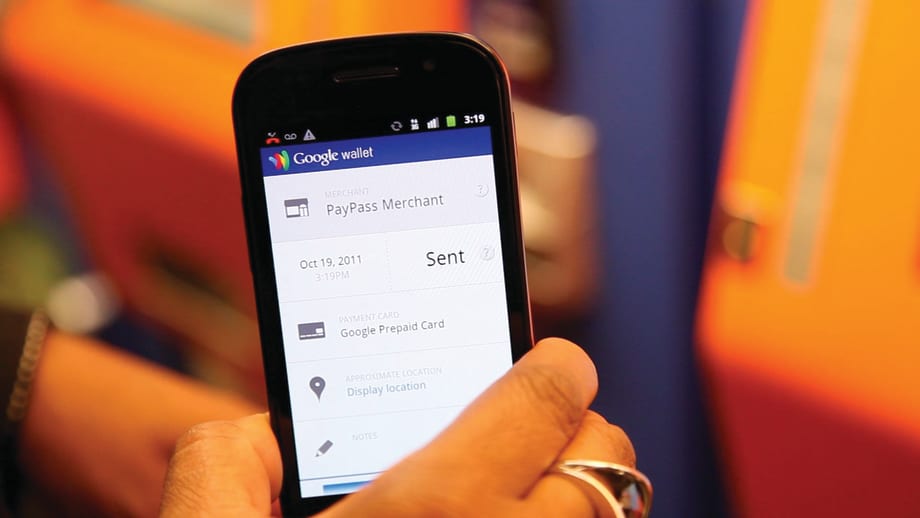
Photo Courtesy: NJ Transit
Photo Courtesy: NJ Transit
Launched at NJ Transit stations in October, Google Wallet is a tap-and-go smart phone app that essentially converts one's mobile phone into a "personal wallet." Rather than digging around for change in purses or pockets, consumers merely tap their phone, which stores credit card information, against a supported payment reader to purchase transit tickets.
During the tap, Google Wallet transmits credit card information using a technology called near field communication (NFC). The entire transaction processes directly on the phone; no physical ticket is needed.
As of now, travelers can use Google Wallet to purchase tickets at New York Penn Station, the Newark Liberty International Airport Station and on select NJ Transit bus routes
"This new and innovative partnership will give our customers more options, more choices and an ability to move more rapidly throughout their daily commute," said John Durso Jr., spokesperson for NJ Transit.
Over the past few years, NJ Transit kept current with industry trends and already had some contactless payment systems in place. This made the transition to Google Wallet easier, said Durso. "We have been committed to advancing our programs, so it was a natural progression in our efforts to leverage this cutting-edge technology," he explained.
To make it a seamless transition for customers as well, Google representatives came to the site on the day of the launch to help familiarize travelers with the new technology.
Since it is fairly new, Google Wallet is only downloadable through Nexus S 4G on Sprint phones. The app is free and there are no transaction fees; however, users do need a Google account. To ensure security, users must lock and unlock their Google Wallet for use.
As of now, payments can only be made through Citi MasterCard credit cards, but travelers can use non-supported credit cards to fund a virtual pre-paid card through Google. For a limited time, new pre-paid card holders receive a $10 incentive.
Following in NJ Transit's footsteps, Utah Transit Authority (UTA) also plans to integrate Google Wallet into its payment system. UTA has been moving toward contactless payment since 2006, with a goal to make its entire fare system electronic. The agency will use both Google Wallet and Isis, — a rival NFC-based mobile wallet platform — according to Gerry Carpenter, media relations specialist for UTA. Isis will be available through UTA by spring, with Google Wallet available by the end of 2012.
Carpenter said that transferring to smart phone payment will help combat some of the biggest challenges the transit agency faces today.
"Transit agencies need to understand how riders are using the system. Right now, it's hard to tell where riders are going — you can count them, but it's hard to track a full linked trip," said Carpenter. "With NFC tapping, each customer has a unique identifier, — either an ID or credit card - which enables us to tell that an individual customer went from point A to point B and arrived at point C, all without violating their privacy."
The long-term benefit is to use the tracking to make improvements to the public transportation system, which better suit the travel patterns of customers. UTA is hoping to create more direct trips to popular locations, explained Carpenter
"There are a lot of advantages of using mobile payment," he said. "It will speed up the boarding process, and also, we'll be able to know the distance of one's trip, so we can start charging people more fairly, based on how far they've traveled."
Both NJ Transit and UTA are tenaciously moving in the same direction as the industry, embracing new technologies to enhance transit in their expansive communities.
"We have pledged to create new and innovative programs that will benefit our customers and help them move throughout their daily routes at a more expeditious manner," said Durso.
More Bus

New York MTA Plans Largest Bus Fleet Upgrade in More Than a Decade
The agency is seeking manufacturers for 650 new CNG buses to replace aging vehicles, improve reliability, and advance its broader fleet modernization strategy.
Read More →
Building a Flexible Path to Transit Electrification
John Hroncich discusses BAE Systems’ modular and scalable approach, lessons learned from decades of real-world operations, and how agencies can identify electrification strategies that fit their fleets.
Read More →
Bus Tech Talk: Keeping Transit Technicians Ahead of the Technology Curve
LA Metro’s Obed Mejia discusses technician training, evolving maintenance technology, fleet replacement, and strategies for getting the most out of today’s transit fleets.
Read More →
Biz Briefs: RIPTA Unveils New Frontrunners, Clevland RTA Adds New Siemens, and More
In METRO's latest installment, we take a look at recent news from Siemens, Prevost, Dodge, and more partnerships making headlines across the transportation sector.
Read More →
People Movement: Holly Arnold Joins Transdev and More
In this edition, we also cover recent appointments and announcements at Pace, CamTran, MCI, and more, showcasing the individuals helping to shape the future of transportation.
Read More →
The High Cost of Transit Buses: Industry Leaders Look to Procurement Reform
Transit leaders and policymakers examine how standardized bus designs, streamlined procurement, and predictable funding could help agencies stretch budgets and deliver better service.
Read More →
The Business Voice Behind Public Transportation
As chair of APTA’s Business Members Board of Governors, Ray Melleady explains how more than 850 business members are partnering with transit agencies to advance funding, innovation, and industry-wide collaboration.
Read More →
From Surviving to Thriving: Building Stronger Transportation Organizations
Bus Business Consultants founder Brian Dickson shares lessons on leadership, organizational health, and creating options for long-term success in a changing transportation industry.
Read More →
Finding the ‘Happy Medium’: Optimizing Maintenance Without Sacrificing Reliability
The key to maintenance optimization isn’t doing less work—it’s doing the right work at the right time on the right assets.
Read More →
LA Metro, City of West Hollywood, and Partners Advance Smarter Bus Lane Enforcement
The award-winning partnership combines AI-powered detection with human oversight to improve bus reliability, accessibility, and enforcement efficiency.
Read More →