



Hybrid Bus Technology Receives High Marks
A continuing swell of support for hybrid buses is apparent as panelists discuss the vehicles' benefits and challenges during the 2006 Clean Heavy-Duty Vehicle Conference.
Alternative-fueled buses have a long history in the transit industry, especially with the growing use of natural-gas engines over the past couple of decades. But the popularity of hybrid buses that combine diesel or gasoline engines with electric-drive motors is steadily expanding.
The transit application of hybrid propulsion was the subject of a panel discussion at the Clean Heavy-Duty Vehicle Conference, sponsored by WestStart/CALSTART, in San Diego in February.
Panelists included Todd Gibbs, program administrator for the fleet engineering group at King County Metro in Seattle; Chris Parro, senior analyst for the Orange County (Calif.) Transportation Authority; Dr. Nigel Clark, an alternative-fuels researcher at West Virginia University; Walt Kulyk, director of mobility innovation for the Federal Transit Administration (FTA); Lurae Stuart, senior program manager for bus programs for the American Public Transportation Association (APTA); and Michael Melaniphy, vice president of government sales for Motor Coach Industries (MCI).
Seattle’s experience
Gibbs provided an update of the use of New Flyer hybrid buses at King County Metro, which began introducing diesel-electric articulated buses into its fleet in June 2004. The 235 buses, equipped with Allison EP-50 parallel hybrid propulsion systems and Caterpillar C-9 engines, each cost about $200,000 more than a conventional diesel bus.
Gibbs said he expects the hybrid buses to last 15 years, without any engine or electric drive overhauls. Expected battery life is four to five years.
Having logged 12 million service miles overall, the buses have been performing with high reliability. Gibbs said the miles between trouble calls has been about 6,500 miles. “It’s one of the highest in our fleet,” he said.
The hybrid buses are also helping cut fuel costs. Hybrids are getting from 3.2 to 3.8 mpg, compared to 2.5 mpg for conventional buses. “We’re seeing significant improvements in fuel economy with the hybrid package,” Gibbs said.
In regard to maintenance costs, Gibbs said the hybrid buses are requiring about six hours of labor per 1,000 miles of service, which, on a per-mile basis, comes out to $1.45. He added that the agency has been able to reduce its service staff by 10% since bringing the hybrids into service. Part of that reduction, however, can be attributed to the retirement of older buses that required significant service hours.
King County’s hybrid program is being evaluated by the National Renewable Energy Laboratory (NREL). Gibbs said the comparative test was scheduled to end last March. In addition, two of the hybrids have undergone fuel economy and emissions testing at NREL’s lab in Golden, Colo.
According to Gibbs, the hybrids’ fuel consumption was 20% to 43% lower than its non-hybrid counterparts, while nitrogen oxide and particulate matter emissions were 10% to 39% and 51% to 97% lower, respectively. “We’re extremely pleased with that information,” he said, adding that the NREL will issue a formal report following the conclusion of the evaluation.
OCTA starts small
Parro described the OCTA’s testing of four New Flyer hybrid buses, two with gasoline-electric (ISE) drives and two with diesel-electric (Allison) drives.
The gasoline hybrids have Ford V10 engines with a Siemens 150 kilowatt generator and two 85 kilowatt drive motors and two integrated ultracapacitor packs, while the diesel hybrids have a Cummins ISL engine with the Allison Ep system and a Panasonic nickel metal hydride battery pack.
Parro said the four test buses have been run on similar routes, making it possible to compare their performance. He said the gasoline hybrids, which were put into service last year, have averaged 3.1 mpg and have run 16,000 miles without drive system component failure. The diesel hybrids, which were introduced in 1998 and have undergone three changes to the electric drive system, have averaged 4.1 mpg and have gone 100,000 miles without drive system component failure.
Parro said the buses vary dramatically in their acceleration from 0 to 60 mph. The gasoline hybrids can reach 60 mph in 35 seconds, but it takes the diesel hybrids 115 seconds to get to the same speed. Nonetheless, he said operators enjoy driving the hybrids, which average 13 mph during route service but can be taken up to 60 mph as they’re driven on the freeways during deadhead runs.
Adding a diesel particulate filter to the diesel hybrid bus has created a few challenges, Parro said. Because the diesel engine is used less overall, the exhaust temperatures are not getting high enough to burn the soot that
gets trapped in the filter. He said the OCTA is working with Cummins and Johnson Matthey, the filter manufacturer, to solve this problem.
FTA’s supporting role
Kulyk discussed the FTA’s role in promoting advanced technologies such as hybrid buses. He said the FTA is particularly interested in electric-drive technology because of its ability to improve acceleration and reduce emissions and fuel consumption. “These are tangible benefits that we can accrue,” he said.
Kulyk said that transit bus fleets are ideal for program testing because they have fixed routes and because it’s relatively easy to collect data and work with the maintenance staff, operators and fuelers. “They lend themselves to a lot of good experimental data,” he said.
Kulyk added, however, that commercialization of advanced technologies is difficult for the manufacturing sector because the transit market is so small. “Our market is from 2,000 to 4,000 new transit buses per year,” he said. With the passage of SAFETEA-LU, he added, the volume of buses manufactured each year could rise to as much as 5,000.
With the growing popularity of hybrid electric buses, Kulyk predicts that the market share of compressed natural gas (CNG) buses will fall off. He said CNG buses accounted for as much as 25% of new bus orders in recent years, but added, “I think it has hit its peak and will slowly taper off.”
To further promote the use of hybrid buses, Kulyk said, the FTA worked with Congress to create an incentive program in its 2007 and ’08 appropriations to cover the cost differential between hybrid buses and conventional diesel buses. “We’ll also pay 100% of the retrofit four or five years down the line if you need to rebuild the engine or replace the batteries,” he said. “In a limited way, this could help to jump-start the industry.”
Kulyk said there’s a federal initiative to also bring fuel-cell buses into development as a possible down-the-line replacement for hybrid buses. In the current reauthorization, he said, Congress provided $49 million to hasten the commercial development of fuel-cell buses. “We are looking at the spectrum — electric drives, clean fuels, hybrid electric and fuel cell — to the benefit, we hope, of the transit market,” he said.
Research shows benefits
Clark of the University of West Virginia provided details on the fuel savings associated with hybrid buses. He said it’s possible to operate hybrid buses with smaller diesel engines or to use conventional diesel engines more efficiently, pointing out that these options could also positively impact emissions.
Braking energy regeneration, Clark said, also helps to extend the fuel economy of hybrid buses. “In my opinion, it has the greatest potential to improve fuel economy,” he said.
According to Clark’s research, 40-foot hybrid diesel-electric buses have been steadily improving their fuel economy. From 4.5 mpg in 1997, fuel economy climbed to 6.7 mpg in 2004. Meanwhile, conventional diesel buses dipped from 5.5 mpg in 1997 to 2.89 mpg in 2004.
Clark also cited research that showed the emissions advantages of hybrid buses in regard to nitrogen oxide and particulate matter. In 2004, a hybrid diesel bus emitted 9.1 grams of NOx per mile compared with 17.8 grams for a conventional diesel bus. For particulate matter, the hybrid diesel produced 0.02 grams per mile compared with 0.03 grams for a conventional diesel bus.
Ahead of the ’07 curve
MCI’s Melaniphy and APTA’s Stuart discussed the impending 2007 EPA emissions regulations and how they will affect transit systems. They pointed out that the new standards will apply to diesel engines used for hybrid buses, although a certification process is still being deliberated.
Melaniphy and Stuart focused on the comparative technology of current engines vs. ’07 engines, in regard to how the powerplants will meet stricter emissions standards. Some of the changes that transit operations can expect: significantly higher prices and open-ended questions about durability, maintainability and availability of the new engines.
The duo also discussed the next set of tightened emissions regulations in 2010, which could require engine manufacturers to begin injecting urea into the aftertreatment system for selective catalytic reduction. This would create new infrastructure demands on the transit system for storage and sourcing of the urea.
The financial impacts of the EPA regulations will include capital costs for vehicles, spare parts, support equipment, filter-cleaning devices, energy storage management for hybrids and diagnostic equipment.
Melaniphy and Stuart also emphasized the need to train maintenance personnel and operators on the new technology. Hybrids, for example, generate high voltage and require that shop staff understand the necessary precautions. Operators need to be trained on the diesel
particulate filter warning indicators and thresholds and out-of-service criteria.
More Management
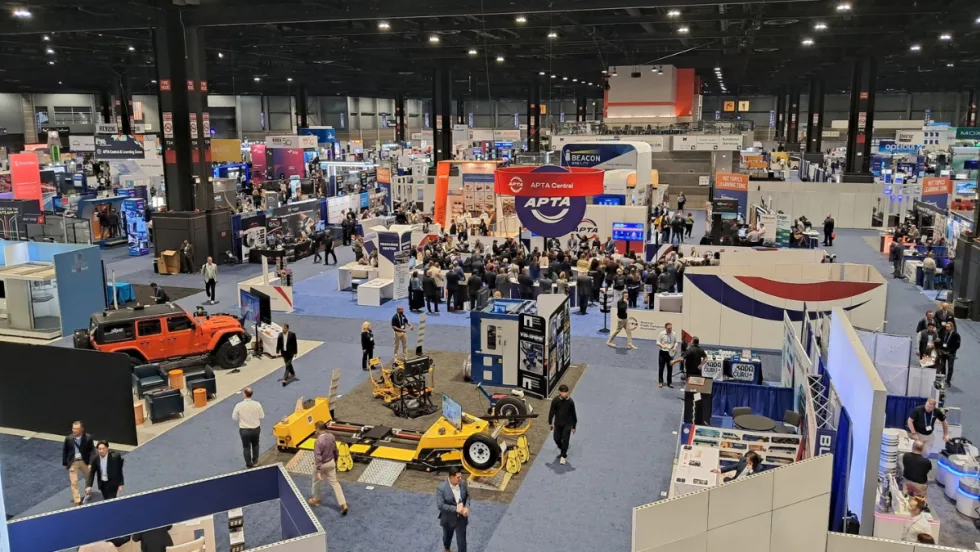
APTA 2026 TRANSform & EXPO Kicks Off in Chicago
After 45 years, APTA returns to Chicago with a focus on next-generation fleets, AI, connected transit networks, and the funding strategies shaping public transportation’s future.
Read More →
New York MTA Warns Federal Tariffs Could Add $1 Billion to Rolling Stock Costs
The agency said tariffs on specialized imported components could reduce the purchasing power of its $23 billion investment in new subway cars, railcars, and buses.
Read More →
From the Show Floor: What’s Happening at APTA TRANSform & EXPO 2026
Follow the latest product launches, partnerships, technology updates, and transit industry announcements coming out of APTA TRANSform & EXPO in Chicago.
Read More →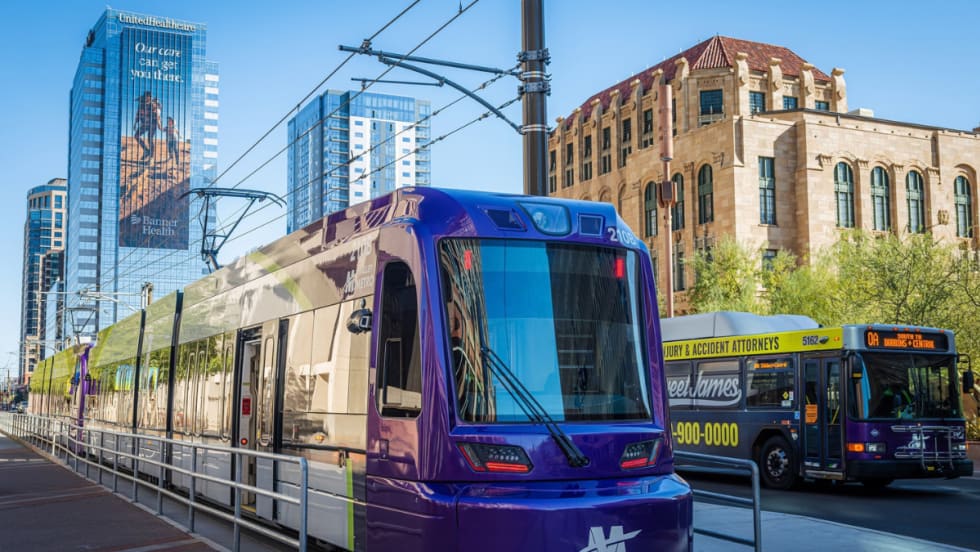
How Valley Metro Is Balancing Transit Growth With the Rider Experience
The APTA award-winning agency is pairing rapid system expansion with investments in workforce, safety, technology, and the fundamentals of transit service.
Read More →
Bus Tech Talk: Keeping Transit Technicians Ahead of the Technology Curve
In this episode of Bus Tech Talk, Complete Coach Works’ Business Development Manager Mark Hollenbeck and METRO’s Executive Editor Alex Roman sit down with Obed Mejia, Senior Technical Trainer for Bus Maintenance, at LA Metro to discuss how rapidly evolving bus technology is changing the maintenance shop — and the skills technicians need to keep pace.
Read More →
Michael Schneider Joins Paslay Group to Expand Transportation Practice
The longtime transportation executive will help Paslay Group grow its advisory and program management work across transit, highway, and other infrastructure sectors.
Read More →
People Movement: Connectpoint Expands Leadership Team, Stadler Names New Group CEO, and More
In this edition, we also spotlight recent personnel moves at Burns, UZURV, and more, highlighting the people taking on new roles across the transportation industry.
Read More →
More Than a Summer Job: Building the Next Generation of Transit Talent
The Delaware River Port Authority and PATCO have transformed their internship program into a hands-on professional development experience that introduces students to the breadth of transportation careers — and creates a pipeline for future employees.
Read More →
LA Metro Board Awards 220 Battery-Electric Bus Contract to ENC
The contract, which is the largest base award of battery-electric buses by a U.S. transit agency, will be built in Southern California, sustaining good jobs as LA prepares to welcome the world in 2028
Read More →
What’s Behind San Diego MTS’s Award-Winning Transit Strategy
Named one of APTA’s 2026 Outstanding Public Transportation Systems with 50 million or more annual passenger trips, California’s San Diego Metropolitan Transit System points to gains in ridership, safety, technology, and reliability as foundations of its success.
Read More →