



Translink's new security approach includes armed officers
The Greater Vancouver Transportation Authority has revamped its effortst to fighting crime in its transit system.

The Greater Vancouver (British Columbia) Transportation Authority’s (Translink) police force will soon be serving the public in a more expanded capacity. The provincial Ministry of Public Safety and Solicitor General recently announced that transit police officers for Translink will be issued firearms later this year. According to Tri-City News, the agency is arming the transit police force not only to increase its effectiveness in combating crime but also to make officers feel more secure. Police Constable Bjorn Bjornson claims that there is ample cause to arm police. “I had more physical confrontations in my first six months on transit than I did in 30 years with the Vancouver Police Department,” he said. Bob Kind, newly appointed transit police chief, said the Translink Police will now have the same policing abilities as any other law enforcement agency. Under the previous job description, Translink officers could only detain someone who had not paid a fare. If they wanted to arrest someone for theft or assault, they had to contact a higher authority, such as the Royal Canadian Mounted Police (RCMP). The 86-officer Translink unit will also be increased to 90 after new hires are put on duty. Kind says that the officers will be armed with “standard-issue Glocks, in plain sight.” Kind estimates that it will be a full three to four months before all 90 officers have completed the necessary weapons training. He said Translink is in the process of securing the training and should be getting started soon. The move to arm Translink officers comes after last year’s provincial approval of a Translink policing unit that has the power to arrest criminals on the SkyTrain system. Issuing firearms is part of an overall increase in the authority level of Translink officers. So far the public reaction has been “quite positive,” said Kind. “They see it as 90 new armed police officers.” Vancouver Police estimates that roughly 55% of its arrests occur within a 2,300-foot radius of SkyTrain stations. Coupled with programs such as Surrey’s Exodus Program, which aims to reduce crime in and around stations, the changes to Translink Police duties are welcomed by RCMP representatives. Recent changes in Translink officers’ policing abilities are a far cry from the limitations of the past. Kind said that transit officers previously were unable to stop drug deals or crime anywhere outside the transit system, even if it was right across the street from a station. The current armed patrols will cover SkyTrain stations and bus loops, and Translink plans to include entire bus routes once more officers are hired. — LANE ROBERTS
More Management

Joshua Schank on Transportation Innovation, Risk, and the Future of Mobility
In this edition of METROspectives, Joshua Schank discusses lessons from launching LA Metro’s Office of Extraordinary Innovation, the challenges of advancing new mobility technologies, and much more.
Read More →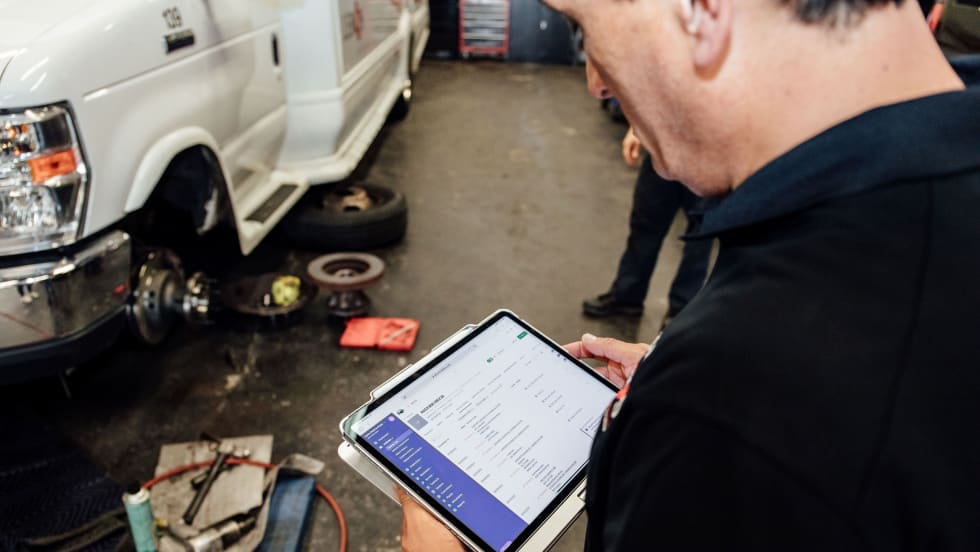
Reinventing Fleet Maintenance with Real-time Visibility and AI
Transit leaders need to know what needs fixing, where to look, who is responsible, when work is completed, and what it costs without having to chase information across disconnected systems.
Read More →
Alstom Acquires Delaware Site to Support Amtrak NextGen Acela Fleet
The company is investing more than $55 million to acquire and improve the property and will employ approximately 100 people at this site once it is operational.
Read More →
SamTrans Sets Priorities for Potential Connect Bay Area Revenue
The board-approved framework allocates future funding to maintaining service, rider improvements, equity initiatives, and infrastructure repairs.
Read More →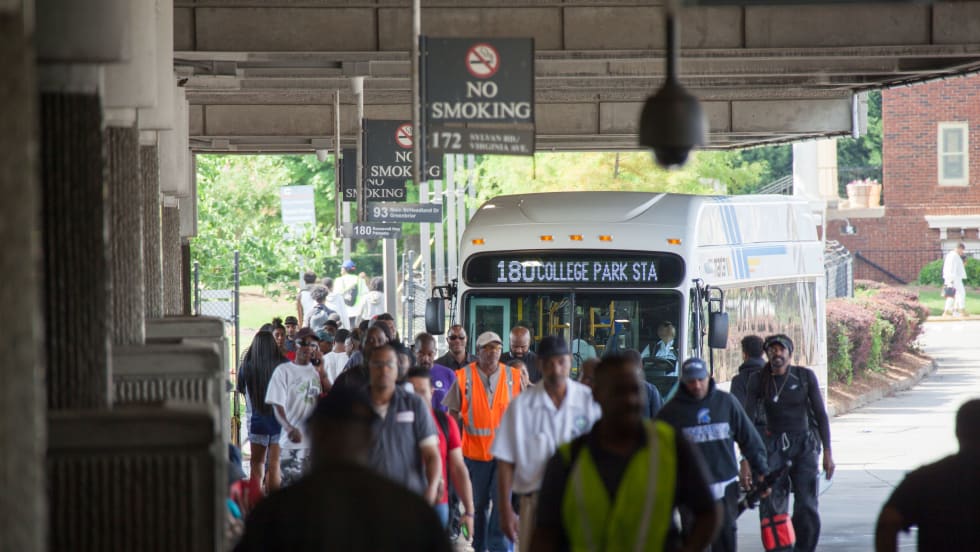
Federal Transit Officials Launch MARTA Safety Probe
FTA has given MARTA 15 days to provide records on crime prevention, fare evasion enforcement, and security funding as part of a broader safety investigation.
Read More →
ABA's Ferguson Testifies in Support of BUS Act, National Standards for Bus Operators
The BUSES Act would create a nationwide framework preventing state and local governments from enforcing bus idling restrictions of less than 15 minutes, a threshold consistent with existing Environmental Protection Agency guidance.
Read More →
When Routine Fails: How Public Transit Must Adapt for the World Cup
The 2026 FIFA World Cup will test transit agencies’ ability to manage unpredictable travel patterns, making real-time data and operational flexibility critical to moving millions of visitors efficiently.
Read More →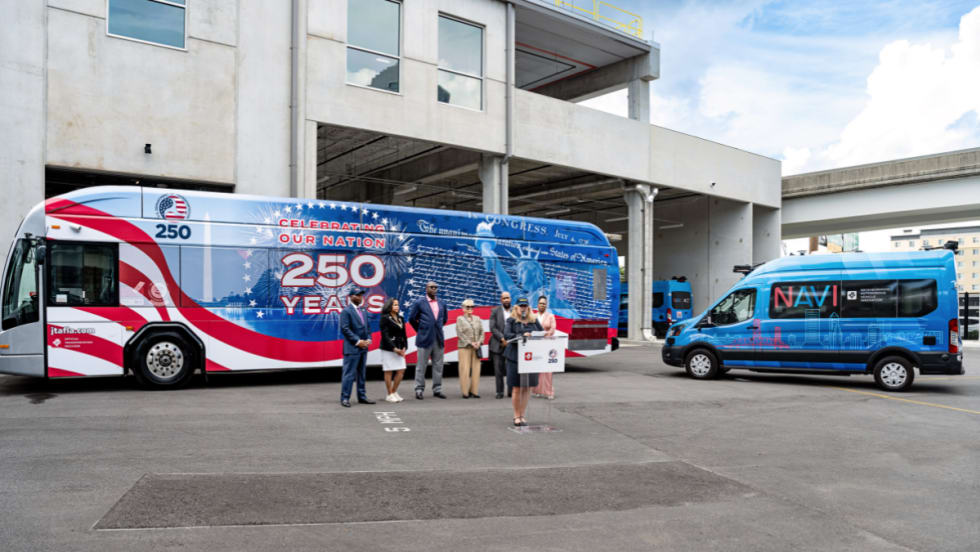
Florida’s JTA Puts Innovation in Motion Ahead of America250
The agency unveiled a commemorative America250 bus during a visit from U.S. DOT's Seval Oz and showcased its autonomous mobility programs.
Read More →
California Selects Team for Nation’s First True High-Speed Rail Track and Systems Contract
The board action follows completion of track installation at the 150-acre southern railhead in Kern County, which will serve as the staging and distribution hub for high-speed track and systems installation.
Read More →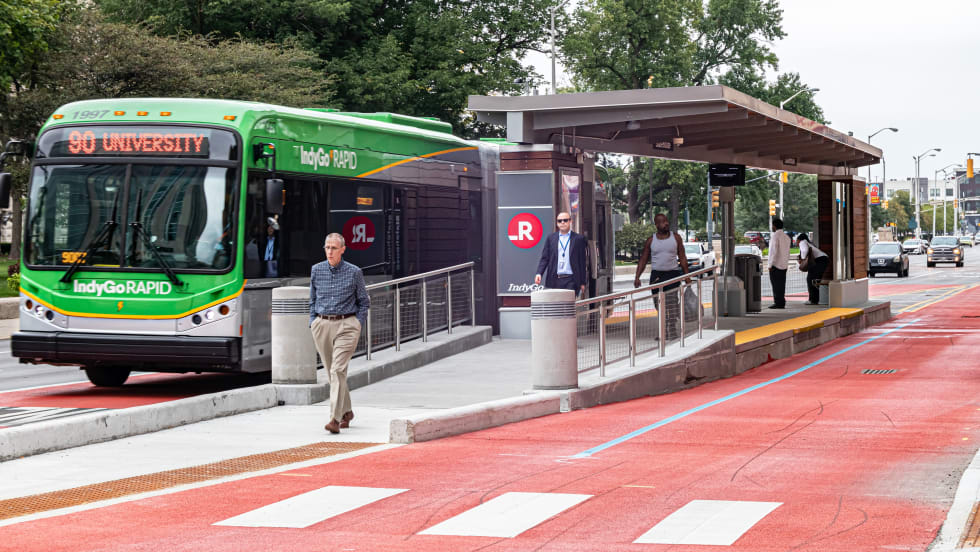
IndyGo, Cleveland RTA Expand Digital Fare Payment Options with Masabi
The new systems combine mobile apps, smart cards, and automatic fare capping to simplify payments, expand flexibility, and help riders access the lowest available fares.
Read More →