




Keep Reading: New York MTA Seeks Bids for 2,390 Subway Cars in Record-Breaking Order
Manhattan’s Central Business District Travel Climbs to 6.3 Million Daily Trips as Transit Leads Growth
Although volumes remain below pre-pandemic levels, NYMTC’s latest Hub Bound report shows rising transit use, shifting commute patterns, and continued recovery.
April 1, 2026

While travel into the CBD has certainly rebounded since the COVID shutdown, overall volumes remain far below 2019 levels, according to the New York Metropolitan Transportation Council’s annual Hub Bound Travel Data Report.
Credit:
Kayla Linero
3 min to read
Travel to and from Manhattan’s Central Business District (CBD) is on the rise, but how people are getting there, and when, continues to evolve.
According to the New York Metropolitan Transportation Council’s (NYMTC) annual Hub Bound Travel Data Report, nearly 6.3 million people entered and exited the CBD during a typical weekday in 2024. This total reflects nearly 600,000 more people than in 2023.
Hub Bound tracks the volume of public and private travel on a single day in the CBD, defined as all areas south of 60th Street in Manhattan.
To enter and exit Manhattan’s CBD, roughly 4.6 million people used public transportation, representing a 14.4% increase over 2023 levels. Close to 1.6 million people used autos, taxis, vans, and trucks — a 1.9% decrease from 2023.
Approximately 98,000 daily bicycle trips were recorded, reflecting 1.6% of the mode share and an 18% increase from 2023. Many bicyclists (65%) entered at 60th Street, while 25% crossed into the CBD from Brooklyn and 9% crossed from Queens.
The Roosevelt Island Tramway saw a 34% decline in ridership from 2023, largely due to the resumption of regular F train service, whose disruption had caused a 92% increase in 2023 compared to 2022.
Recovery Continues as Commuting Habits Evolve
While travel into the CBD has certainly rebounded since the COVID shutdown, overall volumes remain far below 2019 levels, when approximately 7.6 million travelers entered and exited the CBD.
However, study analysts speculate that shifts in work-from-home policies may have solidified changes in travel trends.
According to Hub Bound’s findings, MTA NYC Transit subways carried 80% of all rail passengers, while suburban and intercity rail services and express bus ridership made up almost 89% of all bus travel into the CBD. Plus, 84% of bus riders commuted from New Jersey.
Ferry ridership increased by 2.5%, with Staten Island Ferry passengers accounting for 54% of total ferry trips.
Subway Leads as Top Mode Into CBD Amid Rising Demand
In 2024, the busiest morning hour was from 8 a.m. to 9 a.m., with 452,000 entries into the CBD, which is 18.9% higher than in 2023. The evening peak occurred between 5 p.m. and 6 p.m., when 406,000 people exited the CBD, an increase of 12.7% from 2023.
The subway system remained the most popular mode of public transportation in 2024, carrying nearly 3.5 million passengers to and from the CBD in a single day. Suburban and intercity rail trains brought about 307,000 passengers into the CBD on the survey date, accounting for 13% of all public transit passengers. This represents close to 10% of all daily travelers entering the Hub. It was the third most prevalent mode of entry into the Hub after the subway and private motor vehicles.
Since the first Hub Bound survey in 1924, private motor vehicles, including autos, taxis, vans, and trucks, have been the second most common mode of transportation after the subway system. In 2024, about 785,000 people entered the Hub using private motor vehicles. This represents about 15,000 fewer passengers than in 2023.
“This year’s Hub Bound marks 100 years of Hub Bound tracking since the first report was published by the Regional Plan Association in 1924,” said Adam Levine, executive director of NYMTC. “It’s interesting to see how far we’ve come, and how some of the percentages have stayed relatively the same. For certain, many of these statistics will be even more interesting next year when we compare them to statistics gathered during the introductory year of congestion pricing.”
The 2024 Hub Bound Travel Data Report is available for download in Excel and PDF formats at www.nymtc.org under Data and Modeling.
More Management

Bus Tech Talk: Keeping Transit Technicians Ahead of the Technology Curve
In this episode of Bus Tech Talk, Complete Coach Works’ Business Development Manager Mark Hollenbeck and METRO’s Executive Editor Alex Roman sit down with Obed Mejia, Senior Technical Trainer for Bus Maintenance, at LA Metro to discuss how rapidly evolving bus technology is changing the maintenance shop — and the skills technicians need to keep pace.
Read More →
Michael Schneider Joins Paslay Group to Expand Transportation Practice
The longtime transportation executive will help Paslay Group grow its advisory and program management work across transit, highway, and other infrastructure sectors.
Read More →
People Movement: Connectpoint Expands Leadership Team, Stadler Names New Group CEO, and More
In this edition, we also spotlight recent personnel moves at Burns, UZURV, and more, highlighting the people taking on new roles across the transportation industry.
Read More →
More Than a Summer Job: Building the Next Generation of Transit Talent
The Delaware River Port Authority and PATCO have transformed their internship program into a hands-on professional development experience that introduces students to the breadth of transportation careers — and creates a pipeline for future employees.
Read More →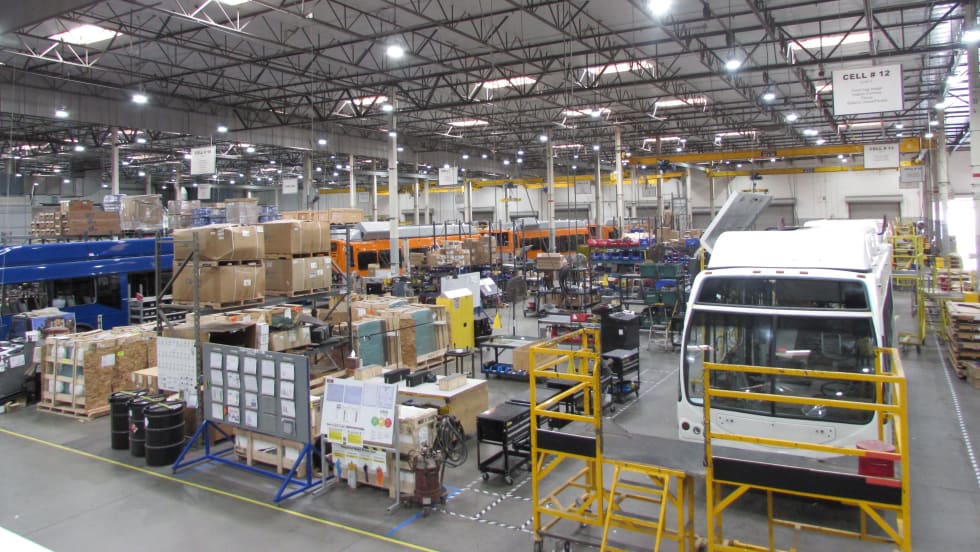
LA Metro Board Awards 220 Battery-Electric Bus Contract to ENC
The contract, which is the largest base award of battery-electric buses by a U.S. transit agency, will be built in Southern California, sustaining good jobs as LA prepares to welcome the world in 2028
Read More →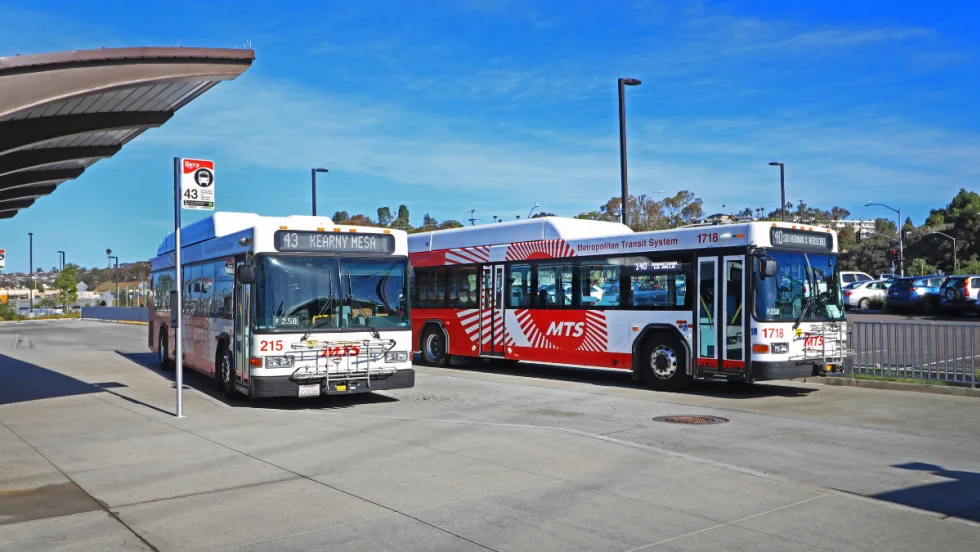
What’s Behind San Diego MTS’s Award-Winning Transit Strategy
Named one of APTA’s 2026 Outstanding Public Transportation Systems with 50 million or more annual passenger trips, California’s San Diego Metropolitan Transit System points to gains in ridership, safety, technology, and reliability as foundations of its success.
Read More →
Public Transit Conference Returning to GFX in 2027, Call for Papers Now Open
The Call for Papers is now open, allowing transit agency professionals and industry experts to help shape the PTC educational program by submitting session ideas for consideration.
Read More →
Indian River Transit’s Community-Focused Approach Earns National Recognition
Named APTA’s 2026 Outstanding Public Transportation System in its size category, Florida’s Indian River County transit system continues to grow ridership through fare-free service and a focus on evolving community needs.
Read More →
ENC Lands MATA Contract and More in Biz Briefs
In this edition of Biz Briefs, we spotlight the latest developments shaping the future of mobility.
Read More →From Surviving to Thriving: Building Stronger Transportation Organizations
Bus Business Consultants founder Brian Dickson shares lessons on leadership, organizational health, and creating options for long-term success in a changing transportation industry.
Read More →