




Brake performance isn’t a big conversation starter for most bus fleet owners, but that could change when the National Highway Traffic Safety Administration (NHTSA) announces its new limits for vehicle stopping distances. The rules, which won’t take effect until 2007, are already a hot topic among vehicle and component manufacturers because they must spend months developing and testing the technology needed to meet the anticipated targets. For these companies, time is running short. “Our component drawings must be released a full year ahead [of the deadline],” says Don Just, chief engineer of brake systems at Navistar International. “And the drawings are based on designs that must first be field-tested for a couple of years. By now, people should have their initial testing well under way.” Unfortunately, Just and his colleagues are trying to aim for targets that don’t officially exist. “NHTSA hasn’t yet published its Notice of Proposed Rulemaking,” Just says. “Without that, it’s tough to convince upper management that this is a priority in need of money and manpower.” Stopping shorter Regulators have hinted that they want to cut 30% from current medium- and heavy-vehicle stopping distances, which vary by vehicle weight and configuration. At present, lighter commercial vehicles must stop within 215 feet when traveling 60 mph. Buses moving the same speed must stop within 280 feet. Straight trucks weighing more than 33,000 pounds must stop within 310 feet, and tractor-trailers within 355 feet. The shorter distances will improve highway safety, but meeting that goal requires advanced brake systems, likely resulting in higher prices and fewer options for buyers. “I think NHTSA’s intent is admirable,” says Tony Moore, director of axle and brake systems at Freightliner Custom Chassis Corp. “But [the objectives] won’t be achieved without adding cost and complexity to vehicles.” In the near future, Moore says, brakes might become weight specific. Class 4 vehicles (14,001 to 16,000 pounds) will have one system, while Class 5 (16,001 to 19,500 pounds) and Class 6 (19,501 to 26,000 pounds) will each have their own. Class 7 (26,001 to 33,000 pounds) might endure the biggest change. Moore thinks air brakes will be mandated for the heaviest medium-duty chassis. “We now have air brakes for Class 8 and hydraulic brakes for lighter classes,” Moore says. Although there is some crossover of air brakes, “a definite line exists between medium and heavy duty. Soon that line will move lower.” Big switch to air brakes? Such a change would affect operators using hydraulic brakes on larger buses. A switch to air brakes would mean more, and entirely different, components and changes in maintenance requirements. Of course, this wouldn’t be the first radical shift in medium-duty braking systems. In the mid-80s, North American chassis builders ditched hydraulic drum brakes in favor of hydraulic disc, a conversion that initially flustered more than a few shop managers. It is unclear whether mandated air brakes for Class 7 vehicles would mean a return to drums for that weight group. The alternative would be air discs, a technology that’s popular in Europe but as rare as whitewall tires on North American buses. The slow adoption of air disc here can be blamed on several factors. Chief among them are price and weight, at least when compared with hydraulic disc and air-powered drum brakes. The main benefit of air disc systems is greater stopping power in severe-duty applications, such as fire trucks, which are often driven at breakneck speeds by people who ride the brake pedal with their left foot. Prakash Jain, director of international business development for ArvinMeritor, says air disc doesn’t yet offer advantages that fleet owners are willing to pay extra for. Until sales volume increases, the prices will remain relatively high. That’s where the government comes in. “Safety agencies would rather have air-disc brakes than drums on heavy vehicles,” Jain says. “However, they cannot mandate a particular type of brake. They can only mandate brake performance.” Jain and his colleagues believe the upcoming changes in stopping distances will be designed around the known capabilities of air discs. That would nudge the vehicle and component industries in the direction preferred by regulators. But Jain warns against writing the obituary for air-powered drum brakes just yet. “Shorter stopping distances alone won’t achieve the [air disc] goals officials have in mind,” he says. Tests make a point Last December, ArvinMeritor brought a group of journalists to a research test track in Ohio where the company demonstrated that drum brakes could outperform discs in a 60-mph emergency stop if they were fitted with more powerful air chambers and larger friction material. “We were just trying to show that air disc isn’t the only alternative for better braking,” Jain says. ArvinMeritor manufacturers both drum and disc brakes. Ron Bailey, technical sales manager for air disc at Bendix Commerical Vehicle Systems, acknowledges that drum brakes can be made more muscular, but he questions the safety of doing so. Larger drum brakes on a front axle can adversely affect driver control, he says. That’s why front-axle drum brakes are typically smaller than those on the rear axle. Bendix has done a considerable amount of comparison testing on the two systems. Company engineers shod a school bus with air discs to determine their effect on stopping distances. “The results were pretty dramatic,” Bailey says. “Conventional drum brakes available today [will stop] a bus in about 252 feet, 10% shorter than the current requirement. When we changed the vehicle to air disc, we cut the stopping distance to 208 feet — 72 feet (or 26%) shorter than the current requirement.” Bailey says disc brakes are mechanically preferable to drums because they can deliver consistently shorter stopping distances, in all conditions, without fading or overheating. He blames the market’s lack of interest in air disc on the soiled reputation of earlier designs. “It’s a shame we didn’t come up with a new name for today’s products, something other than air disc brakes,” he says. “The current generation of product is [completely different] from its predecessors.” Higher costs expected It is doubtful that a name change alone would boost sales much. As mentioned above, air disc brakes are still more expensive than hydraulic disc or air-powered drum, and few buyers are willing to pay extra for just greater stopping power — that is, unless they regularly travel over mountainous terrain. Component manufacturers, though, have been looking for ways to advance brake systems beyond their traditional job description. Traction control and stability control, both widely available these days, are two of the additional roles for brakes. Meritor Wabco, a joint venture between ArvinMeritor and brake manufacturer Wabco, recently introduced a rollover prevention device that uses the vehicle’s anti-lock brake system and its engine’s electronic control module to help keep all wheels on the ground, should a driver enter a curve or corner too fast. Called “roll stability control,” the unit is basically a computerized gyroscope that senses unusual lateral forces and electronically slows the vehicle by decelerating the engine, igniting the compression brake or applying the foundation brakes. Many of these new-fangled devices work with today’s standard brake systems. Others, some of which are being developed, require the magic of electronic braking, a technology that’s almost common in Europe but is still being tested here. Electronic alternative? Electronic braking, known as EBS or ECBS, does for brakes what ECMs do for engines: convert pedal position to an electronic signal, which is then zapped to wheel-end solenoids that apply the precise amount of brake pressure needed. Experts say the system has many benefits. It can automatically ratchet up power on under-performing brakes, resulting in more stable braking and even wear. It can also trigger an engine retarder and dial in the proper amount of braking assistance. The elapsed time between pedal movement and brake actuation is about two-tenths of a second, roughly half the time of air and hydraulic systems. Warning lights immediately alert drivers if a brake becomes disabled, and malfunctions can be quickly and easily diagnosed, with a computer and the correct software. “Electronic braking is attractive because it packages well and enables you to interface with other vehicle systems much more efficiently,” says Dave Tarrant, a chief for medium-duty vehicles at Ford Motor Co. “The big issue is cost. It’s a classic chicken-and-egg scenario: costs won’t come down until volume rises, but volume won’t rise until costs come down. In the long term, I think EBS will catch on because, as vehicles become more and more electronic and sophisticated, [the system] will have benefits that make the transition worthwhile.” It’s impossible to predict when EBS will reach bus fleets, but it will happen soon after vehicle builders believe its features offer greater value, safety and efficiency. In the meantime, bus buyers will adjust to the new air and hydraulic systems that meet the forthcoming changes in NHTSA stopping-distance standards.
The Race for Better Stopping Performance
New federal limits for stopping distance are scheduled for 2007, but brake manufacturers are already hard at work developing the technology.
More Management

Manhattan’s Central Business District Travel Climbs to 6.3 Million Daily Trips as Transit Leads Growth
Although volumes remain below pre-pandemic levels, NYMTC’s latest Hub Bound report shows rising transit use, shifting commute patterns, and continued recovery.
Read More →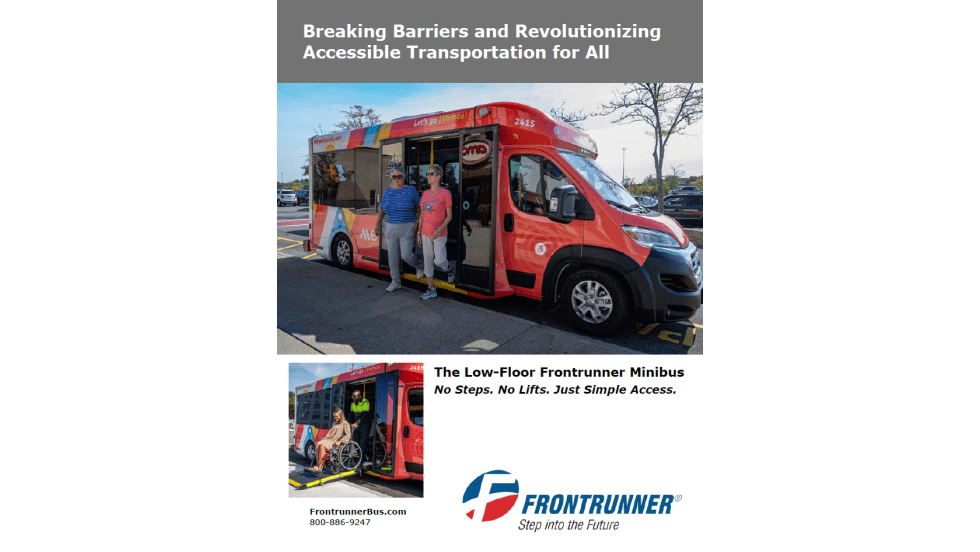
Breaking Accessibility Barriers with the Low Floor Frontrunner Minibus
Accessible transit isn’t a feature—it’s a responsibility. This whitepaper explores how the Low-Floor Frontrunner is redefining mobility with a breakthrough design that removes barriers, empowers riders, and delivers measurable operational advantages for agencies. Discover why this next generation minibus is setting a new standard for inclusive transportation.
Read More →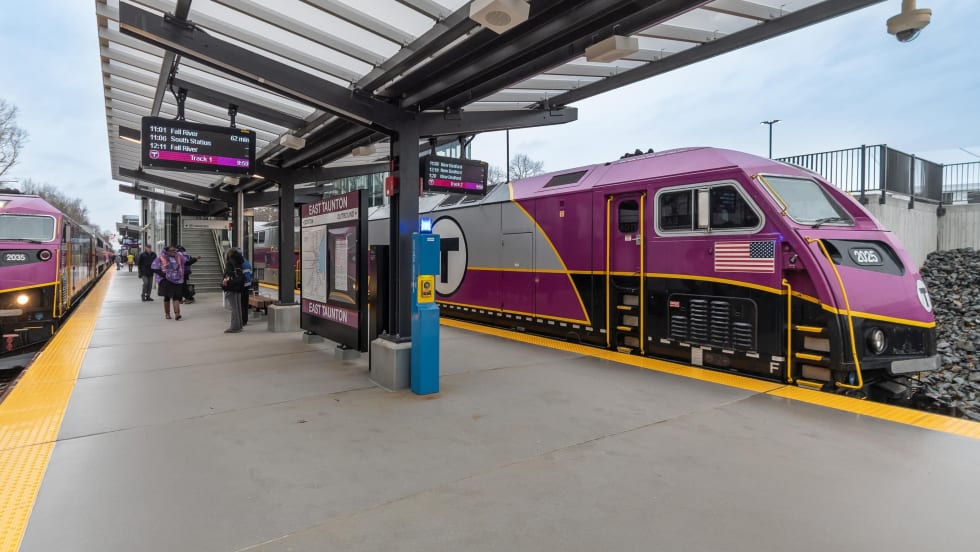
Massachusetts Announces Summer Savings for Commuter Rail Riders
With major events and increased travel expected across the state this summer, the Administration is focused on making sure people have a reliable, affordable alternative to driving so we can reduce congestion, support daily commuters, and keep Massachusetts moving.
Read More →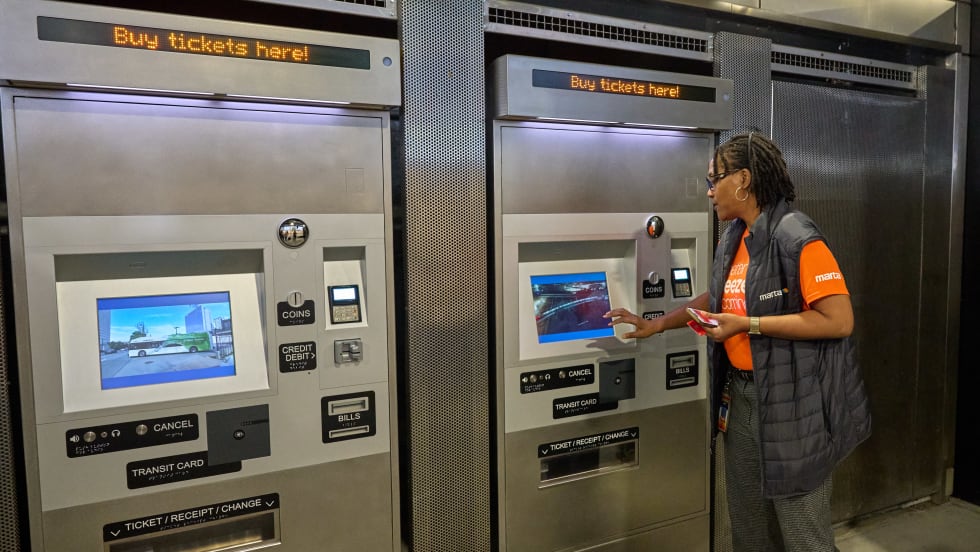
Updated: MARTA’s New 'Better Breeze' Fare System Goes Live
The new system introduces tap-to-pay, touchscreen kiosks, and updated Breeze cards, with both old and new systems running through May.
Read More →
ABA Marketplace Drives $124.9M in Business, New Report Finds
As the American Bus Association marks its 100th year, a new ABA Foundation report highlights the Marketplace’s role as a key revenue engine for the bus and group travel industry.
Read More →
How Coach USA Is Using AI to Prevent Bus Accidents
As motorcoaches navigate increasingly congested urban corridors filled with pedestrians, cyclists, scooters, and distracted drivers, safety leaders across the industry are confronting a growing challenge: visibility.
Read More →
WMATA Proposes Revised FY2027 Budget as System Marks 50 Years of Service
Updated financial plan reflects ridership growth and cost controls as the Washington region’s transit system celebrates five decades of operations.
Read More →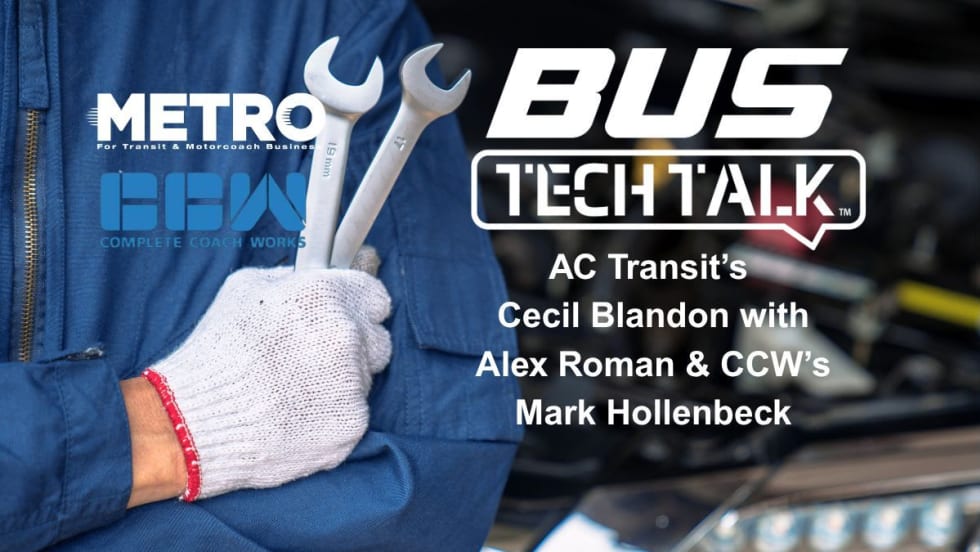
AC Transit’s Cecil Blandon on Leadership, Mentorship, and a Career in Transit
In part 1 of a two-part conversation, AC Transit’s director of maintenance joins co-hosts Alex Roman and Mark Hollenbeck to discuss his journey from the U.S. Marines to public transit and the role mentorship plays in developing the next generation of industry leaders.
Read More →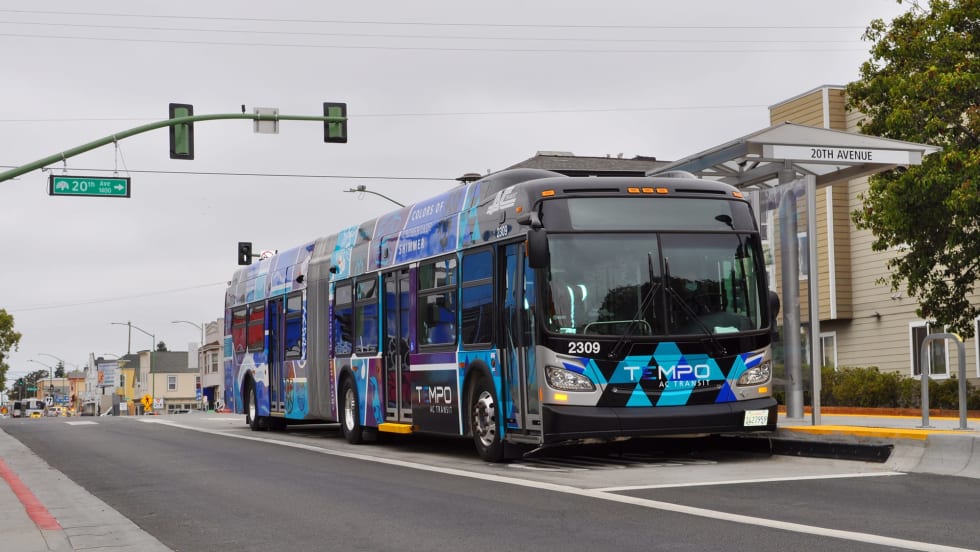
California's AC Transit Greenlights Development of Service Contingency Plan
In reaching its decision, the board considered the District’s mounting long-term structural deficits, with current projections forecasting annual operating deficits of about $50 million beginning in FY 2027-28 and continuing in the years ahead.
Read More →
New York's CDTA Approves 2027 Operating, Capital Plan
The $143 million spending plan represents a 2.4% reduction from last year’s budget. Increasing expenses, along with depleted federal COVID-19 funds, continue to impact the overall budget, CDTA officials said.
Read More →