



S.C. bus operation changes hands
The change in operations came as a natural result of Central Midlands being the last transportation system in the United States that was owned and operated by a private utility company.

Bus operations in Columbia, S.C., changed hands in October, when a local utility company tossed in the towel after nearly 70 years of providing transit service. The veteran’s job was assumed by the Central Midlands Regional Transit Authority (RTA). The change in operations came as a natural result of Central Midlands being the last transportation system in the United States that was owned and operated by a private utility company, according to Mitzy Teel, the RTA’s director of transportation and communications. The utility company, South Carolina Electric & Gas Co./SCANA, commenced bus service in 1934 after a Supreme Court order required it to provide transit service in the Columbia metro area to maintain its electric and gas franchise. The RTA was created specifically for the job. According to Teel, the development of RTA was facilitated by the local council of governments (COG). “For about a year, the COG’s RTA study group looked at the issue of how you go about forming the legal entity of a regional transit authority and what was necessary under the state code for membership representation,” Teel said. “In January 2002, the RTA was fully constituted with these terms. Every local government that joined ratified an agreement and became a member, and all of the boards of directors’ appointments were completed by January 2002.” In full, the RTA is made up of 15 local governments, two counties and 13 municipalities. “So, we’re kind of unique in that we’ve got a ton of local representation, which makes for a rather large board,” Teel said. Management operations will not change, according to Teel. Curtis L. Hamilton, the general manager for the Columbia system, ran the operations while under SCE&G/SCANA and will continue to do so as an employee of Connex TCT, the operating company contracted to provide service. “The private utility already had a contract operator in place … that will not change for the time being,” Teel said. “The RTA has entered into a contract with Connex for them to stay in place and continue to operate on our behalf.” So far, 43 new buses were put into service in the Columbia area, and additional routes were introduced December 1. “It’s a complete fleet replacement,” Teel said. New buses mean new features, so now drivers can take advantage of automated announcement systems, computerized fareboxes and wheelchair lifts. However, for passengers, new buses also mean an increase in fares. “Certainly one of the reasons for increasing the fare [was the bus replacements], but also the fact that we had one of the lowest fares in the Southeast,” Teel said. “It has been that way for quite some time, and just with inflation we know that we need more funds through the farebox. So we have a dollar-based fare now; we went up 25 cents.”
More Management
Alstom Acquires Delaware Site to Support Amtrak NextGen Acela Fleet
The company is investing more than $55 million to acquire and improve the property and will employ approximately 100 people at this site once it is operational.
Read More →
SamTrans Sets Priorities for Potential Connect Bay Area Revenue
The board-approved framework allocates future funding to maintaining service, rider improvements, equity initiatives, and infrastructure repairs.
Read More →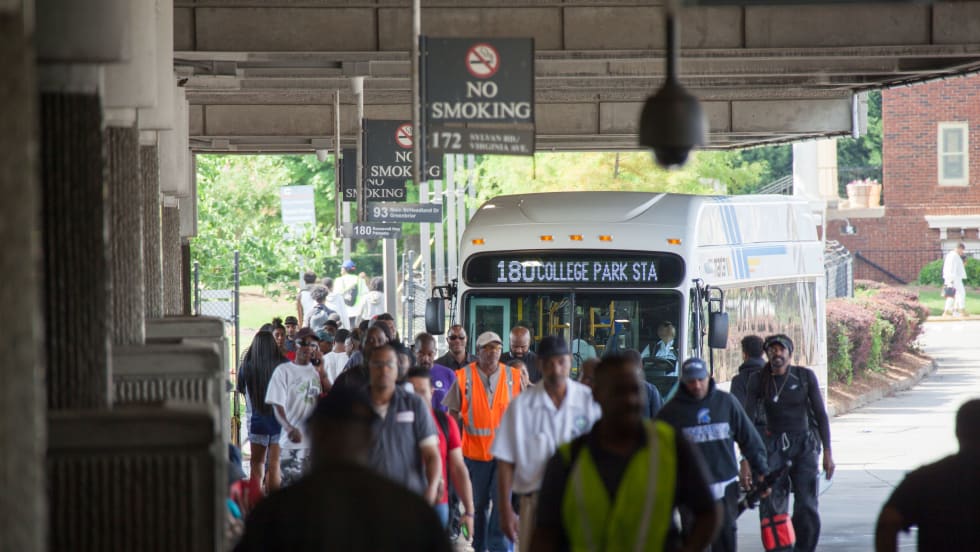
Federal Transit Officials Launch MARTA Safety Probe
FTA has given MARTA 15 days to provide records on crime prevention, fare evasion enforcement, and security funding as part of a broader safety investigation.
Read More →
ABA's Ferguson Testifies in Support of BUS Act, National Standards for Bus Operators
The BUSES Act would create a nationwide framework preventing state and local governments from enforcing bus idling restrictions of less than 15 minutes, a threshold consistent with existing Environmental Protection Agency guidance.
Read More →
When Routine Fails: How Public Transit Must Adapt for the World Cup
The 2026 FIFA World Cup will test transit agencies’ ability to manage unpredictable travel patterns, making real-time data and operational flexibility critical to moving millions of visitors efficiently.
Read More →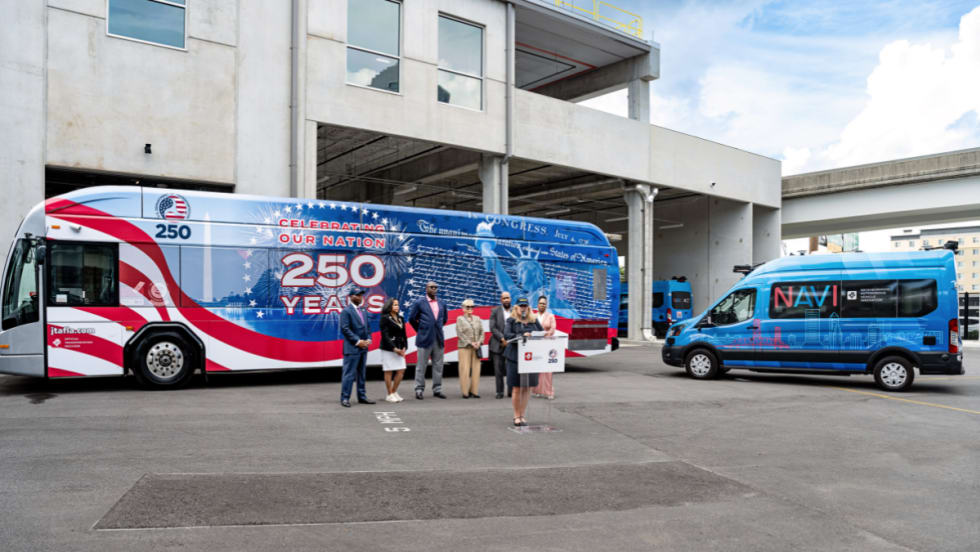
Florida’s JTA Puts Innovation in Motion Ahead of America250
The agency unveiled a commemorative America250 bus during a visit from U.S. DOT's Seval Oz and showcased its autonomous mobility programs.
Read More →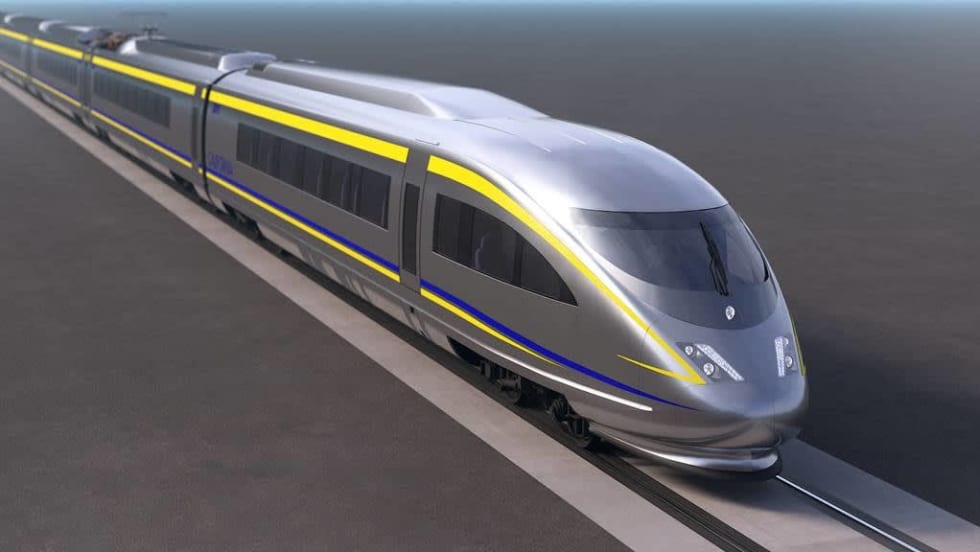
California Selects Team for Nation’s First True High-Speed Rail Track and Systems Contract
The board action follows completion of track installation at the 150-acre southern railhead in Kern County, which will serve as the staging and distribution hub for high-speed track and systems installation.
Read More →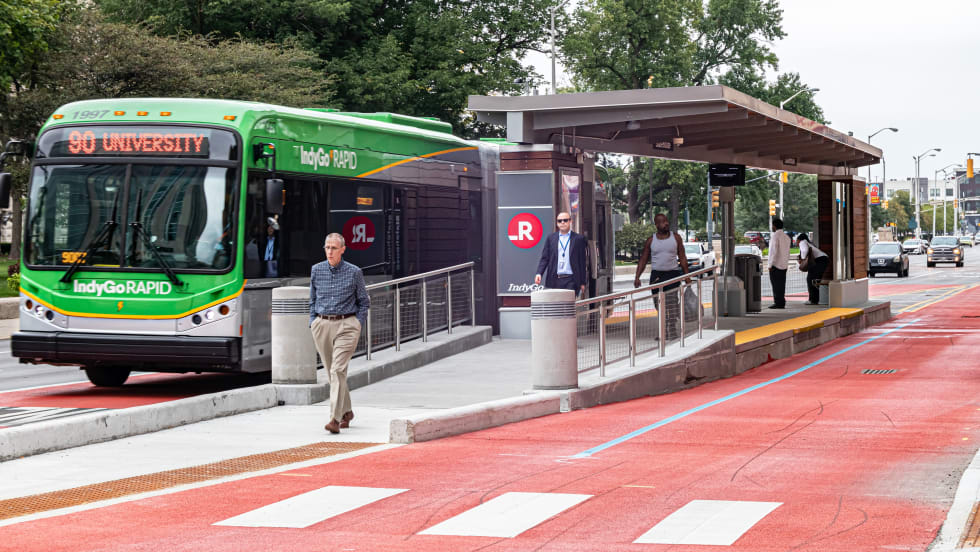
IndyGo, Cleveland RTA Expand Digital Fare Payment Options with Masabi
The new systems combine mobile apps, smart cards, and automatic fare capping to simplify payments, expand flexibility, and help riders access the lowest available fares.
Read More →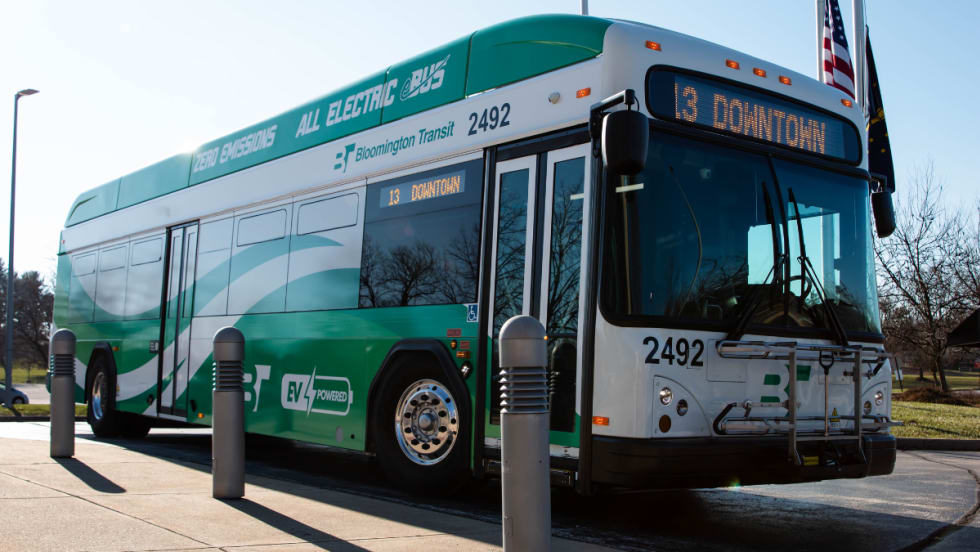
Can Better Branding Grow Ridership? Bloomington Transit Bets on a Unified Mobility Experience
See how the Indiana agency aims to simplify transit access through unified trip planning, expanded microtransit, and new payment options.
Read More →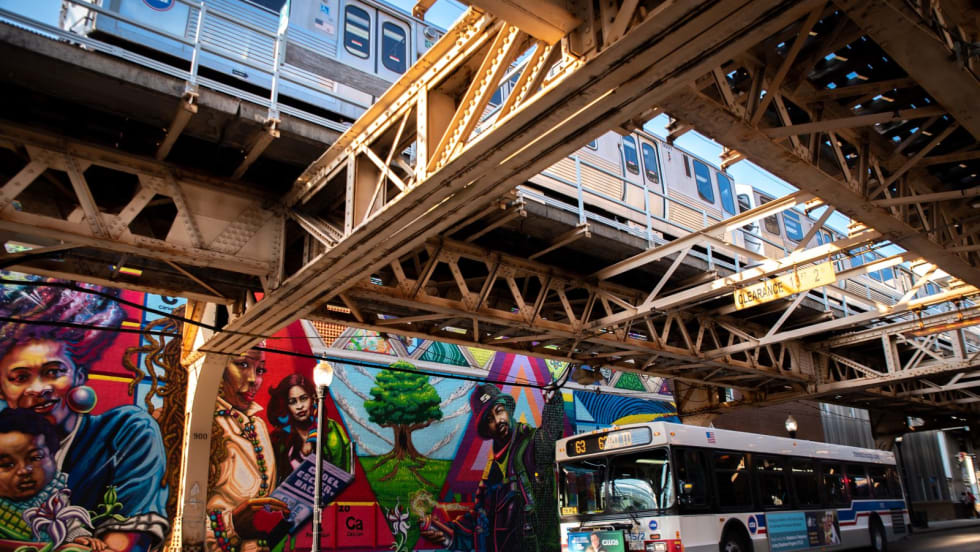
Chicago's NITA Act Moves Into Next Phase as Service Improvements Begin
Rider-focused improvements will begin rolling out across the system immediately as CTA, Metra, and Pace increase service this summer in the six-county region.
Read More →