




Read: Why Transit Agencies Are Rethinking the Farebox, and the Technology Behind It
Can Better Branding Grow Ridership? Bloomington Transit Bets on a Unified Mobility Experience
See how the Indiana agency aims to simplify transit access through unified trip planning, expanded microtransit, and new payment options.
June 2, 2026
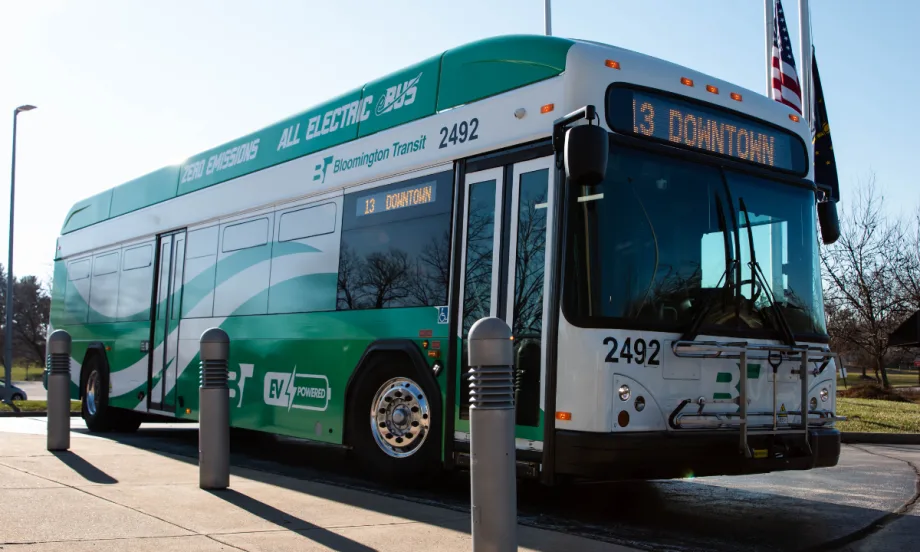
The goal of Bloomington Transit For Everyone is to create a single source of information where riders can access everything they need, regardless of which service they choose.
Credit:
Bloomington Transit
5 min to read
- Bloomington Transit launched a more cohesive travel experience through unified trip planning titled "Bloomington Transit For Everyone."
- Along with fixed-route changes, the agency expanded its microtransit services to cater to a wider range of rider needs.
- New payment options are being rolled out to enhance user convenience and promote higher ridership.
*Summarized by AI
Bloomington Transit just launched a new initiative on June 1 designed to make public transportation easier to understand, access, and use.
Dubbed "Bloomington Transit For Everyone," the campaign unifies the agency’s fixed-route bus network, BLink microtransit service, and paratransit offerings under a single mobility brand to reduce barriers for both new and existing riders.
The initiative coincides with recent route changes, an expansion of Bloomington Transit’s microtransit service, and the rollout of new rider tools intended to streamline trip planning and fare payment.
While the services themselves are not new, agency leaders said the campaign represents a fresh approach to how Bloomington Transit communicates mobility options to the community.
“Over the past year, there were a couple of different things, one of which was our fixed-route ridership has kind of been taking a slight dip,” said Shelley Strimaitis, planning and special projects manager at Bloomington Transit. “We wanted to get something out there that really promoted the entire Bloomington Transit network, not just fixed route, not just paratransit or microtransit, but something that branded them all together as one mobility option for the entire city.”
The campaign officially launched alongside Bloomington Transit’s fare-free week, giving residents an opportunity to test the system and explore available mobility options without cost from June 1 through June 7.
Reducing the Public Transit Intimidation Factor
According to Strimaitis, one of the biggest challenges facing transit agencies is convincing people to try transit for the first time.
“The hardest thing about getting people to ride the bus is getting them on the very first time,” she said. “The bus is easy once you get to understand it, but it can be really intimidating the first time.”
To address that challenge, Bloomington Transit has launched a new multimodal app that combines trip-planning information for fixed-route and microtransit services on a single platform. Rather than requiring riders to navigate multiple websites or applications, users can enter their destination and receive directions tailored to the service that best meets their needs.
The agency is also introducing open payments, allowing riders to pay fares directly with contactless credit or debit cards, rather than requiring a dedicated transit card or a mobile ticketing app.
“These are all efforts to remove barriers,” said Bryan Fyalkowski, manager of marketing and development at Bloomington Transit, noting that simplifying fare payment and trip planning can make transit feel more approachable for occasional users and is more in line with other parts of the globe.
Strimaitis said the campaign centers on a simple idea: every Bloomington resident should have access to a mobility option through Bloomington Transit.
“Everyone who lives in the City of Bloomington has a mobility option with Bloomington Transit,” the campaign materials read. “Whether that is on one of our 15 bus routes or by BLink Microtransit, we’re here to help you get where you need to go.”
Unlike many microtransit deployments that primarily serve as first- and last-mile connections to fixed-route service, Bloomington’s BLink service is designed to provide complete point-to-point trips within its service zone. Fyalkowski said that the approach was intentional.
“We wanted to make the different trip options as simple as possible for people,” he said. Rather than requiring riders to transfer between services, Bloomington Transit’s microtransit service can complete an entire trip on its own, reducing complexity for first-time users.
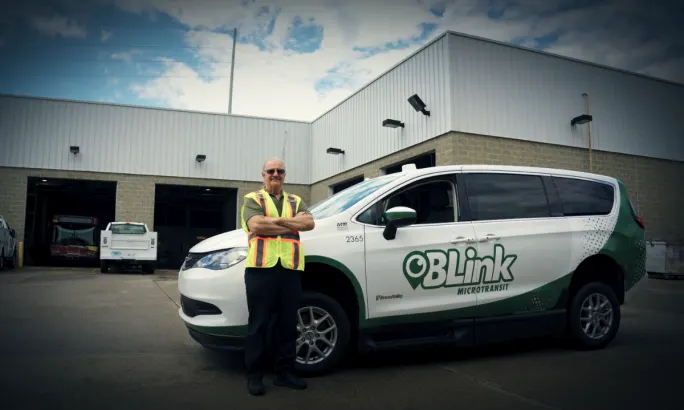
The "Bloomington Transit For Everyone" campaign unifies the agency’s fixed-route bus network, BLink microtransit service, and paratransit offerings under a single mobility brand.
Credit:
Bloomington Transit
Repackaging Lessons for Other Transit Agencies
Bloomington Transit leaders believe their experience may offer lessons for agencies seeking to unify multiple transportation services under a single customer-facing experience.
Strimaitis said many transit agencies unintentionally create confusion by separating information across different modes, brands, and platforms.
“A lot of transit agencies deal with app fatigue. If you have multiple modes, there are a lot of different places for different information,” she said. “It becomes up to the customer to figure out where they need to go to find out the information.”
The goal of Bloomington Transit For Everyone is to create, as Strimaitis describes, a "single source of information" where riders can access everything they need, regardless of which service they choose.
Their advice for other agencies considering a similar strategy is straightforward: simplify.
“I come from outside of transit,” Fyalkowski said. “Part of my role here is to think about, how can I simplify this as much as possible for someone who's not already familiar with transit?”
He added that agencies often underestimate how unfamiliar public transportation can be for non-riders. By removing complexity from communications, trip planning, and payment systems, transit agencies can make it easier for residents to choose transit over alternatives.
“The more challenges you have for people to understand what it's about, the more likely there’s going to be, ‘I'm finding another way,’” Fyalkowski said.
Measuring Transit Success Beyond Ridership
While increased ridership remains an important goal, agency leaders say the campaign's success will also be measured by broader public awareness and understanding of Bloomington Transit’s services.
“If we ask someone, ‘Do you know what Bloomington Transit is? Did you know we have fixed-route service and microtransit?’ and they say yes, even if they don't personally use it, I would call that a success,” Strimaitis said. “We want really good brand awareness and positive feelings toward Bloomington Transit.”
The agency will monitor the campaign using existing key performance indicators reported to its board, including ridership, rides per hour, rides per mile, and other service metrics. Officials expect it could take six months or more to evaluate the campaign’s long-term effectiveness, particularly given Bloomington’s seasonal ridership fluctuations tied to Indiana University.
The campaign’s visual identity is also playing a key role in generating community interest.
Bloomington Transit partnered with local graphic artist Aaron Lowell Denton, known for his distinctive concert-poster-style artwork, to create a series of colorful retro-inspired advertisements featured on buses, in shelters, and throughout the community.
Rather than relying solely on traditional transit branding, the campaign uses bold, eye-catching designs to spark curiosity and encourage residents to learn more about the agency’s services.
According to Fyalkowski, the response has already been noticeable.
“People have come up to us and said, ‘I like your graphics. What’s this about?’” he said. “Even if transit isn't something they use every day, we want people to know the service is there for them if they need it.”
More Management
Indian River Transit’s Community-Focused Approach Earns National Recognition
Named APTA’s 2026 Outstanding Public Transportation System in its size category, Florida’s Indian River County transit system continues to grow ridership through fare-free service and a focus on evolving community needs.
Read More →
ENC Lands MATA Contract and More in Biz Briefs
In this edition of Biz Briefs, we spotlight the latest developments shaping the future of mobility.
Read More →
From Surviving to Thriving: Building Stronger Transportation Organizations
Bus Business Consultants founder Brian Dickson shares lessons on leadership, organizational health, and creating options for long-term success in a changing transportation industry.
Read More →

Everett Transit, Community Transit Outline Consolidation Agreement
The proposed agreement calls for a 50% increase in bus service in Everett, a new microtransit zone, continued paratransit service, and the transfer of Everett Transit operations to Community Transit.
Read More →
Strada360’s Steve Lassey on Turning Transit Data Into Better Decisions
From breaking down data silos to preparing for AI, Strada360 CEO Steve Lassey discusses how transit agencies can use technology to improve operations, customer information, and long-term decision-making.
Read More →
People Movement: Phil Washington Joins HNTB, Denver RTD Launches CEO Search, and More
In this edition, we also spotlight recent personnel moves at STV, the Eno Center for Transportation, and more, highlighting the people taking on new roles across the transportation industry.
Read More →
SEPTA Details Accelerate Vision for Transit System
The plan outlines investments in trolley modernization, new Metro and Regional Rail vehicles, accessible stations, and more frequent bus and rail service.
Read More →
FTA Ends Direct Oversight of MBTA Safety Actions
The federal agency closed its remaining special directive to the Massachusetts Department of Public Utilities following a safety review that began in 2022.
Read More →
Report: Transit Bus Manufacturing Supports 34,100 Jobs, $5.1B in GDP
The “Buses Mean Business” report examines the transit bus manufacturing industry’s economic footprint, supply chain, and rising demand for vehicle replacements.
Read More →
LIT Marks 10-Year Milestone at Annual Summit
Hosted by the COTA from September 10 to 13, the Summit carried the theme “Celebrating 10 Years of Excellence, Leadership, and Impact,” with every part of the program honoring the people, agencies, and partners who built LIT over its first decade.
Read More →