



Optare Rolls Out Alero, Small Bus Targeted at Growing U.K. Disabilities, Smaller City Markets
The Optare Group unveiled its new Alero small bus.

The Optare Group unveiled its new Alero small bus at a special launch ceremony held at the NEC in Birmingham, U.K. last month. The bus was specifically designed for rural and community market segments, particularly for dial-a-ride services, which are expected to grow rapidly in the wake of Britain’s new disability rights legislation. Principal features of the Alero include:
16-passenger capability, in any combination of seats and wheelchairs, plus driver and courier
Ultra-low floor height, with an entry step height when kneeling of just 180 mm (7 in.)
Roll-on wheelchair access via on-board ramps
Fully programmed air-conditioned, electronic climate control
Excellent ride and handling
Safety features including rollover protection, ABS brakes and seat belts
One-piece color-impregnated composite body for long life and more attractive, “MPV-like” styling
Heavy-duty drivetrain including 122 hp, 2.8 liter Iveco 4-cylinder turbo diesel engine meeting Euro 3 emissions standards; ZF 6-speed manual gearbox (with automatic available as an option); Albion/RVI rear-drive axle; Meritor beam front axle with medium-duty independent front suspension; front and rear disc brakes; and full air suspension. “The Alero truly is a revolutionary product; revolutionary in its choice of components and materials and in its packaging of them to offer an ultra low floor bus at an affordable price,” said Russell Richardson, managing director of the Optare Group, at the launch ceremony. “It will revolutionize transport and mobility for some of the most disadvantaged passengers in our society, and it will carry the Optare Group a significant step further along the road to producing 1,000 vehicles a year.” Optare is now owned by North American Bus Industries Inc., of Anniston, Ala. Richardson said he began looking at a new model targeted at these markets as soon as it became apparent that the U.K. government would enact the Disability Discrimination Act. This law will accelerate the replacement rates for buses and coaches in the U.K. and in particular create a demand for low-floor midibuses that can accommodate wheelchairs, he added. Although other manufacturers are said to be developing smaller buses targeted at these segments, Alero appears to be the first such model. Optare will offer Alero in four different model variants, ranging from a simple seat layout in Model 1, to longer-distance local/rural service configuration (Model 2), dial-a-ride configuration (Model 3) to higher-ended product aimed at the transfer coach market (Model 4). Price has been set at between £50,000 and £55,000 (US $85,000-$94,000), depending upon customer specifications. The 7.2m (24 ft) long Alero has a gross vehicle weight of 6.1 tons. Following completion of a comprehensive prototype test program at the Millbrook (U.K.) proving ground, Optare says that pilot production should begin this winter, with full production out of the company’s Rotherham plant in the first half of 2001.
More Management

Alstom Acquires Delaware Site to Support Amtrak NextGen Acela Fleet
The company is investing more than $55 million to acquire and improve the property and will employ approximately 100 people at this site once it is operational.
Read More →
SamTrans Sets Priorities for Potential Connect Bay Area Revenue
The board-approved framework allocates future funding to maintaining service, rider improvements, equity initiatives, and infrastructure repairs.
Read More →
Federal Transit Officials Launch MARTA Safety Probe
FTA has given MARTA 15 days to provide records on crime prevention, fare evasion enforcement, and security funding as part of a broader safety investigation.
Read More →
ABA's Ferguson Testifies in Support of BUS Act, National Standards for Bus Operators
The BUSES Act would create a nationwide framework preventing state and local governments from enforcing bus idling restrictions of less than 15 minutes, a threshold consistent with existing Environmental Protection Agency guidance.
Read More →
When Routine Fails: How Public Transit Must Adapt for the World Cup
The 2026 FIFA World Cup will test transit agencies’ ability to manage unpredictable travel patterns, making real-time data and operational flexibility critical to moving millions of visitors efficiently.
Read More →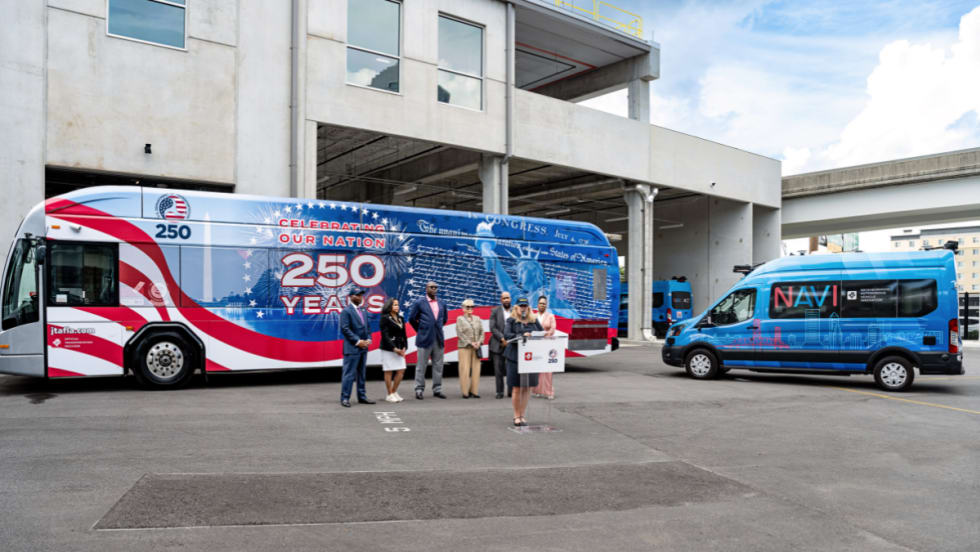
Florida’s JTA Puts Innovation in Motion Ahead of America250
The agency unveiled a commemorative America250 bus during a visit from U.S. DOT's Seval Oz and showcased its autonomous mobility programs.
Read More →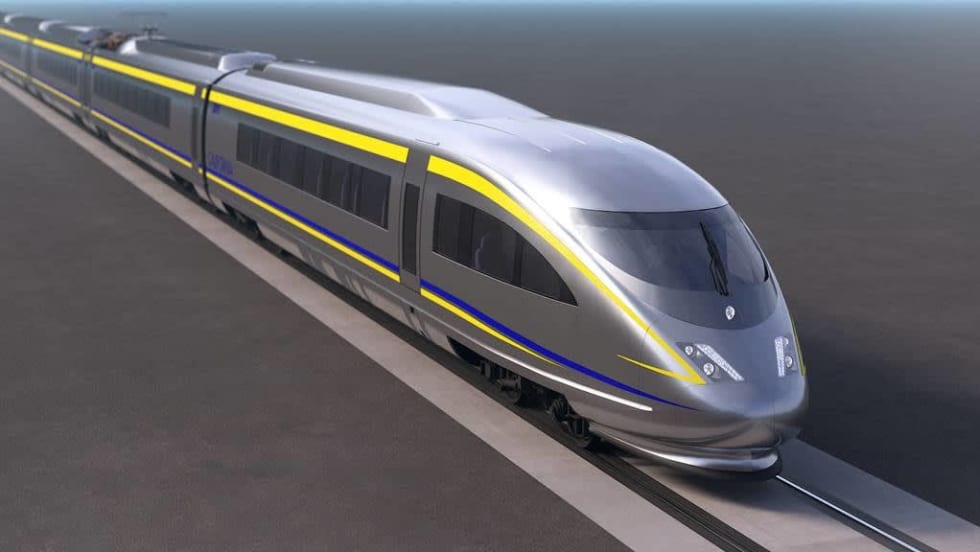
California Selects Team for Nation’s First True High-Speed Rail Track and Systems Contract
The board action follows completion of track installation at the 150-acre southern railhead in Kern County, which will serve as the staging and distribution hub for high-speed track and systems installation.
Read More →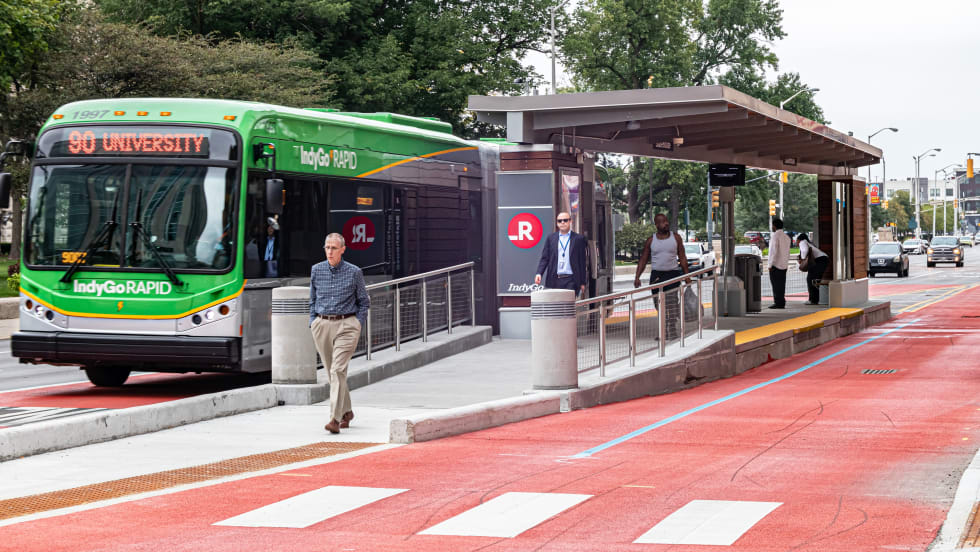
IndyGo, Cleveland RTA Expand Digital Fare Payment Options with Masabi
The new systems combine mobile apps, smart cards, and automatic fare capping to simplify payments, expand flexibility, and help riders access the lowest available fares.
Read More →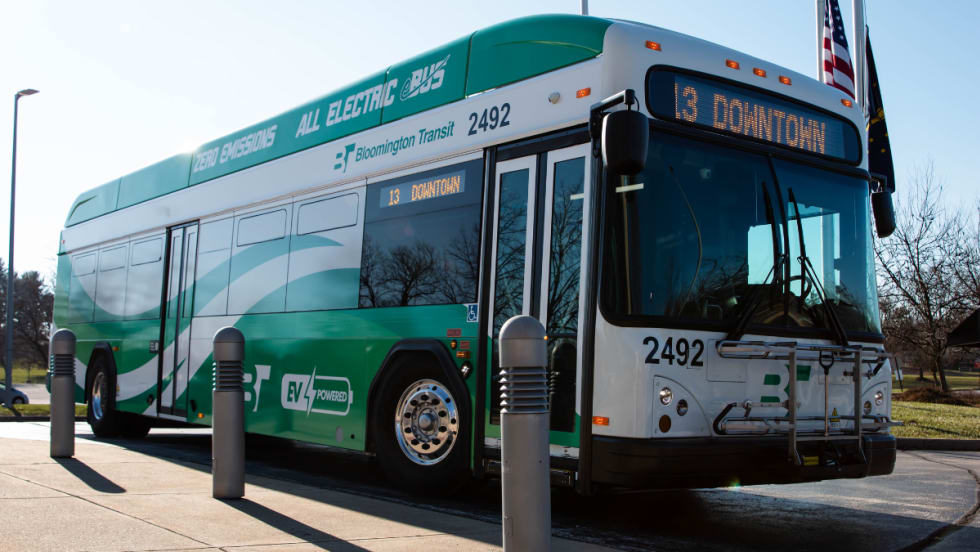
Can Better Branding Grow Ridership? Bloomington Transit Bets on a Unified Mobility Experience
See how the Indiana agency aims to simplify transit access through unified trip planning, expanded microtransit, and new payment options.
Read More →
Chicago's NITA Act Moves Into Next Phase as Service Improvements Begin
Rider-focused improvements will begin rolling out across the system immediately as CTA, Metra, and Pace increase service this summer in the six-county region.
Read More →