



RELATED: FTA, VTA to pilot expedited project delivery program
FTA could improve reliability of estimating rail project costs:GAO
For example, the documents did not discuss sensitivity analyses — an assessment of each factor's effect on cost.
by Alex Roman, Managing Editor
July 24, 2019
The GAO looked at the factors affecting the cost of rail projects, selecting four rail projects to serve as case studies.
CATS
2 min to read
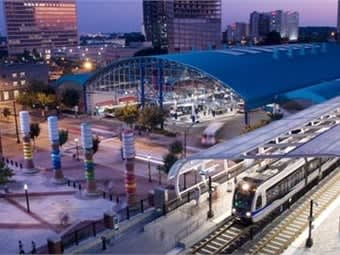
The GAO looked at the factors affecting the cost of rail projects, selecting four rail projects to serve as case studies.
CATS
After the analysis of four rail projects, the Government Accountability Office (GAO) has recommended ways that the Federal Transit Administration (FTA) can help project sponsors increase the reliability of their cost estimates on rail projects.
The GAO looked at the factors affecting the cost of rail projects, selecting four rail projects to serve as case studies. After interviewing the people involved in the projects from industry and government, the GAO identified approaches that can help project sponsors — usually state and local government agencies — manage costs, including improving their cost estimation.
The analysis found that project sponsors and other stakeholders have identified various approaches sponsors have used to manage a project’s cost, including:
Ensuring management capability;
Making informed procurement decisions;
Managing risk; and
Managing stakeholder relationships.
For example, sponsor officials and a contractor's representative from one GAO case study said they managed risk by cooperating to purchase steel materials early in the project to reduce the risk of additional steel price increases.
For its part, the GAO found that while the FTA’s cost estimating information for sponsors aligns with many best practices, the agency could improve the information's usefulness. GAO found that taken together, FTA's cost estimating information substantially or fully met seven of the 12 cost estimating steps outlined in GAO's Cost Estimating and Assessment Guide, but did not align with five of the steps. For example, the documents did not discuss sensitivity analyses — an assessment of each factor's effect on cost. Doing so could help sponsors better identify which cost factors are most likely to influence a project's overall costs if assumptions change, thereby improving an estimate's reliability and better informing sponsors' decisions, said the GAO.
In addition, sponsors may have difficulty identifying critical cost estimating information because it is distributed across 14 different documents available to sponsors, 11 of which are intended for FTA's oversight contractors. By improving the content and organization of cost estimating information, FTA would help project sponsors increase the reliability of their cost estimates and reduce the risk of cost overruns.
In summation, the GAO recommended that the FTA should:
(1) ensure that FTA's cost estimating information is consistent with all 12 steps in GAO's Cost Guide for developing reliable cost estimates; and
(2) provide a central, accessible source of cost estimating information for project sponsors.
FTA partially concurred with the first and concurred with the second recommendation, however, the GAO said it believes the FTA should fully implement both recommendations.
More Rail

Report Examines NJ TRANSIT Reliability, Funding Challenges
The Garden State Initiative analysis examines the roles of Amtrak infrastructure, fleet management, and agency operations while recommending a more performance-based approach to improving reliability.
Read More →
Stadler, CapMetro Sign Long-Term Rail Fleet Support Agreement
Beginning in 2027, Stadler will provide on-site technical expertise, spare parts support, training, and obsolescence management to help extend the reliability and longevity of CapMetro’s GTW fleet.
Read More →
Biz Briefs: Alstom Lands Canadian Contract, LYT to Supply California TSP, and More
In METRO's latest installment, we take a look at recent news from Complete Coach Works, Beep, FlixBus, and more partnerships making headlines across the transportation sector.
Read More →
CATS Gold Line Marks 5 Years of Service, 2.8M Passenger Trips
With a six-mile expansion planned, the Charlotte streetcar is positioned to connect more neighborhoods and major transit hubs across the region.
Read More →
Why Simulating Pedestrian Movement Has Become Essential for Modern Rail Stations
Pedestrian microsimulation is helping rail planners identify bottlenecks, test station designs, and prepare complex transit hubs for growing passenger volumes.
Read More →
Amtrak Begins Major Construction at New York’s Sunnyside Yard
The new maintenance facility will support Amtrak’s Airo trainsets while improving maintenance efficiency and turnaround times in New York.
Read More →
Chicago Leaders Unveil Plans for O’Hare Airport Express Train
The privately developed project would offer a 15-minute trip between downtown and O’Hare’s Terminal 2, with trains operating every 15 minutes on a dedicated track. The service would use battery-electric trains and three existing freight rail rights-of-way.
Read More →
OCTA Maps Out 30-Year Strategy to Protect Coastal Rail Corridor
The draft feasibility report identifies strategies to protect the coastal rail line for decades as the agency continues near-term stabilization and sand placement efforts.
Read More →
The Business Voice Behind Public Transportation
As chair of APTA’s Business Members Board of Governors, Ray Melleady explains how more than 850 business members are partnering with transit agencies to advance funding, innovation, and industry-wide collaboration.
Read More →
FRA Announces $5.3B in Rail Investments, Including $2B for Amtrak
Funding will support grade-crossing improvements, infrastructure upgrades, and new Amtrak equipment in 23 states.
Read More →