MCI lands contract for D4500, D45 CRT LE Commuter Coaches
The vehicles will be delivered to SRTA, which manages the Xpress mobility and public transportation operations throughout counties surrounding metro Atlanta.
Introduced in 2017, the MCI D45 CRT LE features modern styling and a patented mid-coach low-entry vestibule with passenger seating and curb-level ramp system.
MCI
2 min to read
Introduced in 2017, the MCI D45 CRT LE features modern styling and a patented mid-coach low-entry vestibule with passenger seating and curb-level ramp system.
MCI
The State Road and Tollway Authority (SRTA), which manages the Xpress mobility and public transportation operations throughout the 12 counties surrounding metropolitan Atlanta, ordered 77 new MCI D4500 and 15 all-accessible MCI D45 CRT LE Commuter Coaches.
Last September, the two coaches were listed on the Georgia State Contract for Public Mass Transit and Transportation Vehicles. The statewide contract serves as a centralized purchasing mechanism for all state and local Georgia public entities from local governments to state offices and universities. Georgia makes this contract available to other states, too.
MCI’s ADA and Buy America-compliant and Altoona-tested D4500 and D45 CRT LE designed for comfortable distance travel. With an aging population, workers living farther outside city centers and fewer younger citizens buying cars, both models are flexible alternatives for transporting riders safely, economically, and comfortably to their destination.
Introduced in 2017, the MCI D45 CRT LE features modern styling and a patented mid-coach low-entry vestibule with passenger seating and curb-level ramp system allowing easy access for all passengers, including those with mobility devices. The dual entry on the model speeds passenger entry and exit to match low floor transit dwell times.
Both models are designed for durability, essential for vehicles placed on long-term distance commuting routes. MCI’s Commuter Coach brand is known for its rugged semi-monocoque structure and comfort and safety features including above-traffic, forward-facing seating with seatbelts, and electronic passenger services onboard.
The D4500 coaches will begin delivering in August 2019 with deliveries of the D45 CRT LE beginning first quarter 2020.
Complete Parts features new branding with a new logo, a new contact telephone number, a dedicated order desk, enhanced processes and inventory, all designed to provide the parts bus operations need.
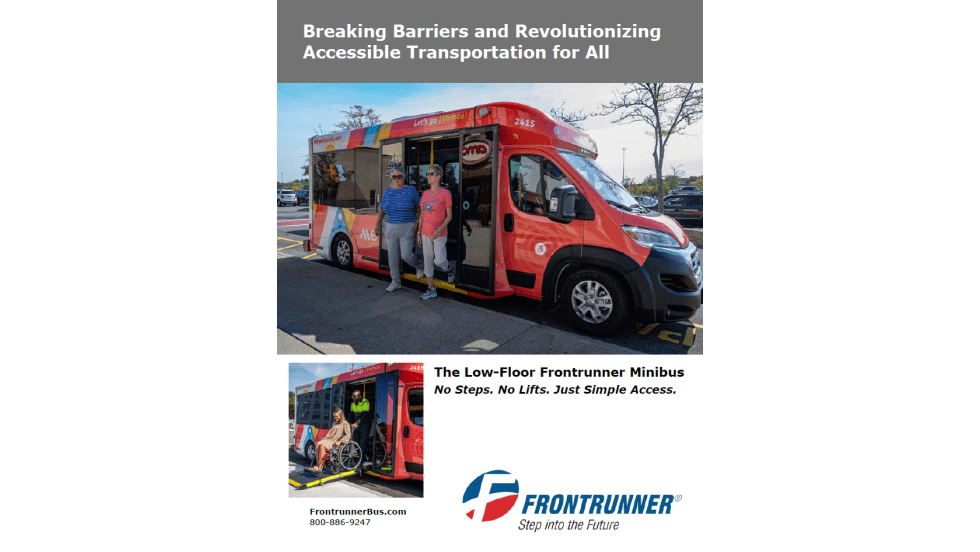
Accessible transit isn’t a feature—it’s a responsibility. This whitepaper explores how the Low-Floor Frontrunner is redefining mobility with a breakthrough design that removes barriers, empowers riders, and delivers measurable operational advantages for agencies. Discover why this next generation minibus is setting a new standard for inclusive transportation.
SEPTA was awarded $43 million in competitive grant funding from the FTA's FY25 Low and No Emission and Bus and Bus Facilities grant programs to support this procurement.
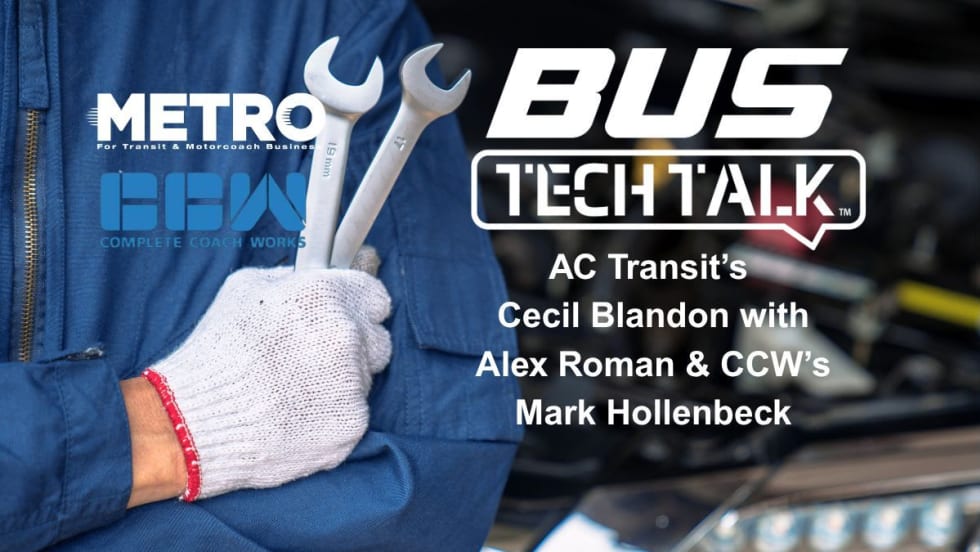
In part 1 of a two-part conversation, AC Transit’s director of maintenance joins co-hosts Alex Roman and Mark Hollenbeck to discuss his journey from the U.S. Marines to public transit and the role mentorship plays in developing the next generation of industry leaders.
When construction is complete, battery-electric buses will operate from the Arborway facility on Day One, providing cleaner, quieter, and more reliable service for riders, the MBTA said. After completion, the old facility will be demolished, and the land will be made available for redevelopment.
Nadine S. Lee, who has served as president/CEO since July 2021, said the decision comes after careful reflection on the agency’s progress and its path forward.
In this conversation, TBC’s Executive Director Ed Redfern, President Corey Aldridge, and Washington Representative Joel Rubin outline the coalition’s key policy priorities, the challenges facing transit agencies, and how industry stakeholders can work together to strengthen the voice of bus transit at the federal level.
What truly drives the cost of a paratransit fleet? Beyond the purchase price, seven operational factors quietly determine maintenance frequency, downtime, and long-term service reliability. This whitepaper explores how these factors shape lifecycle cost and what agencies should evaluate when selecting paratransit vehicles.