



MCI completes production of first D45 CRT LE Commuter Coach
The coach offers modern styling and rider comfort along with a second door with a low-entry automatic ramp system.

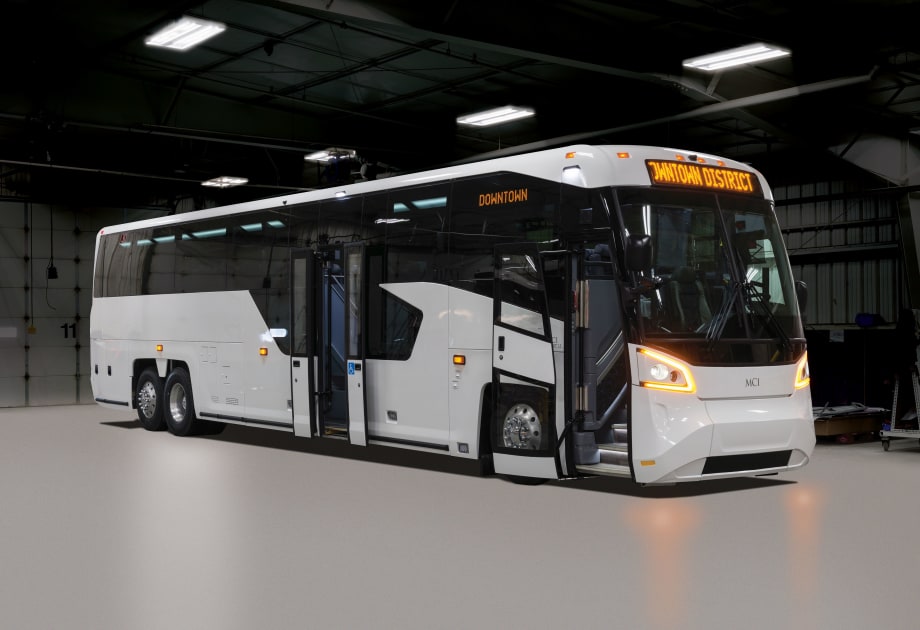
Over four years, MCI’s design team worked with Designworks on dozens of concepts.
MCI
Over four years, MCI’s design team worked with Designworks on dozens of concepts.
MCI
Motor Coach Industries (MCI) delivered the first of its all new MCI D45 CRT LE, the company's next-generation Commuter Coach.
The coach offers modern styling and rider comfort with passenger accessibility via a second door with a low-entry automatic ramp system. The Low-Entry Vestibule design provides comfortable seating for up to five passengers, including two with mobility devices plus an attendant.
Following rigorous in-service testing by public and private transportation organizations across the nation, the first full production unit, # 81000, has rolled off the production line for delivery.
Everything about the MCI design project was new. “Our research and customer feedback demonstrated a need for more efficient, well-designed options for mobility challenged passengers,” said Brent Maitland, MCI VP, marketing and product planning. “The D45 CRT LE entry simplifies the boarding process, matching low-floor transit dwell times, and as importantly improves the overall passenger experience.”
A conventional motorcoach wheelchair lift takes an estimated eight to 10 minutes to deploy; involving a multi-step process. Operating a wheelchair lift requires significant driver training. The lift elevates the passenger in the air to a slide-door entry and requires several driver maneuvers and interior seat adjustments. Boarding the D45 CRT LE is radically easier, according to MCI officials.
Over four years, MCI’s design team worked with Designworks on dozens of concepts. Representatives from accessibility groups including the National Council on Independent Living, The American Association of People with Disabilities, and Manitobans with Disabilities provided input into the final design.
“The important design element isn’t just about boarding efficiency, it’s caring about the users,” said Maitland. “We learned that all passengers, specifically the mobility challenged, desire a stress-free boarding experience. The vestibule allows passengers using mobility devices to board in the same manner as all other passengers, and provides access to amenities for an enjoyable riding experience.”
In fact, passengers surveyed while riding the D45 CRT LE during test phase service gave it a 93% approval rating, according to MCI.
Alberta’s Bow Valley Regional Transit was the first operator to order the MCI D45 CRT LE. Delivery is scheduled to be completed by April 5, and the agency’s four new coaches will serve the longest, most scenic route for Bow Valley’s Roam Transit — a 45-minute commute connecting Banff and Lake Louise.
Later this year, SouthWest Transit, Eden Prairie, Minnesota, will take delivery of two new MCI D45 CRT LE Commuter Coaches, citing that the coaches will allow for better vehicle scheduling and cost-savings by providing the right vehicle for both the load demand and accessibility needs.
At United Motorcoach Association’s annual EXPO in January, MCI also showcased a custom order for a Silicon Valley employer that features bike racks, flat-screen monitors and onboard workspace areas, also planned for 2019 delivery.
More Motorcoach

METRO Opens Submissions for 2026 Motorcoach Awards
Nominations are now being accepted for METRO Magazine’s Operator of the Year and Innovative Operator of the Year awards.
Read More →
Biz Briefs: Alstom Lands Canadian Contract, LYT to Supply California TSP, and More
In METRO's latest installment, we take a look at recent news from Complete Coach Works, Beep, FlixBus, and more partnerships making headlines across the transportation sector.
Read More →
Biz Briefs: RIPTA Unveils New Frontrunners, Clevland RTA Adds New Siemens, and More
In METRO's latest installment, we take a look at recent news from Siemens, Prevost, Dodge, and more partnerships making headlines across the transportation sector.
Read More →
People Movement: Holly Arnold Joins Transdev and More
In this edition, we also cover recent appointments and announcements at Pace, CamTran, MCI, and more, showcasing the individuals helping to shape the future of transportation.
Read More →
ABA Report: Motorcoach Travel Generates $161.6B Economic Impact
The 2025 analysis finds motorcoach travel supported nearly 900,000 jobs and generated $28 billion in federal, state, and local taxes.
Read More →
CharterUP’s Armir Harris on Technology, AI, and the Future of Group Mobility
In a recent episode of METROspectives, CharterUP Founder/CEO Armir Harris discussed the company’s evolution from an online charter bus marketplace into a technology platform supporting public- and private-sector mobility and much more.
Read More →
People Movement: ABC Names John Walsh as Chief Commercial Officer
In this edition, METRO also covers recent appointments and announcements at the DART, STV, and more, showcasing the individuals helping to shape the future of transportation.
Read More →
From Surviving to Thriving: Building Stronger Transportation Organizations
Bus Business Consultants founder Brian Dickson shares lessons on leadership, organizational health, and creating options for long-term success in a changing transportation industry.
Read More →
Biz Briefs: Luminator Marks Milestone and More
From manufacturers and suppliers to transit agencies and motorcoach operators, these updates offer a snapshot of the projects, partnerships and business moves driving the industry forward.
Read More →
ABAF Study Reveals Growing Insurance Crisis for Motorcoach Operators
Preliminary findings show 98% of operators faced premium increases over the past five years, while shrinking insurer participation is putting added pressure on businesses and customers.
Read More →