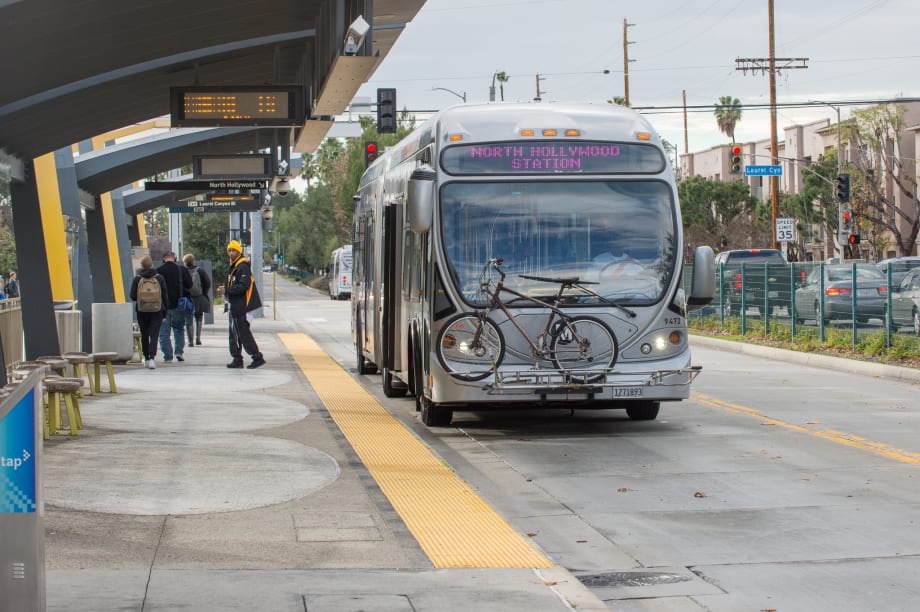
TAPforce adds a cloud-based layer to the existing TAP Card System and enables one centralized place for program signup and TAP payment spanning several new programs, beginning with Metro Bike Share.
Steve Hymon/Metro
2 min to read
TAPforce adds a cloud-based layer to the existing TAP Card System and enables one centralized place for program signup and TAP payment spanning several new programs, beginning with Metro Bike Share.
Steve Hymon/Metro
Salesforce and the Los Angeles County Metropolitan Transportation Authority (Metro) announced a new unified payment solution called TAPforce.
The idea for the hybrid system was originated by Invoke Technologies and architected, implemented, and launched on the Salesforce Platform by Publicis.Sapient.
Ad Loading...
TAPforce adds a cloud-based layer to the existing TAP Card System and enables one centralized place for program signup and TAP payment spanning several new programs, beginning with Metro Bike Share.
L.A. Metro plans to connect payments for scooter sharing, parking, electric vehicle charging, microtransit, toll lanes, ride-hailing, and other account-based programs through TAPforce in 2019.
L.A. Metro, the agency that operates the TAP smart card system on behalf of 27 agencies, wanted to improve payment options for its smart card system, which is used in 99 rail stations and on 3,800 buses in Los Angeles County. Rather than spending half a billion dollars building a completely new system, L.A. Metro took a hybrid approach by layering existing infrastructure with Salesforce, providing the modern connections that today’s transit customers expect at a fraction of the cost.
The agency partnered with Publicis.Sapient to replace its CRM system with Salesforce Service Cloud, Marketing Cloud, and Community Cloud, creating TAPforce.
TAPforce allows customers to view ride history, add funds to their TAP cards or TAP accounts, order new cards, and sign up for new programs from a single digital hub.
It also empowers vendors to order new cards and report issues easily.
TAPforce allows new payment solutions such as PayPal, and includes a “Pay Near Me” feature that allows customers to load their TAP accounts with cash at nearby retailers.
In addition to offering new payment options, the new solution will enable L.A. Metro to quickly incentivize customers with promo codes and discounts that can be conveniently shared across programs.
In 2019, L.A. Metro will launch the new TAP mobile app, TAP rewards, and more payment optionssuch as Apple Pay and Android Pay.
Acts as a one-stop shop for payment and program sign-ups for multiple account-based transportation options in Los Angeles. Metro Bike Share is the first program to integrate with TAPforce, enabling customers to sync their bike share account with their TAP account.
Ad Loading...
This integration opens doors for consolidation of other transportation options — L.A. Metro plans to connect payments for scooter sharing, parking, electric vehicle charging, microtransit, toll lanes, ride-hailing, and other account-based programs through TAPforce in 2019.
The proposed acquisition of a company with deep digital expertise and expected 2026 revenues of over $220 million marks a significant step in Hitachi Rail’s strategy to operate as a leading global digital mobility player, the company said.
The board authorized a five-year contract, with two one-year options, to Tolar Manufacturing Company Inc., for the fabrication and installation of upgraded passenger amenities at bus stops across the DART Service Area.
As motorcoaches navigate increasingly congested urban corridors filled with pedestrians, cyclists, scooters, and distracted drivers, safety leaders across the industry are confronting a growing challenge: visibility.
In this edition of Biz Briefs, we highlight the latest developments shaping the future of mobility — from manufacturers and technology providers to transit agencies and motorcoach service operators.
In this product roundup, METRO highlights transit software platforms designed to optimize scheduling; harness actionable data; and support flexible, on-demand operations.
A major goal of the pilot, which begins in April, is to test the speed, functionality, and durability of new handheld devices to scan Ventra and paper tickets.