MARTA completes New Flyer electric-bus demonstration project
All-electric propulsion system has many benefits including zero tailpipe emissions, reduced noise inside and outside the bus, and low operational and maintenance costs.
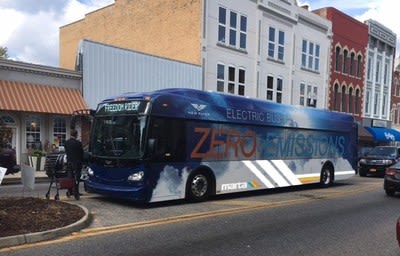
New Flyer of America Inc., a subsidiary of New Flyer Industries Inc., announced a successful three-week demonstration of the New Flyer Xcelsior® XE40 battery-electric bus for the Metropolitan Atlanta Rapid Transit Authority (MARTA).
The three-week electric bus demonstration, which concluded on Dec. 23, transported over 2,200 passengers throughout the region on seven different service routes and yielded over 1,600 in-service miles.
Ad Loading...
New Flyer's all-electric propulsion system has many benefits including zero tailpipe emissions, reduced noise inside and outside the bus, and low operational and maintenance costs.
"Our electric bus met MARTA's bus rollout each and every day over the course of this demonstration, said Paul Smith, New Flyer’s executive VP, sales and marketing. “Having built over 6,400 buses with electric motors, New Flyer has the proven experience and unique qualifications to deploy electric buses and provide the support our customers rely on for the entire life of the bus."
Xcelsior® electric buses are manufactured in St. Cloud, Minn.; one of New Flyer's three U.S.-based transit production facilities. New Flyer integrates Michigan-sourced lithium-ion batteries into a durable energy storage system designed for North American applications. Close to MARTA in nearby Alpharetta, Ga., Siemens manufactures high-efficiency electric motors and power systems for the Xcelsior's propulsion and regenerative braking system.
New Flyer electric buses have the ability to quick-charge at an equipped bus stop. This capability typically requires only six minutes of re-charge for every hour of service operation. New Flyer also builds extended-range electric buses with more battery capacity. These buses can operate for longer periods during the day, then recharged over-night using plug-in charging. MARTA is considering both types of charging methods for bus operations.
Southern Company, its subsidiary Georgia Power (MARTA's regional utility company), and New Flyer are jointly participating with Electric Power Research Institute and the Society of Automotive Engineers to implement standardized charging equipment and infrastructure to accompany the electric buses.
Ad Loading...
"We clearly understand the important role we play in supporting continuous air quality improvement in the communities we serve, consistent with our sustainability mission of 'a better product — a better workplace — a better world,'” said Smith. “Our zero-emissions battery-electric bus demonstration in Atlanta follows MARTA's debut of New Flyer's clean-air compressed natural gas (CNG) articulated buses in May 2016. Whether it's battery-electric or low-emissions CNG, each propulsion system with New Flyer's Xcelsior® platform offers both tremendous environmental and operational benefits."
A phased approach to technology, in-house capabilities, and workforce investment is helping transportation leaders break the reactive cycle and build more resilient, revenue-focused operations.
The landmark event empowers riders across six agencies in the Puget Sound region to tap-and-ride transit using a contactless credit or debit card or a mobile wallet.
Now in its latest edition, the awards recognize forward-thinking solutions that improve safety, operational efficiency, sustainability, rider experience, and overall system performance.
Menard discusses how data-driven signal prioritization is improving efficiency, reliability, and ridership, while offering insight into the innovations driving the next generation of smart mobility. Together, they explore how technology and collaboration are paving the way for a more connected, sustainable future in transit.
The pilot program showcases two companies’ technology at eight bus stops. The companies submitted their ideas through the Transit Tech Lab, which is backed by the Partnership Fund for New York City and provides an accelerated pathway for early to growth-stage companies to solve public transportation challenges for the largest transit agencies in North America.
To accomplish this work, the MBTA announced that four phases of temporary evening service changes will begin on February 28 and continue through April.