




Read More: Chicago Transit Unveils Next-Gen Performance Dashboard
CTA Celebrates Heritage Fleet Railcars’ Centennial
On Saturday, July 29, the CTA will run the historic 4000-series rail cars around the Loop ‘L’ from 10 a.m. to 2 p.m.
July 28, 2023
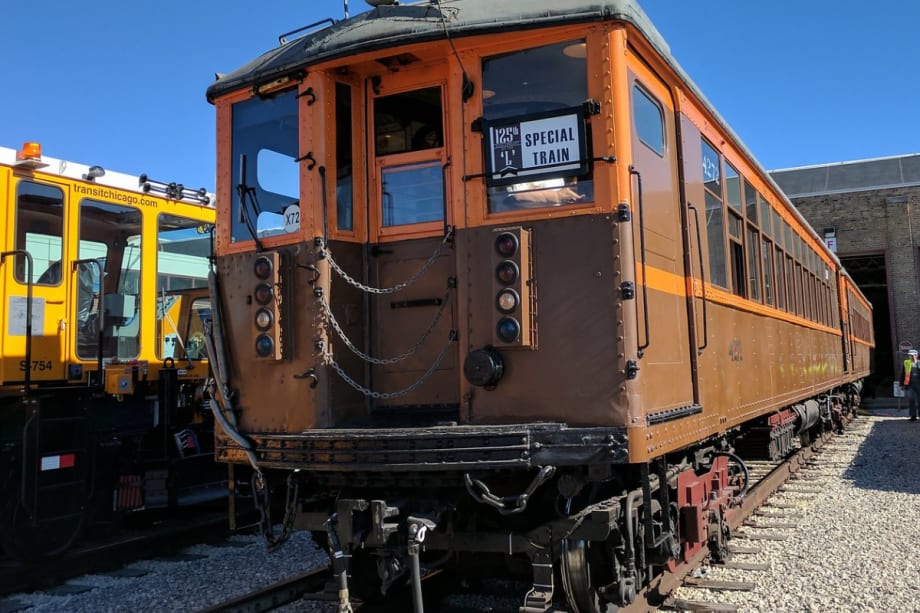
The 4000-series railcars, built by the long-defunct Cincinnati Car Company, are the oldest vehicles in CTA’s Heritage Fleet.
Photo: CTA
2 min to read
The Chicago Transit Authority (CTA) announced is marking the 100 “birthday” of its vintage 4000-series railcars by inviting customers to take a ride back in time.
On Saturday, July 29, the CTA will run the historic 4000-series railcars around the Loop ‘L’ from 10 a.m. to 2 p.m.
Regular CTA rail fare ($2.50 full fare; $1.25 reduced fare) will still apply.
“The 4000-series railcars and the entire Heritage Fleet are a treasure not just in CTA’s history, but the City of Chicago’s history too, and Chicagoans of all ages are welcome to come out and experience this century-old gem,” said CTA President Dorval R. Carter, Jr. “It is a privilege to serve our customers each day, and events such as this are just as much a gift for us as it is for those coming out to ride and experience a bygone era of public transit that is appreciated across multiple generations.”
History of the 4000-Series Railcars
The 4000-series railcars, built by the long-defunct Cincinnati Car Company, are the oldest vehicles in CTA’s Heritage Fleet—a collection of vintage buses and railcars from the 1920s through the 1970s.
The 4000-series were built in two phases: from 1914-15 and from 1922-24.
The 4000s were Chicago's first steel-body cars. The first phase of cars was affectionately referred to as "baldies" because of their plain arched roofs, while the second phase of cars were known as the “plushies,” featuring canvas-covered wood roofs, more luxurious interiors with green plush seats, circulating fans, and opal shades on the lights.
The 4000-series railcars in CTA’s Heritage Fleet, cars 4271-4272, have been lovingly maintained by the agency since the entire series was retired in the early 1970s.
Both vintage railcars feature the burnt orange and brown paint scheme they wore in the 1940s, while inside, they feature replica advertisements from the era.
"The Heritage Fleet Program is designed to preserve and celebrate the city's and CTA's history. Our vintage trains and buses allow the public to experience how people traveled in years past first-hand—sitting in the same seats, holding handholds and stanchions, reading the vintage advertisements,” said Graham Garfield, who manages CTA’s Heritage Fleet Program. “These vehicles tell the story of our daily lives – how people traveled to work, school, shopping, and play – and we love giving everyone a window into past generations or a walk down memory lane."
More Rail

New York MTA Advances Final Contract for Second Avenue Subway Expansion
Contract Four is the largest in the Second Avenue Subway Phase 2 project and includes construction of station infrastructure, tracks, and signals for the subway expansion, MTA officials said. Work on Contract Four will begin in 2027.
Read More →
San Diego MTS Breaks Monthly Trolley Ridership Record
Agency officials said July’s ridership indicates MTS’s continued recovery from the pandemic.
Read More →
Report Examines NJ TRANSIT Reliability, Funding Challenges
The Garden State Initiative analysis examines the roles of Amtrak infrastructure, fleet management, and agency operations while recommending a more performance-based approach to improving reliability.
Read More →
Stadler, CapMetro Sign Long-Term Rail Fleet Support Agreement
Beginning in 2027, Stadler will provide on-site technical expertise, spare parts support, training, and obsolescence management to help extend the reliability and longevity of CapMetro’s GTW fleet.
Read More →
Biz Briefs: Alstom Lands Canadian Contract, LYT to Supply California TSP, and More
In METRO's latest installment, we take a look at recent news from Complete Coach Works, Beep, FlixBus, and more partnerships making headlines across the transportation sector.
Read More →
CATS Gold Line Marks 5 Years of Service, 2.8M Passenger Trips
With a six-mile expansion planned, the Charlotte streetcar is positioned to connect more neighborhoods and major transit hubs across the region.
Read More →
Why Simulating Pedestrian Movement Has Become Essential for Modern Rail Stations
Pedestrian microsimulation is helping rail planners identify bottlenecks, test station designs, and prepare complex transit hubs for growing passenger volumes.
Read More →
Amtrak Begins Major Construction at New York’s Sunnyside Yard
The new maintenance facility will support Amtrak’s Airo trainsets while improving maintenance efficiency and turnaround times in New York.
Read More →
Chicago Leaders Unveil Plans for O’Hare Airport Express Train
The privately developed project would offer a 15-minute trip between downtown and O’Hare’s Terminal 2, with trains operating every 15 minutes on a dedicated track. The service would use battery-electric trains and three existing freight rail rights-of-way.
Read More →
OCTA Maps Out 30-Year Strategy to Protect Coastal Rail Corridor
The draft feasibility report identifies strategies to protect the coastal rail line for decades as the agency continues near-term stabilization and sand placement efforts.
Read More →