



MTI Survey Attempts to 'Put Brakes' on Transit Harassment
The MTI survey provides a rigorously-vetted research method transit operators can use to gather evidence about the extent of passenger harassment.

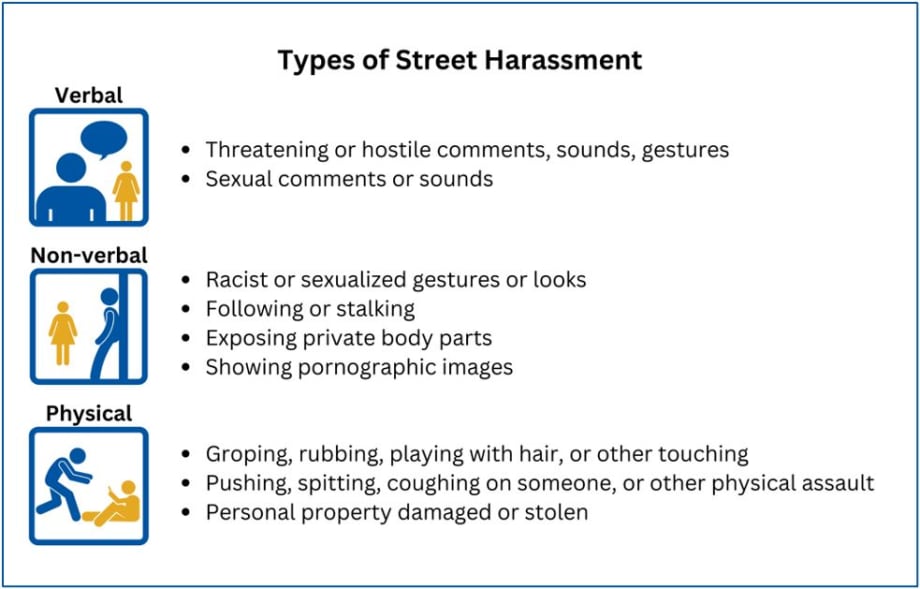
Street harassment can be verbal, non-verbal, and/or physical. Examples include cat-calling, racist gestures, groping, and spitting.
Photo: Design by Minvhy Tran, adapted from the RedDot Foundation SafeCity initiative and Vania Ceccato, “Sexual Violence in Public Transportation,” International Encyclopedia of Transportation (2019).
Researchers from the Mineta Transportation Institute (MTI) developed a survey instrument that transit operators can use to collect information from passengers about the extent, location, and characteristics of any street harassment they have experienced when using public transit.
Street harassment can be verbal, non-verbal, and/or physical. Examples include cat-calling, racist gestures, groping, and spitting.
Harassers target victims based on a wide variety of personal characteristics such as perceived gender, race, disability, or sexual orientation. Fear of harassment leads many would-be transit riders to ride only at certain times of day or only when traveling with a companion — or even to stop riding transit altogether.
Groups Most at Risk
Although both male and female riders may suffer from harassment, the problem is more severe for women and girls, especially those who are low-income or of color.
Evidence also suggests that nonbinary and transgender transit passengers experience disproportionate levels of sexual harassment.
Study author Asha Weinstein Agrawal, PhD, explained the need for the research: “Despite wide-spread acknowledgment that transit passenger harassment is a problem, most transit operators don’t know specifically who is targeted, what kinds of behaviors are common, the scale of the problem, or how victims respond.”
About the MTI Survey
The MTI survey provides a rigorously-vetted research method transit operators can use to gather evidence about the extent of passenger harassment. Survey findings will allow transit operators to develop appropriate programs to combat the kinds of harassment happening on their systems.
The study was conducted in accordance with California Senate Bill 1161 (2022), legislation introduced by California State Senator Dave Min. More recent legislation from Senator Min, California Senate Bill 434 (2023), requires California’s 10 largest transit operators to document passenger experiences with harassment using the MTI survey or an equivalent and report the findings by the end of 2024.
The survey instrument was produced in English, Spanish, and Chinese. It is also available in 11 AAPI languages thanks to support from Stop AAPI Hate.
More Security and Safety

CSA Group Releases Climate Resilience Standard for Transit, Passenger Rail
Developed with support from the Standards Council of Canada, CSA D700 guides assessing climate-related risks and planning adaptation measures for transit and passenger rail systems.
Read More →
San Diego MTS Approves New Fare Evasion Penalty Program
The new administrative process will move eligible violations out of the criminal court system, cap penalties at $125, and provide flexible payment options for riders.
Read More →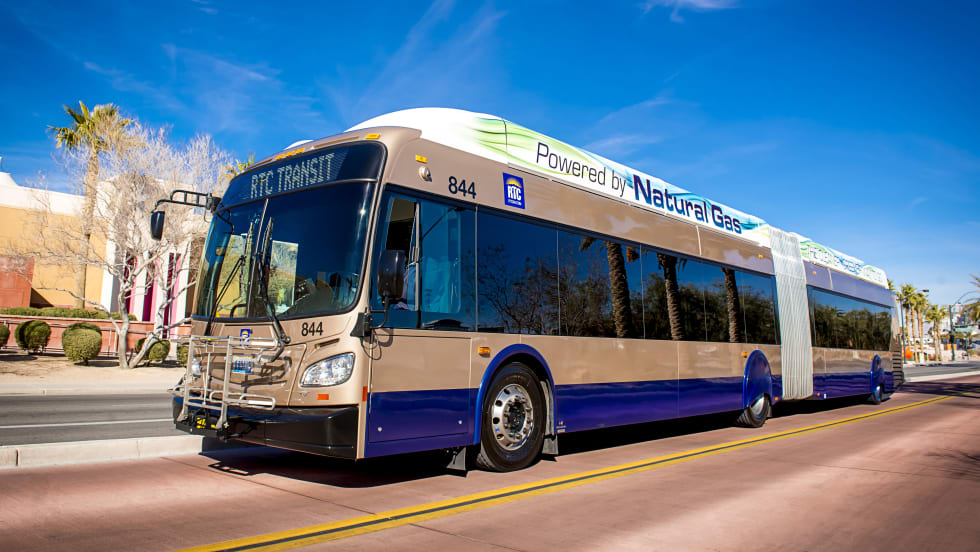
RTC of Southern Nevada Reports 29% Drop in Transit Operator Assaults
The agency credits expanded security measures, employee training, and technology investments for improvements in transit safety, while security officers have responded to 19 suspected overdoses since July.
Read More →
Public Transit Conference Returning to GFX in 2027, Call for Papers Now Open
The Call for Papers is now open, allowing transit agency professionals and industry experts to help shape the PTC educational program by submitting session ideas for consideration.
Read More →
Safe Transit Act Proposes New Security Requirements for Federal Transit Funding
Proposed legislation would link federal transit dollars to safety measures while requiring security investments, onboard cameras, and new fare collection standards.
Read More →
FTA Ends Direct Oversight of MBTA Safety Actions
The federal agency closed its remaining special directive to the Massachusetts Department of Public Utilities following a safety review that began in 2022.
Read More →
Transit Agencies Highlight Safety Gains at National Summit
Leaders from 15 major transit systems shared crime-reduction results and safety initiatives while discussing the role of continued federal support.
Read More →
DART Launches Major Security, Fare Enforcement Initiative
The 90-day demonstration will deploy coordinated security teams at five light rail stations while testing controlled access and gathering data to guide future investments.
Read More →
RTD Launches NextRide App to Consolidate Trip Planning, Fares, Security Reporting
The app expands on RTD’s existing NextRide web application and allows customers to view real-time vehicle locations and service alerts, purchase and store digital fares, and access customer support.
Read More →
TAPTCO Updates OSHA Compliance Training for Transit Maintenance Operations
The revamped program addresses 26 OSHA standards for maintenance facilities, with TAPTCO pointing to training, documentation, and everyday shop hazards as continuing challenges for transit operations.
Read More →