INIT, Seattle’s ORCA Integrate with Google Wallet for Transit Payments
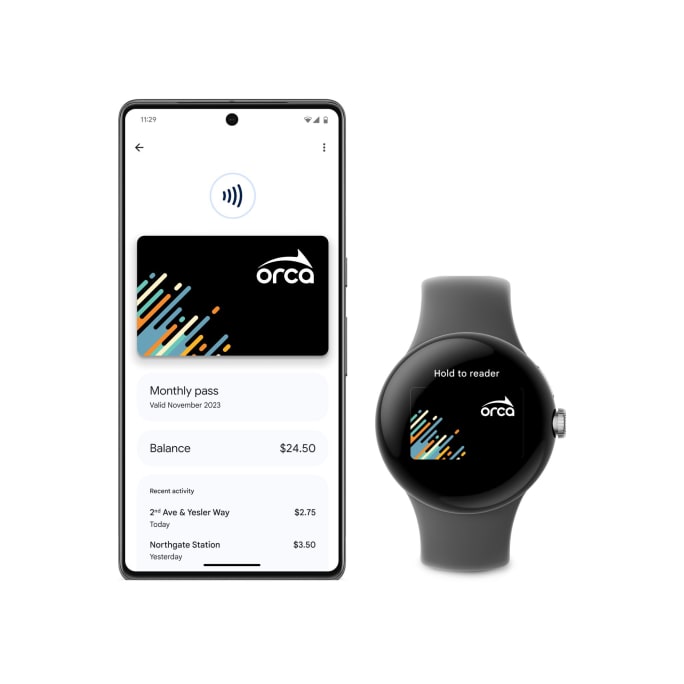
The latest development allows Android and Wear OS users to seamlessly manage their transit payments, recharge their ORCA accounts, and monitor recent purchase activity and trip history directly through Google Wallet.
Used within the regional fare system implemented by INIT, the ORCA card available in Google Wallet gives riders a simplified tap-and-go approach while enhancing travel across seven participating transit agencies in the Seattle region: Community Transit, Everett Transit, King County Metro, Kitsap Transit, Pierce Transit, Sound Transit, and Washington State Ferries.
The latest development allows Android and Wear OS users to seamlessly manage their transit payments, recharge their ORCA accounts, and monitor recent purchase activity and trip history directly through Google Wallet.
Ad Loading...
A New Benefit for Riders
Used within the regional fare system implemented by INIT, the ORCA card available in Google Wallet gives riders a simplified tap-and-go approach while enhancing travel across seven participating transit agencies in the Seattle region: Community Transit, Everett Transit, King County Metro, Kitsap Transit, Pierce Transit, Sound Transit, and Washington State Ferries.
“We’re excited for this feature to offer another convenient payment option for ORCA transit customers using Google devices,” said Sound Transit ORCA Director Brittany Esdaile. “This is an important step forward in advancing transit payments in our Puget Sound region.”
Riders can easily convert their plastic ORCA card or get a brand-new digital ORCA card with nothing more than their mobile Android phone or watch.
By registering their card on the myorca.com website or mobile app, they can take advantage of convenient account management and balance protection features.
The INIT system empowers users to digitize their ORCA card directly from within the Google Wallet, after which their ORCA account is immediately updated, if registered.
Ad Loading...
Riders can easily convert their plastic ORCA card or get a brand-new digital ORCA card with nothing more than their mobile Android phone or watch.
Photo: INIT
A New Milestone for INIT
As a pioneer in fare technology, INIT was the first in the US to offer ticket integration into Google Wallet. Building on this legacy, INIT continues to deliver state-of-the-art fare solutions that enhance user convenience and the overall transit experience.
"We're excited to be on the cutting edge of innovation with the ORCA card now in Google Wallet,” said Roland Staib, INIT’s CEO. “This new feature demonstrates our commitment to providing intuitive, efficient payment options that meet the evolving needs of modern transit riders."
CEO Magnus Friberg discusses Luminator’s shift toward becoming a digital partner, the growing importance of software and interoperability, and how AI can help agencies improve operations and passenger experience.
Reliability-Centered Maintenance helps transit agencies move beyond routine checklists to focus limited resources on the assets and failures that have the greatest impact on safety, reliability, and service.
More than 1,500 buses now feature upgraded technology designed to improve arrival predictions and provide free Wi-Fi, with deployment expected to reach nearly 2,000 buses by the end of 2026.
John Hroncich discusses BAE Systems’ modular and scalable approach, lessons learned from decades of real-world operations, and how agencies can identify electrification strategies that fit their fleets.
In METRO's latest installment, we take a look at recent news from Complete Coach Works, Beep, FlixBus, and more partnerships making headlines across the transportation sector.
What if transit leaders could ask any operational question and get a trusted answer in seconds? Conversational AI is transforming how agencies use their data.
More than $191 million in federal funding will help three transit agencies replace aging rail vehicles and support a new autonomous shuttle service in Chattanooga.
LA Metro’s Obed Mejia discusses technician training, evolving maintenance technology, fleet replacement, and strategies for getting the most out of today’s transit fleets.
In METRO's latest installment, we take a look at recent news from Siemens, Prevost, Dodge, and more partnerships making headlines across the transportation sector.
Pedestrian microsimulation is helping rail planners identify bottlenecks, test station designs, and prepare complex transit hubs for growing passenger volumes.