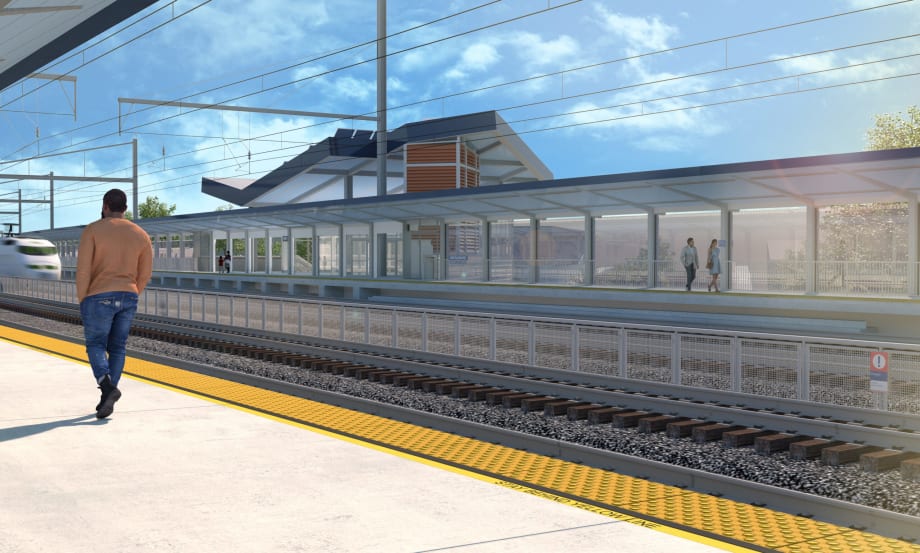
Amtrak Unveils West Baltimore MARC Station Renderings
The updated designs build on previous versions shared publicly and were developed in close coordination with MDOT MTA, while also incorporating feedback provided by members of the community and other stakeholders.
Amtrak and MDOT MTA are developing a construction timeline for the new station and will publish additional updates as planning and final design efforts advance.
The updated designs build on previous versions shared publicly and were developed in close coordination with MDOT MTA, while also incorporating feedback provided by members of the community and other stakeholders.
Ad Loading...
“These renderings reflect the meaningful input we received from community members through the design process,” said Amtrak asst. VP Luigi Rosa, who is leading the program. “The new West Baltimore MARC Station will upgrade the customer experience for thousands of annual MARC riders while enhancing connectivity to Baltimore Penn Station, Washington DC and beyond.”
The overall Program will be completed by 2035.
Photo: Amtrak
Features of the New MARC Station
The new West Baltimore MARC Station will feature:
Restrooms.
Enclosed waiting area.
Full ADA accessibility, including elevators and level boarding platforms that line up with the train, allowing all doors access for boarding and alighting.
Local transit connections, including to the West Baltimore Bus Hub and future Red Line Light Rail Roadway improvements.
Widened, protected, and illuminated sidewalks on Franklin and Mulberry streets.
Enhanced pick-up and drop-off areas.
Public art from local artists.
The new fully accessible station is a vital component of the Frederick Douglass Tunnel Program, which will modernize and transform a 10-mile section of the Northeast Corridor through several infrastructure upgrades.
Photo: Amtrak
Impact of the New Station
The new fully accessible station is a vital component of the Frederick Douglass Tunnel Program, which will modernize and transform a 10-mile section of the Northeast Corridor through several infrastructure upgrades.
These include the construction of a new tunnel for electrified passenger trains that currently use the existing 151-year-old B&P Tunnel, a $50 million West Baltimore Community Investment Program designed to benefit neighborhoods along the new tunnel route, new road bridges, modern rail infrastructure, and more.
Ad Loading...
The overall Program will be completed by 2035. Amtrak and MDOT MTA are developing a construction timeline for the new station and will publish additional updates as planning and final design efforts advance.
Contract Four is the largest in the Second Avenue Subway Phase 2 project and includes construction of station infrastructure, tracks, and signals for the subway expansion, MTA officials said. Work on Contract Four will begin in 2027.
The Garden State Initiative analysis examines the roles of Amtrak infrastructure, fleet management, and agency operations while recommending a more performance-based approach to improving reliability.
Beginning in 2027, Stadler will provide on-site technical expertise, spare parts support, training, and obsolescence management to help extend the reliability and longevity of CapMetro’s GTW fleet.
In METRO's latest installment, we take a look at recent news from Complete Coach Works, Beep, FlixBus, and more partnerships making headlines across the transportation sector.
Pedestrian microsimulation is helping rail planners identify bottlenecks, test station designs, and prepare complex transit hubs for growing passenger volumes.
The privately developed project would offer a 15-minute trip between downtown and O’Hare’s Terminal 2, with trains operating every 15 minutes on a dedicated track. The service would use battery-electric trains and three existing freight rail rights-of-way.
The draft feasibility report identifies strategies to protect the coastal rail line for decades as the agency continues near-term stabilization and sand placement efforts.