



Tampa's HART Makes Most Popular Route Fare Free
The pilot is possible thanks to Tampa City Council allocating $1.65 million in city funds to support free fares and increasing peak service frequency to every 15 minutes.

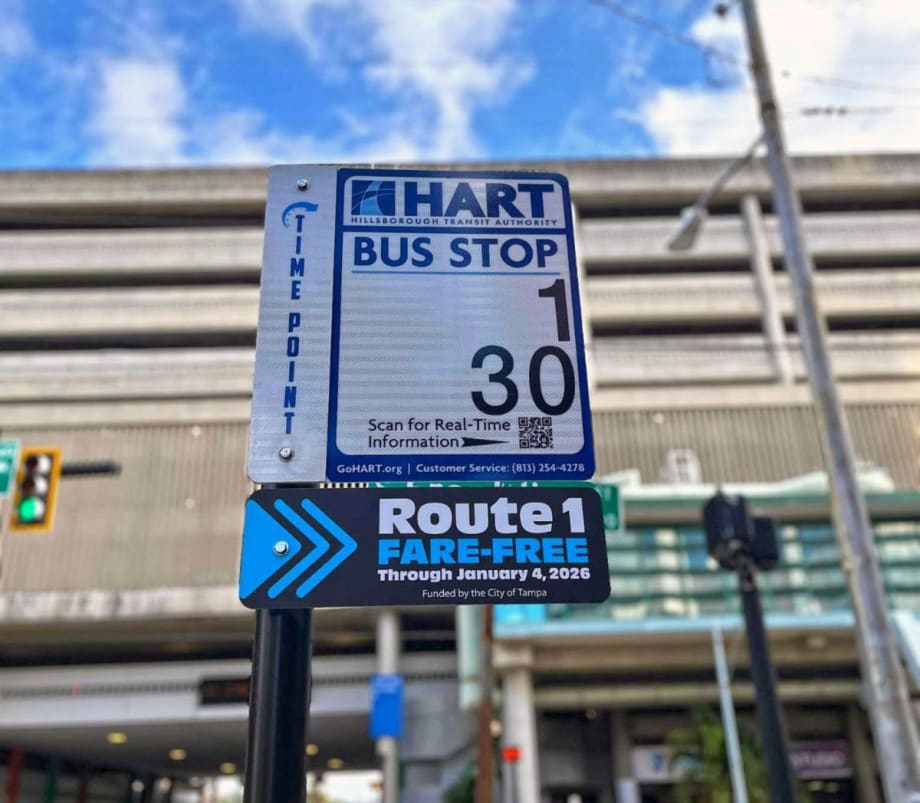
HART's initiative also includes an additional $150,000 in paratransit services, ensuring that transportation remains accessible to those with disabilities.
Photo: HART
Tampa, Fla.’s Hillsborough Transit Authority (HART) announced its most popular route, Route 1, is now fare-free for one year.
The pilot is possible thanks to Tampa City Council allocating $1.65 million in city funds to support free fares and increasing peak service frequency to every 15 minutes.
HART’s Route 1
Route 1, which serves nearly 3,000 daily customers, operates between the University area and downtown Tampa, providing vital transportation services to thousands of residents.
Approximately 32,000 residents and 56,000 jobs within a quarter mile of Route 1.
Notably, 18% of the population in this area does not own a car, more than a quarter live below the poverty line, 14% have a disability, and 64% are minorities.
“We are thrilled to work with the City of Tampa to provide this essential service to the community, which will not only ease the financial burden on our riders but also increase service on the route, supporting those who rely on HART to access jobs, education, and healthcare,” said HART CEO Scott Drainville. “This initiative represents a meaningful step toward making transit more equitable and accessible for all.”
The initiative also includes an additional $150,000 in paratransit services, ensuring that transportation remains accessible to those with disabilities.
More Bus

More Than a Summer Job: Building the Next Generation of Transit Talent
The Delaware River Port Authority and PATCO have transformed their internship program into a hands-on professional development experience that introduces students to the breadth of transportation careers — and creates a pipeline for future employees.
Read More →
LA Metro Board Awards 220 Battery-Electric Bus Contract to ENC
The contract, which is the largest base award of battery-electric buses by a U.S. transit agency, will be built in Southern California, sustaining good jobs as LA prepares to welcome the world in 2028
Read More →
Public Transit Conference Returning to GFX in 2027, Call for Papers Now Open
The Call for Papers is now open, allowing transit agency professionals and industry experts to help shape the PTC educational program by submitting session ideas for consideration.
Read More →
Indian River Transit’s Community-Focused Approach Earns National Recognition
Named APTA’s 2026 Outstanding Public Transportation System in its size category, Florida’s Indian River County transit system continues to grow ridership through fare-free service and a focus on evolving community needs.
Read More →
ENC Lands MATA Contract and More in Biz Briefs
In this edition of Biz Briefs, we spotlight the latest developments shaping the future of mobility.
Read More →
From Surviving to Thriving: Building Stronger Transportation Organizations
Bus Business Consultants founder Brian Dickson shares lessons on leadership, organizational health, and creating options for long-term success in a changing transportation industry.
Read More →
Everett Transit, Community Transit Outline Consolidation Agreement
The proposed agreement calls for a 50% increase in bus service in Everett, a new microtransit zone, continued paratransit service, and the transfer of Everett Transit operations to Community Transit.
Read More →
SEPTA Details Accelerate Vision for Transit System
The plan outlines investments in trolley modernization, new Metro and Regional Rail vehicles, accessible stations, and more frequent bus and rail service.
Read More →
Report: Transit Bus Manufacturing Supports 34,100 Jobs, $5.1B in GDP
The “Buses Mean Business” report examines the transit bus manufacturing industry’s economic footprint, supply chain, and rising demand for vehicle replacements.
Read More →
Biz Briefs: New Flyer Delivers in Columbus, Houston, Beep and Freebee Merge, and More
In this edition of Biz Briefs, we spotlight the latest developments shaping the future of mobility.
Read More →